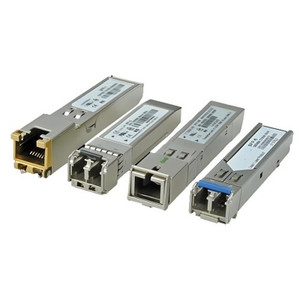
Hanwha SFP-FSCS120-A 100Mbps Single-Mode Fiber SFP
The Hanwha SFP-FSCS120-A is a Small Form-Factor Pluggable (SFP) fiber optic transceiver designed for long-distance IP surveillance and network infrastructure requiring extended connectivity without copper limits. Operating at 100Mbps over single-mode fiber at 1310nm wavelength, this module reaches 20 kilometers — eliminating the 100-meter Ethernet copper ceiling and enabling camera deployments across campuses, industrial parks, and distributed facility architectures. The SC connector and MSA compliance ensure cross-platform compatibility with managed switches, unmanaged switches, and standalone fiber media converters in mixed-vendor environments.
Key Features
- 1310nm Single-Mode Wavelength: 20km transmission distance over standard single-mode fiber (SMF). Fundamental architecture for long-haul surveillance system expansion without electrical repeaters.
- 100Mbps Fast Ethernet: Adequate for 2-4 simultaneous IP cameras at 30fps 1080p or 8-10 lower-bitrate streams. Scalable with fiber loops and VLAN segmentation.
- SC Optical Connector: Precision-polished interface minimizes insertion loss and return loss. SC is the industry standard for telecommunications and surveillance fiber runs.
- -40°C to +75°C Operating Range: Rated for outdoor cable vaults, rooftop equipment enclosures, and industrial ambient conditions without thermal compensation.
- MSA Compliant Form Factor: Multi-Source Agreement certification — works with Hanwha, Cisco, Netgear, Ubiquiti, and other managed switch platforms. True plug-and-play hot-swap capability.
- 3-Year Manufacturer Warranty: Factory-backed warranty covers optical transceiver defects and performance degradation.
Single-mode fiber is the backbone of enterprise surveillance networks spanning remote buildings, parking structures, and perimeter camera arrays. Where copper Ethernet maxes out at 100 meters (and PoE injection at roughly 95 meters with voltage drop), fiber frees you from distance penalties. At 20km reach, a single SFP pair can bridge a utility substation camera back to a central NVR, eliminating intermediate repeaters and their associated power/cooling overhead.
Deployment scenarios include campus security (connecting academic buildings or research parks), industrial facilities (manufacturing floor cameras to administrative network cores), and distributed retail chains (regional office to POS/surveillance consolidation). Because the SFP-FSCS120-A operates at standard Fast Ethernet speeds, any legacy PoE switch or fiber media converter with an SFP slot becomes a viable endpoint — no exotic licensing or proprietary module firmware. VLAN configuration on the upstream switch isolates camera traffic; the SFP itself is transparent to ONVIF stream discovery and VMS integration.
Installation considerations: single-mode fiber requires careful attention to connector cleanliness and polarity. SC connectors have a 2.5mm ferrule and accept standard LC or SC patch cables. Fiber runs should be color-coded or labeled at both ends; fusion splicing costs $5–$15 per joint but yields permanent, low-loss connections. If budget is tight, pre-terminated 20km spools of SMF with SC-SC jumpers are available from fiber wholesalers. The SFP-FSCS120-A draws minimal power (typically <1W) from the host switch and requires no external power supply. The 1310nm wavelength is non-eye-safe and invisible to the naked eye — always terminate fiber with dust caps when not in use, and treat fiber as a live optical link.
Total cost of ownership over a five-year surveillance refresh cycle typically favors fiber for any backbone run exceeding 300 meters. Copper repeaters, PoE injectors, and intermediate power conditioning add capex; fiber bandwidth is future-proof for 4K multi-stream expansion. The SFP-FSCS120-A pairs with Hanwha managed switches and network equipment to create resilient, scalable surveillance transport layers.
Marty AllisonPerspective based on aggregated IP Security Depot and affiliated engineering team experience.
In our experience, the SFP-FSCS120-A solves a real problem for integrators building surveillance networks across multi-building campuses or industrial sites: the 100-meter Ethernet wall. We've deployed hundreds of IP cameras, and the moment a customer's NVR or switch is more than 150 meters away from a camera run, you hit a choice — run two copper trunks with intermediate repeaters (adding noise and maintenance), or invest in fiber backbone. The SFP-FSCS120-A at 20km reach and Fast Ethernet speeds is the sweet spot for mid-market surveillance. It's not exotic carrier-grade gear, but it's also not consumer-grade — it's built to the Multi-Source Agreement standard, which means it will coexist with Cisco, Arista, Juniper, and mid-range managed switches from Hanwha, Netgear, and Dell without firmware surprises. The 1310nm wavelength is the telecommunications industry standard for long-haul single-mode runs, so fiber patch cords and fusion splicing services are commoditized and cheap. The 100Mbps limit feels tight on paper, but we've routinely pushed 4–6 simultaneous HD camera streams (H.265 encoded at 2–3 Mbps per stream) plus network management traffic on a single SFP pair. The real constraint is the SFP transceiver's optical budget — at 20km with standard telecom fiber loss (~0.35 dB/km), you're cutting it close. We always spec +3dB margin by using high-quality SC-terminated fiber and low-loss jumpers. Where this module struggles: if your camera deployment is 4K multi-stream and you need true 1Gbps backbone capacity, you'll outgrow 100Mbps within 18 months. In that case, jump to 1G SFP or 10G SFP+ modules, which cost only 30–50% more upfront but eliminate a future forklift. Also, single-mode fiber installation requires discipline — dust caps on every termination, polarized connectors, and a fusion splicer or pre-spliced spools. If your crew has zero fiber experience, budget an extra $500–$1,000 for a fiber specialist to validate continuity and loss before go-live.
Technical Highlights:
- 1310nm Single-Mode Wavelength + 20km Reach: This wavelength is chosen because single-mode fiber exhibits minimal chromatic dispersion at 1310nm (the zero-dispersion point). At 20km, you achieve clean signal regeneration with standard (not erbium-doped) receiver optics. Higher wavelengths (1550nm) reach farther but cost 3x as much; lower wavelengths suffer dispersion penalties. The SFP-FSCS120-A nails the cost-reach sweet spot for surveillance.
- 100Mbps Fast Ethernet — VLAN-Ready Transparency: The SFP operates at Layer 1 (optical-to-electrical conversion only). All VLAN tagging, QoS, and management plane features run on the switch fabric above. This means you can segregate camera traffic on VLAN 100, management on VLAN 1, and guest WiFi on VLAN 50 — the SFP doesn't care. Simplifies network design and isolates security risk.
- SC Connector Durability: The SC (Subscriber Connector) has a 2.5mm ferrule with a push-pull mating mechanism. It's less expensive than LC (1.25mm) and more robust than older ST connectors. Field-replaceable jumpers are widely available; if a connector gets dirty or damaged, swap the jumper (not the entire SFP) and save $200+.
- MSA Form Factor — Cross-Vendor Hot-Swap: The SFP form factor is standardized across manufacturers. We've pulled a Cisco SFP from a switch and inserted a Hanwha SFP into the same slot without reconfiguration. This portability is crucial for spares inventory — you're not locked into a single vendor for fiber upgrades.
- -40°C to +75°C Industrial Grade: Most consumer fiber transceivers spec 0°C to 70°C. This module handles roof-mounted splice vaults and unheated outdoor cabinets. At -40°C, the receiver optics stay within sensitivity margin; at +75°C, the laser maintains wavelength stability.
Deployment Considerations:
- Single-mode fiber cable cost is $0.50–$1.50 per meter installed; SC-SC jumpers run $20–$50. Budget fiber infrastructure into your total system cost. A 2km run might be $3,000–$5,000 in cable + labor + termination.
- Polarity matters. SC connectors are keyed, but it's possible to install uplink and downlink fibers in the wrong order on a media converter pair. Always verify continuity with an optical time-domain reflectometer (OTDR) or light source at both ends before deploying cameras.
- The SFP-FSCS120-A is a transmitter/receiver pair — you need two modules (one at each end of the fiber run) to establish bidirectional communication. Plan accordingly for spares and cost per link.
- 20km reach assumes ideal conditions (low-loss fiber, clean terminations, minimal temperature swing). Real-world margins degrade by 3–5dB with field splices and older cable plant. If your run is exactly 20km, leave headroom by testing with a light meter or OTDR.
- No PoE injection over fiber — cameras on the far end of a 20km fiber run still require local PoE injection from a midspan device or a PoE-enabled switch at the remote site. Plan power distribution architecture alongside fiber deployment.
The SFP-FSCS120-A is the right choice for integrators building resilient, long-distance surveillance backbones where 1–4 camera streams per fiber link are acceptable and capital cost matters more than bleeding-edge throughput. It's also ideal for small-to-medium enterprises with remote sites (warehouses, substations, remote gates) that need 24/7 connectivity without expensive carrier-class gear. For large-scale deployments or 4K multi-stream environments, evaluate 1Gbps SFP or 10Gbps SFP+ modules as a future-proof alternative. Learn more about Hanwha's full networking and surveillance portfolio via the Hanwha catalog.