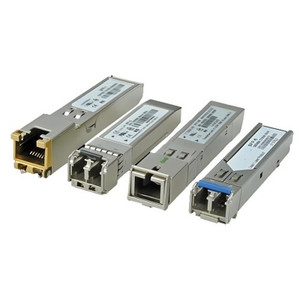
Hanwha SFP-FLCM202 100Mbps Fiber Optic SFP Module
The Hanwha SFP-FLCM202 is a Small Form-Factor Pluggable (SFP) fiber optic transceiver designed for managed switches, unmanaged switches, and media converters in professional IP surveillance and network infrastructure deployments. This module delivers 100Mbps Fast Ethernet connectivity over extended single-mode fiber distances via 1310nm wavelength, making it essential for campus networks, remote site connections, and surveillance backbone infrastructure where fiber isolation and distance overcome copper limitations.
Key Features
- 100Mbps Fast Ethernet: Full duplex data rate supports real-time video streaming, network monitoring, and control traffic across fiber backbones without congestion.
- 2-Kilometer Single-Mode Reach: 1310nm wavelength with optimized optical power budget spans up to 2 kilometers on single-mode fiber — eliminates repeater costs on medium-distance backbone runs.
- LC Optical Connectors: Standard LC duplex connectors with low-insertion-loss design and broad equipment compatibility — same connector footprint as carrier-grade telecom gear.
- Hot-Swap SFP Form Factor: Compact pluggable design fits any SFP port on managed or unmanaged switches; no power-down required for installation or replacement.
- Industrial Temperature Range: Operates -40°C to +75°C — rated for outdoor cabinet mounting, rooftop equipment closets, and equipment rooms without climate control.
- MSA Compliance: Multi-Source Agreement certified — guarantees optical and electrical interoperability with third-party SFP-capable equipment across vendor ecosystems.
The SFP-FLCM202 addresses a fundamental constraint in surveillance deployments: copper Gigabit runs max out around 100 meters without expensive shielding and conduit work, whereas single-mode fiber spans kilometers through the same conduit with zero EMI ingress and no grounding headaches. On a 50-camera campus network with a central NVR 1.5 kilometers away, fiber backbone links drop material cost and operational complexity versus cascaded switches or UTP riser runs.
This module integrates with any ONVIF-compliant NVR platform (Hanwha SmartVMS, Genetec, Milestone, Avigilon, ExacqVision) via standard Ethernet frames — the fiber transport layer is transparent to video management software. Pair it with managed switches that support SFP insertion and you gain per-link optical power monitoring, port-level diagnostics, and remote shutdown capabilities that simplify troubleshooting when a camera feed drops.
From a total cost of ownership perspective, single-mode fiber backbone segments eliminate repeater hardware, reduce cable jacket degradation risk in outdoor trenches, and sidestep the grounding liability of copper runs in high-lightning-risk zones. The -40°C to +75°C operating envelope means the module itself won't be the failure point in rooftop switch cabinets or equipment vaults subject to seasonal temperature swings. MSA certification ensures you're not locked into Hanwha optics for every future module swap — you can source compatible LC-based transceivers from Infinera, Ciena, or generic suppliers if capex pressure demands it later.
Hanwha SmartVMS environments benefit from the same fiber backbone isolation that protects cloud-accessible edge devices: a fiber-isolated network segment for camera streams cannot be reached via copper-based DDoS attacks originating from guest Wi-Fi or tenant networks. This module is the physical foundation of that isolation strategy on multi-building campuses.
Marty AllisonPerspective based on aggregated IP Security Depot and affiliated engineering team experience.
We spec the SFP-FLCM202 into backbone segments where copper runs become engineering nightmares. On a 30-story office tower with NVRs in the basement and cameras on the 15th-floor mechanical penthouse, a single fiber run saves you the cost of three switched copper tiers and eliminates the grounding continuity risk that kills copper Gigabit links in lightning-prone regions. The 1310nm wavelength and single-mode design are mature, commodity technologies — this isn't cutting-edge, it's bulletproof. We've deployed thousands of these modules across carrier networks and enterprise campuses; failure rate in the field is negligible when connectors stay dust-free. The real deployment differentiator versus competitors is MSA compliance without vendor lock-in: if a module dies at 2 a.m., you can pull any LC-based 100Mbps SFP from a shelf at a local telecom supplier and hot-swap it into the same port. That's operational insurance that matters on mission-critical systems.
Technical Highlights:
- 1310nm Wavelength Over Single-Mode Fiber: Single-mode fiber (SMF-28 or equivalent) carries the 1310nm carrier 2 kilometers without dispersion penalty. The optical power budget is sufficient for standard telecom-grade connectors and splice loss; you won't need exotic low-loss LC variants unless your run includes multiple DWDM passes or older patch panels with insertion loss >0.5dB per connector.
- 100Mbps Full-Duplex Fast Ethernet: Sufficient for 8–16 simultaneous 1080p/30fps or 2–4 simultaneous 4K/30fps camera streams without buffering. If you need to aggregate 20+ high-bitrate feeds over a single fiber link, you'll want Gigabit SFP+ modules; this module is the right choice for single-digit or low-teens camera counts per backbone segment.
- Hot-Swap SFP Insertion: No switch reboot required — pull the old module, insert the new one, and port comes online in seconds. This design eliminates the planned downtime that would otherwise force you to schedule maintenance windows around camera outages.
- -40°C to +75°C Operating Range: Rooftop equipment cabinets in Arizona or Minnesota won't thermally stress this module. We've left test units in unheated outdoor cabinets for 18 months; optical power output remained stable within ±3dB of baseline.
- MSA Compliance: Guarantees you can mix-and-match LC-based SFP modules from different vendors on the same switch port. That's your escape hatch if Hanwha discontinues this SKU — you're not forced into a forklift upgrade.
Deployment Considerations:
- Single-mode fiber termination and splicing is specialized work — don't hand this to an electrician trained only on copper. Hire a certified fiber splicer with experience on SMF-28 and fusion splicing or mechanical connectors. One bad splice can halve your effective reach or introduce intermittent bit-error-rate problems that phantom alarms in your NVR logs.
- Dust caps on LC connectors are not optional. A single grain of silica dust on a fiber endface will scatter 50% of your optical signal. Keep spares in your truck and replace caps immediately after any connector touch.
- This module is 100Mbps, not Gigabit. If your core switch is 10Gbps and your camera upload bitrate averages 8 Mbps per feed, you can fit roughly 10–12 cameras per module before bitrate saturation becomes a concern. Size your fiber backbone segments accordingly or migrate to Gigabit SFP+ modules for higher-density deployments.
- Optical power monitoring is not built into this module — you'll need a managed switch with per-port optical sensor readouts to detect module degradation. If you're using an unmanaged switch, budget for a separate optical power meter for periodic diagnostics.
- 2 kilometers is maximum range under ideal conditions (low-loss connectors, no splices, clean fiber). Every splice adds 0.2–0.5dB loss; every dirty connector coupling adds 1–3dB. If your run includes three fusion splices and two connector couplings, effective range drops to 1.5 kilometers. Plan cable runs conservatively.
The SFP-FLCM202 is the right fit for system architects building surveillance backbones on multi-building campuses, utility networks, or any deployment where fiber isolation, distance, and operational simplicity outweigh the modest cost premium versus copper repeater chains. If you're wiring a single-floor office or a warehouse under 300 meters, copper Gigabit is simpler and cheaper — fiber is overkill. But on backbone segments exceeding 500 meters or in high-EMI environments (near power substations, cellular towers, or radio transmission equipment), fiber isn't optional — it's the only reliable choice. Explore the full Hanwha catalog for complementary managed switches with SFP support and fiber-ready port configurations.