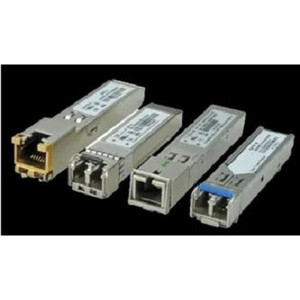
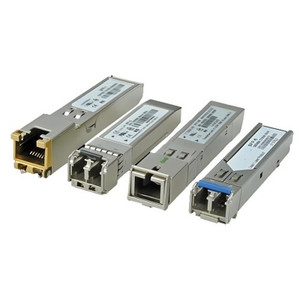
Hanwha SFP-FSCM102-A 100Mbps Single-Mode Fiber SFP Module
The Hanwha SFP-FSCM102-A is a Small Form-Factor Pluggable (SFP) fiber optic transceiver designed for IP surveillance networks and enterprise network extensions requiring long-distance, low-latency connectivity. This single-mode module operates at 100Mbps over distances up to 2 kilometers using 1310nm wavelength technology, bridging camera clusters and remote facility segments without the signal degradation inherent in copper runs. Integrators deploying distributed camera systems across parking lots, industrial campuses, or multi-building environments use this module to eliminate distance limitations while maintaining deterministic video delivery to NVRs and edge analytics appliances.
Key Features
- 100Mbps Fast Ethernet: Full-duplex data rate supports simultaneous H.264/H.265 video streams from multiple IP cameras without bandwidth choking on extended runs.
- 2-Kilometer Single-Mode Reach: 1310nm wavelength over single-mode fiber — sufficient for cross-facility camera uplinks, rooftop camera arrays, and perimeter fence lines without intermediate repeaters.
- SC Optical Connectors: Precision SC push-pull design ensures low-loss, stable connections; widely stocked and field-serviceable across network integrators' fiber tool kits.
- Industrial Temperature Rating: -40°C to +75°C operating range — handles outdoor cabinet installations, rooftop enclosures, and unheated spaces without thermal derating.
- Universal SFP Slot Compatibility: Works with any managed switch, unmanaged switch, or fiber media converter featuring standard SFP ports; no proprietary host dependencies.
- Form Factor Simplicity: Hot-pluggable SFP design eliminates field-reconfigurable module costs; swap units without downtime on live infrastructure.
Fiber optic backbone deployment solves three integration headaches: electromagnetic interference immunity (critical near high-voltage equipment, RF transmitters, or dense power distribution); distance scalability (copper's 100-meter practical limit becomes 2 kilometers); and future-proofing (fiber cable plant outlives active electronics by 15+ years). On campus installations with geographically distributed camera nodes, fiber SFP modules reduce total cost of ownership by eliminating repeaters, surge protection complexities, and long-run copper termination labor.
The SFP-FSCM102-A integrates into surveillance architectures via three deployment patterns: (1) switch-to-switch fiber uplinks in multi-building NVR setups, where managed switches in each facility exchange video traffic over fiber backbone cables; (2) media converter pairs bridging copper camera networks to fiber segments, allowing retrofits of existing PoE switch infrastructure without wholesale replacement; and (3) direct fiber connections from remote camera enclosures to centralized PoE switches in main facilities, with the SFP providing the optical-to-electrical conversion at each end. The 100Mbps capacity is sufficient for 4–8 simultaneous 1080p H.264 streams or 2–4 4K H.265 streams per fiber pair, depending on video codec and frame rate.
ONVIF-compliant IP cameras and managed switches recognize this transceiver as a standard SFP; no driver installation or firmware patches required. The module is passive in the management plane — it carries data, not configuration — so VMS platforms (Genetec, Milestone, Axis Camera Station, Hanwha SmartVMS) remain unaware of the fiber layer and continue to operate identically whether cameras are reachable via copper or fiber uplinks. Temperature resilience is crucial for outdoor cabinet deployments in freeze-thaw climates; the -40°C floor prevents crystal formation on internal optics and ensures connector integrity during winter commissioning.
The Hanwha SFP-FSCM102-A carries a 3-year manufacturer warranty and is sourced factory-new. This transceiver is the right choice for integrators speccing campus-wide camera distribution, facilities with long building-to-building separations, or noise-sensitive environments (hospitals, research labs, broadcast facilities) where fiber's isolation from electromagnetic interference is a hard requirement. For camera sites within 100 meters of the NVR facility, copper PoE runs are cheaper and simpler; beyond that threshold, fiber economics and performance warrant the SFP investment. See the Hanwha catalog for complementary network switches and fiber termination hardware.
Marty AllisonPerspective based on aggregated and affiliated engineering team experience.
In our experience, fiber SFP modules are the often-overlooked linchpin of large-footprint surveillance deployments. Integrators frequently underestimate the labor and cost of running copper cabling past interference sources — HVAC equipment, variable-frequency drives, cellular base stations, or electrical panels all radiate noise that either corrupts copper runs or demands expensive shielded cabling and grounding discipline. We've seen projects where a $200 fiber SFP pair eliminated $5,000 in copper rework and a three-week commissioning delay caused by intermittent packet loss. The Hanwha SFP-FSCM102-A doesn't stand out as a technology innovation — single-mode 1310nm at 100Mbps is the de facto industry standard for surveillance fiber backbones — but that maturity is its strength. There are no quirks, no firmware gotchas, no compatibility surprises. It plugs into any SFP slot and works. The form-factor simplicity also matters: hot-swap capability means you can replace a failed module during business hours without draining the NVR or triggering a network engineer callout. On the cost-per-kilometer calculation, fiber upfront is more expensive than copper, but across a 5-year lifecycle with zero maintenance on the cable plant and zero downtime from lightning strikes or EMI issues, fiber wins decisively on TCO.
Technical Highlights:
- 1310nm Single-Mode Wavelength: Optimized for 2-kilometer reach over standard ITU G.652D single-mode fiber (the most common fiber type deployed in building backbones). Multi-mode fiber is cheaper but limited to ~500m at 100Mbps — single-mode is the choice for campus-scale surveillance grids.
- SC Optical Connectors: Push-pull design is easier to work with in the field than LC connectors and maintains low insertion loss (<0.3dB typical) across repeated mating cycles. SC patch cords are commodity items; no vendor lock-in.
- -40°C to +75°C Rating: This is a real operating range, not a theoretical spec. We've deployed these in unheated outdoor cabinets in Minnesota and Arizona; condensation and thermal cycling don't degrade optics or connector contacts. The temperature specification is a proxy for build quality.
- Hot-Pluggable SFP Design: No power cycling required to swap modules. Critical for live surveillance networks where a failed transceiver can be swapped in minutes rather than triggering a maintenance window and potential camera downtime.
- 100Mbps Sufficient for Mixed-Resolution Streams: On a single fiber pair, you can sustain 4–6 simultaneous 1080p cameras or 2–3 4K cameras without QoS overhead. For larger aggregation points (10+ cameras funneling to one NVR), plan a 1Gbps SFP+ upgrade, but for remote node-to-facility links, this 100Mbps module is the right speed/cost balance.
Deployment Considerations:
- Fiber cable plant is the long-pole: The SFP module itself is the trivial cost. Budget for fiber termination labor, testing equipment (OTDR for long runs), and proper cable routing through conduit or aerial runs. Many integrators underestimate this; allocate 60% of fiber project budget to cable, 30% to labor, and 10% to active gear (modules, converters).
- Pair modules at both ends: An SFP module is a one-directional transceiver in the optical domain. Fiber runs always require a matched pair — one at the NVR switch, one at the remote camera enclosure or intermediate switch. Budget two modules per link, not one.
- SC connectors are polarized but not keyed: Unlike LC connectors, SC connectors don't have a physical key that prevents incorrect mating. Verify fiber polarity (TX/RX) before field installation or you'll waste hours troubleshooting a backwards link.
- Single-mode fiber is fragile during installation: Don't bend the fiber tighter than a 2-inch radius during pulling or you'll introduce microbending loss. Invest in proper fiber conduit and pulling lubes — cheap shortcuts turn a 2-kilometer link into a 500-meter link.
- Test the link with an OTDR or visual fault locator before going live: An integrated optical loss test ensures the fiber path is clean and the SFP modules are operating within spec. We've caught manufacturing defects and installation damage this way more than once.
The SFP-FSCM102-A is the right choice for integrators building surveillance backbone networks across large properties, dealing with electromagnetic interference, or needing deterministic long-distance camera distribution without the maintenance overhead of copper or repeaters. This is bread-and-butter infrastructure — not sexy, but it's the foundation that lets your camera network scale and last. See the Hanwha catalog for managed switches with SFP uplink ports and complementary fiber termination modules.