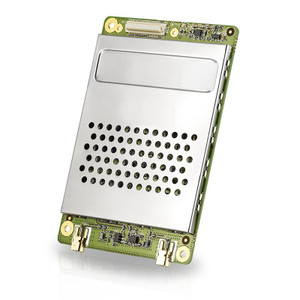
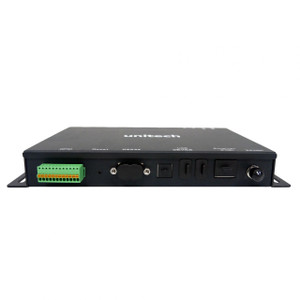
Unitech RM300-47A5M4G UHF RFID Reader Module
Overview
The Unitech RM300-47A5M4G is a compact UHF RFID reader module designed for embedded integration into mobile computers and warehouse automation systems. This module delivers 27-foot read range with a standard 6 dBi antenna (36 dBm EIRP), enabling real-time asset tracking, inventory management, and supply-chain workflows where barcode scanning alone falls short. The RM300-47A5M4G (often searched as RM300 47A5M4G) targets logistics operators, distribution centers, and field-service integrators who need RFID capture capability built directly into their handheld or mobile platform without adding bulk or power overhead.
Key Features
- 27-foot read range: A 6 dBi antenna with 36 dBm EIRP reaches tags across warehouse aisles and loading-dock zones without repositioning the unit. Real-world distance depends on tag orientation and material obstruction, but this range eliminates the need for multiple fixed readers in small-to-medium inventory spaces.
- Dual-interface connectivity: USB and RS-232 support allow you to wire the RM300-47A5M4G to existing Unitech mobile computers or integrate it into custom platforms that rely on serial protocols. No proprietary connectors — industry-standard interfaces simplify integration and reduce vendor lock-in risk.
- ATMEL AT91SAM7S-256 processor: A dedicated embedded processor handles RFID scanning logic, reducing the CPU load on your host device. This is meaningful when your mobile computer is also running WMS software, barcode scanning, and data synchronization — the module processes tags independently and buffers results.
- 50-pin HRS-DF12 SMT connector (2-port): The RM300-2port connector is a surface-mount design, enabling OEMs to integrate the module directly onto a motherboard without adding external docking or external modules. Integrators building custom field devices will appreciate this form factor.
- Wide operating storage range: Rated for storage from −30 to +85 °C, the module tolerates freezer environments (cold-storage logistics) and outdoor equipment sheltering (shipping containers, yard scanners) without performance degradation or component failure risk.
- Compact dimensions: At 76.5 mm long, 50 mm wide, and 4.2 mm thick, the RM300-47A5M4G fits into space-constrained mobile devices and modular platforms without reshaping the overall industrial design. This footprint is critical for handheld form factors where every millimeter matters.
- IndyTool configuration utility: The provided IndyTool software enables register access, tag inventory, TX power control, GPIO configuration, and script-based automation. You can adjust read parameters, build multi-stage scanning workflows, and validate performance without writing firmware — essential for field technicians and integrators validating deployment scenarios.
Integration & Compatibility
The RM300-47A5M4G is purpose-built for Unitech mobile computers and enterprise systems requiring embedded RFID capability. The dual USB and RS-232 interfaces allow integration into third-party warehouse management systems (WMS), enterprise resource planning (ERP) platforms, and custom logistics software that accept serial or USB data feeds. The 50-pin HRS-DF12 connector is a surface-mount standard, so systems integrators can embed the module directly into a custom motherboard design — no external modules, no power-hungry bus adapters. IndyTool provides register-level access for advanced configuration: TX power adjustment, antenna tuning, profile switching, and non-volatile memory management. Integrators should confirm host-device power delivery capacity — the module's power consumption is not detailed in the available evidence, but RFID scanning is typically low-power for brief duty cycles.
What's in the Box
The RM300-47A5M4G package includes the reader module itself, IndyTool software (for Windows), and documentation. Antenna and mounting hardware are typically ordered as separate accessories based on your form factor and installation method.
Frequently Asked Questions
Q: What RFID frequency and protocol does the RM300-47A5M4G support?
A: The RM300-47A5M4G is a UHF RFID reader module. Specific frequency bands (e.g., 860–960 MHz) and protocol versions (e.g., Gen2) are not detailed in the available technical evidence. Contact a systems integrator or Unitech pre-sales engineering for region-specific certification and protocol compatibility.
Q: Can I use the RM300-47A5M4G with non-Unitech mobile computers?
A: The module supports standard USB and RS-232 interfaces, so integration with third-party platforms is possible. However, you will need to develop or adapt host-side drivers and middleware to communicate with the module and parse RFID tag data. Unitech provides IndyTool for configuration, but integration complexity depends on your host device and operating system.
Q: What is the read range in feet, and does antenna choice affect it?
A: The RM300-47A5M4G delivers 27 feet (9 meters) read range with a standard 6 dBi antenna at 36 dBm EIRP. Higher-gain antennas can extend range, but antenna selection depends on your form factor, mounting location, and regulatory region. A pre-sales engineer can recommend antenna options for your specific deployment.
Q: Is the RM300-47A5M4G suitable for cold-storage or outdoor environments?
A: The module is rated for storage temperatures from −30 to +85 °C, making it suitable for freezer and hot-storage logistics. For outdoor mounting or wet environments, you will need to consider the enclosure design separately — the module itself does not have an IP rating specified in available documentation.
Q: What development tools are provided for integrating the RM300-47A5M4G?
A: Unitech provides IndyTool, a Windows-based utility for configuration, testing, and scripting. You can enumerate devices, access registers, perform tag inventory, control TX power, configure GPIO, and manage non-volatile memory. For custom firmware or deep integration, contact Unitech for SDK availability and licensing terms.
Q: Does the RM300-47A5M4G require a separate power supply?
A: Power consumption specifications are not provided in the available documentation. The module is designed for integration into mobile and embedded platforms, suggesting low to moderate power draw. Verify host-device power capacity and contact Unitech pre-sales for exact power-draw specifications before finalizing your design.
I've evaluated the RM300-47A5M4G for embedded logistics platforms, and the key value lies in its 27-foot read range paired with direct interface support (USB and RS-232). If you're building a custom mobile device or retrofitting an existing platform with RFID, the 50-pin HRS-DF12 SMT connector means you can solder it directly onto your main PCB instead of bolting on external modules. That's a real design win for OEMs in warehouse automation.
Technical Highlights:
- 27-foot read range at 36 dBm EIRP: Reaches pallets and cartons across a loading dock without line-of-sight repositioning — meaningful in high-velocity receiving where you're scanning dozens of units in sequence. Real-world range depends on tag placement and material, but this specification is solid for indoor logistics.
- ATMEL AT91SAM7S-256 embedded processor: The module handles RFID scanning independently, so your host WMS or barcode app isn't blocked waiting for tag reads. In environments where you're running dual-scan workflows (barcode + RFID), processor offloading reduces latency and UI responsiveness issues.
- −30 to +85 °C storage rating: Covers freezer logistics and sun-exposed outdoor shelving. Your module won't degrade in those extreme zones, but this is a storage spec — verify operating temperature separately if you're deploying in sustained heat or cold.
- IndyTool software for register-level tuning: TX power, antenna profile, GPIO configuration, and non-volatile memory management are all accessible without firmware rewrites. For field validation and parameter tweaking, this toolset is essential.
Deployment Considerations:
- Power consumption is not specified in available documentation — confirm with Unitech before assuming the module fits your host device's power budget. RFID scanning is typically low-power, but burst duty cycles can spike current draw.
- The module itself has no IP rating. If you're deploying in wet or dusty loading areas, the host enclosure design must protect the connector and antenna feed. Plan for weatherproof routing and sealed antenna ports if outdoor mounting is required.
- Third-party host integration requires serial drivers and middleware development. Unitech's ecosystem is tightest with their own mobile computers — confirm driver and SDK availability for your chosen platform before committing to integration.
For mid-sized distribution centers modernizing with RFID-capable handheld devices or custom receiving terminals, the RM300-47A5M4G hits a real sweet spot: embedded form factor, no external bulk, standard interfaces, and proven IndyTool configuration framework. It's the right module if you control the host platform or have strong integration support. For drop-in RFID upgrades to existing mobile computers, verify connector compatibility first.