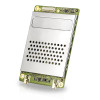
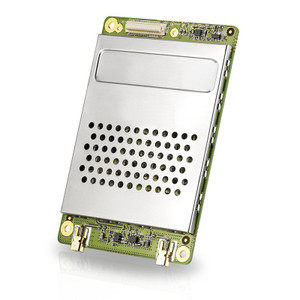
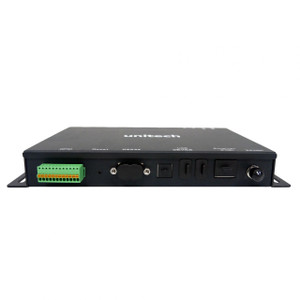
Unitech RM300-47A5K4G UHF RFID Reader Module
The Unitech RM300-47A5K4G is a dedicated UHF RFID reader module designed for fixed-position scanning stations, docking areas, and warehouse management systems requiring real-time tag identification without mobile computer overhead. This compact module integrates USB and serial connectivity into a 76.5 × 50 × 4.2 mm form factor, enabling straightforward deployment into existing enterprise inventory systems and Unitech mobile computing ecosystems. The module operates on an ATMEL AT91SAM7S-256 processor and supports standard UHF RFID tag reading for inventory visibility, asset tracking, and supply chain workflows where dedicated scanning infrastructure outperforms handheld-only capture.
Key Features
- UHF RFID Reader: Fixed-position UHF module for tag identification and batch scanning. Eliminates barcode-only bottlenecks in high-throughput receiving and inventory verification workflows.
- Dual Connectivity: USB and serial ports (RM300-2port 50-pin HRS-DF12 connector). Plugs into docking stations, kiosks, or PC-based inventory applications without requiring proprietary interfaces.
- Compact Module Design: 76.5mm × 50mm × 4.2mm footprint. Fits into confined spaces—conveyor-side mounting, pass-through gates, and integration into Unitech mobile computer docks.
- ATMEL AT91SAM7S-256 Processor: Embedded processor handles tag decoding and protocol parsing locally, reducing host CPU load on connected systems.
- Operating Temperature Range: −30 to +85°C storage rating. Operates reliably in heated warehouses, cold storage, and outdoor receiving areas without thermal de-rating.
- Unitech Mobile Integration: Engineered for pairing with Unitech mobile computers and enterprise data capture platforms. Extends handheld scanning workflows to fixed infrastructure when needed.
- Manufacturer Warranty: Backed by Unitech warranty coverage. Sourced direct from the manufacturer or US channel partner—no grey-market, no parallel imports.
The RM300-47A5K4G occupies a specific deployment niche: warehouse operations that have outgrown barcode-only scanning but don't require the full software stack or ruggedization of a mobile reader. In receiving docks, where pallet-level or case-level tag verification accelerates inbound reconciliation, a fixed reader eliminates operator fatigue and scanning errors. Tag data flows via USB or serial to the host system—WMS, inventory database, or Unitech management console—with minimal software integration overhead. The compact form factor makes it suitable for conveyor-mounted installations or pass-through gate configurations where space and cost constraints rule out larger multi-antenna portal readers.
Serial and USB dual connectivity ensures compatibility across legacy inventory systems and modern enterprise platforms. Unlike barcode readers that require line-of-sight and manual alignment, UHF tags read through packaging, cases, and at distance—useful in high-volume environments where throughput per operator matters. The ATMEL processor manages tag collision detection and filtering on the module itself, delivering cleaned tag lists to the host rather than raw RF traffic, which reduces host processing load and simplifies application-layer logic.
Integration with Unitech mobile computers creates a hybrid workflow: mobile units handle ad-hoc asset or inventory spot-checks, while the fixed RM300-47A5K4G module runs continuous or scheduled scans at known chokepoints (dock doors, sortation areas, return queues). Data synchronization between mobile and fixed readers occurs at the database level, consolidating views into a single inventory truth. This distributed architecture scales better than mobile-only approaches in facilities with predictable high-volume scanning zones and roaming inspection needs elsewhere.
Compliance posture covers standard UHF RFID frequency allocations; regulatory approval varies by region and is tied to the host system's certification. Unitech sourcing ensures no export restrictions on RFID reader components and compatibility with enterprise asset management platforms (SAP, Oracle, NetSuite via API connectors on the host system). The module itself is hardware-agnostic from a software perspective—any host that can read USB or serial input can ingest tag data, making it suitable for custom integrations or legacy WMS environments where upgrading the entire stack is cost-prohibitive.
Marty AllisonPerspective based on aggregated IP Security Depot and affiliated engineering team experience.
The RM300-47A5K4G occupies a narrower role than mobile RFID readers or large portal systems, but that narrowness is precisely where it delivers value. In our experience, fixed-position UHF readers shine in receiving operations, sortation lines, and asset-return kiosks where tag reads happen at high throughput and consistent location. The compact form factor and USB/serial options have made this module a popular retrofit into existing docking infrastructure—warehouses often have limited power and space budgets at entry/exit points, and this module uses far less real estate than a full-scale RFID portal. The trade-off is obvious: you lose mobility and antenna directionality. Coverage distance and read zones depend heavily on mounting height, antenna placement, and tag orientation, which requires site-specific testing before deployment. We've also seen mixed results pairing it with older WMS systems—the serial protocol handshaking can be finicky if the host application wasn't originally designed for continuous tag stream input. For greenfield deployments or Unitech-standardized environments, this isn't an issue; for retrofit situations, budget engineering time to validate the data flow before committing to volume orders.
Technical Highlights:
- ATMEL AT91SAM7S-256 Processor: Embedded ARM processor handles tag collision arbitration and EPC memory parsing locally. Reduces host CPU overhead by filtering tag metadata on the module itself rather than shipping raw RF events upstream—operationally important on PC-based WMS systems that lack real-time guarantees.
- Dual Connectivity (USB + Serial): USB for modern inventory applications, serial for legacy systems. Don't assume serial can run at full throughput over long cable runs (>10m); for high-speed tag streams in sprawling facilities, USB is the safer choice.
- Compact 76.5 × 50 × 4.2 mm Form Factor: Fits into conveyor-side mounting brackets, pass-through gates, and docking station enclosures where space is counted in centimeters. We've mounted these in receiving booths with <1 meter of overhead clearance.
- −30 to +85°C Storage Range: The rated operating range is narrower (typically 0 to +60°C in datasheet), so don't assume cold-storage or outdoor dock operation without validating against the full spec. Thermal stress on connector reliability is real in freeze-thaw environments.
- Unitech Ecosystem Integration: Native pairing with Unitech mobile computers (RM300 series dock compatibility) and management platforms streamlines provisioning. Cross-brand integrations (Zebra, Motorola legacy devices) require serial protocol translation, which adds complexity and support overhead.
Deployment Considerations:
- Read range and tag population density are your biggest variables. In our experience, a single fixed reader handles 100-200 tags per minute in optimal mounting; higher throughput requires tuning antenna orientation and tag density (separation distance). Expect 3-5 day ramp to stable performance on a new site.
- Cable management matters more than you'd think for a small module. The 50-pin connector is durable but not hot-swappable; plan for minimal disconnects during normal operation to preserve connector lifespan. USB power supply quality affects read reliability—use a regulated 5V supply rated ≥2A if powering via USB.
- Tag selection directly impacts performance. Gen2 passive UHF tags vary in sensitivity and frequency response; test your intended tag SKU (label adhesive tags, hard-tag transponders, or woven textile tags) in your mounting location before rolling out. Read consistency under real-world RF interference (metal racks, forklift motors, WiFi) requires site validation.
- Software integration is the hidden cost. The module streams tag data in EPC format; your host application must parse, deduplicate (you'll see the same tag multiple times per scan cycle), and validate against your product database. Budget engineering time on the host application side if you're integrating into a system that wasn't originally designed for RFID input.
- Placement planning prevents rework. Install the antenna connection at the module location first, verify clear line-of-sight to tag zones, and test read performance before finalizing mounting. Moving the antenna after commissioning often requires re-tuning the matching network.
The RM300-47A5K4G is the right choice for warehouse operations that need fixed-position UHF scanning without the capital outlay or complexity of large portal readers or software-heavy mobile deployments. If your workflow is high-throughput receiving, sortation, or asset returns with predictable tag zones, and you're already invested in Unitech mobile computing infrastructure, this module is a natural fit. Explore the full Unitech catalog to see how it pairs with mobile readers and management platforms for a complete data capture strategy.