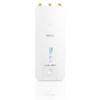
Ubiquiti RP-5AC-GEN2 5 GHz Wireless Basestation Radio
Overview
The Ubiquiti RP-5AC-GEN2 is a 5 GHz basestation radio engineered for outdoor point-to-point and point-to-multipoint wireless links in infrastructure deployments where fiber backhaul is unavailable or uneconomical. This model (RP-5AC-GEN2, often searched as RP 5AC GEN2) operates on the airMAX AC protocol and delivers 500+ Mbps throughput, making it a practical choice for campus interconnect, remote site connectivity, and wireless backhaul between network hubs. The lightweight design—2.25 lb—minimizes structural loading on poles and masts, reducing installation complexity and cost compared to heavier basestation alternatives.
Key Features
- 500+ Mbps airMAX AC Throughput: The RP-5AC-GEN2 achieves reliable mid-range backhaul speeds using 802.11ac technology. This throughput level supports dual or triple concurrent wireless links on the same basestation without saturating a single Gigabit Ethernet uplink—useful in hub-and-spoke topologies where multiple remote sites feed back to a central location.
- 5 GHz Band Operation: 5 GHz spectrum reduces interference from congested 2.4 GHz Wi-Fi environments and industrial equipment. Longer-range propagation than 2.4 GHz at equivalent antenna gain, so you can cover campus or rural deployments with fewer towers.
- Gigabit Ethernet Port (10/100/1000): A single RJ-45 connection handles both data and PoE power injection. Full Gigabit speed means no bottleneck at the wired layer—useful when upgrading existing 100 Mbps infrastructure or planning future throughput growth.
- GPS Synchronization: Built-in GPS receiver allows frequency and time coordination across multiple basestations. In multi-sector or mesh installations, GPS sync mitigates interference by ensuring coordinated channel access. If you're deploying three or more radio sectors, GPS alignment is essential to avoid collisions.
- CLI and Management Radio Capability: Dual management paths—command-line interface for hands-on provisioning and a dedicated management radio channel for centralized monitoring. This redundancy is critical for remote sites where you can't physically visit every location to troubleshoot.
- Basestation Form Factor: Designed for hub installations in hierarchical or mesh topologies. The RP-5AC-GEN2 concentrates traffic from multiple access points or remote radios, simplifying network topology planning and reducing the number of radios needed at each location.
Integration & Compatibility
The RP-5AC-GEN2 integrates into Ubiquiti wireless ecosystems via airMAX protocol support, allowing seamless operation alongside other Ubiquiti airMAX devices in hybrid wired-wireless architectures. Standard PoE injectors power the radio—no separate supply required. The single Gigabit Ethernet port accepts standard network cables, simplifying field deployment and reducing the footprint of a hub site installation. Centralized management through Ubiquiti's CLI tools or management platforms (when available in your environment) enables consistent configuration across distributed sites.
Deployment Scenarios
The RP-5AC-GEN2 is suited for wireless backhaul between network hubs, interconnection of remote wireless access points, and point-to-multipoint distribution in areas where fiber is uneconomical. Integrators commonly deploy this model in campus networks spanning multiple buildings, rural broadband expansion projects, and temporary event connectivity. The lightweight profile and compact basestation form factor reduce installation labor compared to larger radios—a meaningful factor when you're deploying dozens of hub sites across a region.
Installation & Environmental Considerations
The RP-5AC-GEN2 is designed for outdoor mounting on poles or masts using standard U-bolt or pole-mount hardware. Ensure clear line-of-sight between endpoints; obstructions (trees, buildings, terrain) will degrade throughput—test with a site survey tool before committing to a link budget. Verify GPS signal availability at hub locations if you plan to use sync functionality; dense urban environments or heavily wooded sites may experience GPS degradation. Refer to network planning guides for wireless backhaul topology design to confirm this model meets your coverage and throughput requirements before procurement.
Frequently Asked Questions
Q: What is the maximum link distance for the RP-5AC-GEN2?
A: Maximum distance depends on antenna gain, transmit power, and environmental path loss. In clear line-of-sight with directional antennas, multi-kilometer links are achievable. Perform a site survey and path-loss calculation for your specific deployment.
Q: Does the RP-5AC-GEN2 support PoE power delivery?
A: Yes. The radio draws power from a standard PoE injector connected to the Gigabit Ethernet port. A typical PoE+ (802.3at) injector will support this unit without additional power supplies.
Q: Can I use the RP-5AC-GEN2 in a mesh topology with other Ubiquiti radios?
A: Yes, as long as all devices support the airMAX protocol. The basestation form factor suits hub installations; pair it with airMAX clients or other airMAX-compatible radios to build your mesh.
Q: Is GPS synchronization mandatory for operation?
A: No. GPS sync is optional and primarily useful in multi-sector or high-density multi-link installations to reduce interference. Single-link or small topologies operate without GPS.
Q: What cables and connectors are needed for installation?
A: Standard Ethernet cable (Cat5e or Cat6), a PoE injector, and antenna connectors (check your antenna type). Pole-mount hardware (U-bolts, brackets) is not typically included and should be sourced separately.
Q: Does the RP-5AC-GEN2 work with non-Ubiquiti wireless devices?
A: The radio uses Ubiquiti's proprietary airMAX AC protocol, so compatibility is best with other Ubiquiti airMAX devices. Cross-vendor 802.11ac may work but is not guaranteed and limits airMAX-specific optimizations.
Ted PerryPerspective based on aggregated IP Security Depot and affiliated engineering team experience.
The Ubiquiti RP-5AC-GEN2 is a proven workhorse for mid-range wireless backhaul in cost-conscious infrastructure expansions. The MPN RP-5AC-GEN2 delivers solid 500+ Mbps throughput in line-of-sight conditions, and the GPS synchronization feature is genuinely essential if you're planning sectored multi-link hubs—it cuts interference management complexity significantly. Not the newest silicon, but that maturity often translates to stable firmware, predictable field behavior, and solid Ubiquiti ecosystem support. Worth the short vendor lead time for brownfield upgrades or regional deployments where you need to deliver network backbone quickly.
Technical Highlights:
- 500+ Mbps airMAX AC Throughput: Sufficient for dual or triple concurrent client links feeding back to a single Gigabit uplink without saturation—a real advantage in hub installations where you're aggregating traffic from multiple remote sites.
- 2.25 lb Weight: Minimizes pole loading and installation labor. Compare this to legacy basestation radios at 4–6 lb; lighter gear reduces structural engineering costs and speeds pole deployment in the field.
- Integrated GPS Receiver: Enables frequency and time sync across multiple radio sectors. In three-sector or denser hub installations, GPS-aligned basestations eliminate many interference gotchas that plague uncoordinated multi-radio sites.
- Single Gigabit Ethernet Port with PoE: No separate power supply needed—standard PoE injector powers the entire radio. Simplifies field logistics and reduces the number of connectors you're managing at a hub.
Deployment Considerations:
- GPS performance degrades in dense urban or heavily forested environments. Pre-survey hub locations to confirm GPS lock before committing to synchronization-dependent topologies.
- Airspace coordination: 5 GHz is less congested than 2.4 GHz, but in metropolitan areas or near wireless ISP operators, interference can still occur. A spectrum analyzer sweep is cheap insurance before deployment.
- Link budgeting is critical: 500+ Mbps assumes clear LoS and appropriate antenna gain. Terrain and foliage loss can erode throughput faster than expected in rural or hilly terrain—field-test a candidate link before deploying the full backbone.
Position the RP-5AC-GEN2 as a hub radio for campus networks, rural broadband expansion, or event connectivity where you need reliable, cost-effective backhaul without enterprise rack infrastructure. It's not suitable for indoor deployments—this is outdoor-only. For single-link point-to-point bridges, it's overkill; for multi-sector hubs feeding a wired core, it's the right tool.