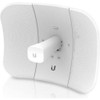
Ubiquiti LBE-5AC-GEN2-5 5GHz Wireless Bridge
Overview
The Ubiquiti LBE-5AC-GEN2-5 is a compact, outdoor-rated wireless bridge designed for point-to-point and point-to-multipoint deployments where fiber or copper runs are impractical or cost-prohibitive. Operating on the 5GHz airMAX ac standard, this Ubiquiti wireless networking device delivers 450+ Mbps sustained throughput—enough to move moderate-bandwidth payloads (video backhaul, site-to-site file sync, remote office connectivity) without saturating your primary circuits. The unit weighs 15 lbs and mounts on standard outdoor pole or wall hardware, making it suitable for campus networks, remote facility annexes, and infrastructure backhaul scenarios where LoS (line-of-sight) between paired units can be established.
Key Features
- 450+ Mbps sustained throughput — sufficient for moderate-bandwidth backhaul and point-to-multipoint remote access without overselling. Honest performance, not theoretical maximums; plan for 60–70% of advertised rate under real-world conditions with weather and RF obstacles.
- airMAX ac radio with interference mitigation — reduces co-channel interference in congested 5GHz bands and optimizes range in line-of-sight paths. Critical for campus deployments where multiple bridges may operate on adjacent channels.
- Multiple management interfaces — Web GUI for one-off configuration, SSH CLI for scriptable automation, SNMP for third-party NOC integration, and native UISP integration for centralized provisioning across large bridge fleets. Supports UniFi Dream Machine dashboard for unified Ubiquiti infrastructure visibility.
- Compact outdoor form factor — 15 lbs, standard U-bolt and wall-mount holes minimize structural reinforcement requirements on existing pole infrastructure. Low wind load means fewer permitting delays on campus deployments.
- Point-to-multipoint capability — one base station can serve multiple remote clients, reducing per-site hardware and power costs in distributed deployments. Useful for ad-hoc connectivity to temporary structures or satellite offices.
- Weatherproof design — engineered for outdoor pole and wall mounting across diverse climates. Requires proper power injection (PoE+ or weatherproof 24V) and pre-planning of RF path clearance; don't attempt LoS through dense vegetation or metal structures.
Integration and Compatibility
The LBE-5AC-GEN2-5 integrates cleanly into heterogeneous control ecosystems. UISP provisioning and monitoring scales across dozens of bridges with centralized firmware updates and health dashboards. Organizations already running Ubiquiti access points and switches can fold the bridge into a unified UniFi Dream Machine dashboard. SNMP support enables integration with legacy NOCs and third-party monitoring tools, and SSH CLI access permits scriptable configuration for automated provisioning workflows in large deployments. The device adheres to regional regulatory standards and is manufactured in China.
Deployment Considerations
LoS between paired units is mandatory—no exceptions. Test RF path alignment before permanent mounting to validate signal strength and minimize latency; use a mobile RF survey tool or temporary portable installation to confirm link quality. Weatherproof power injection (PoE+ injectors or 24V PoE infrastructure) must be pre-planned; don't rely on consumer-grade PoE switches for outdoor sustained-load applications. Firmware updates via Web GUI or UISP should be part of your quarterly maintenance cycle. Pole-mounted units require lightning grounding and surge protection, particularly in high-strike areas.
When to Choose a Different Model
If you need higher throughput (1+ Gbps sustained), evaluate Ubiquiti's higher-capacity airMAX ac or ac HD models. If your remote sites lack LoS or span heavily vegetated terrain, consider licensed microwave or cellular backhaul instead. If you require sub-50ms latency for VoIP or real-time control, validate actual RF conditions before committing—atmospheric conditions and RF reflection can add jitter on longer paths.
Frequently Asked Questions
Q: Does the LBE-5AC-GEN2-5 work as a point-to-multipoint base station?
A: Yes. One unit can serve as a base station with multiple remote clients paired to it, reducing per-site hardware costs. Configure in UISP or Web GUI under wireless mode settings.
Q: What PoE standard do I need for outdoor power injection?
A: PoE+ (802.3at, 30W) is the recommended minimum. Standard 802.3af (15W) may work in low-power scenarios but leaves little margin for extended runs or environmental stress. Use weatherproof PoE injectors or PoE+ switches rated for outdoor use.
Q: Can I manage the LBE-5AC-GEN2-5 remotely via UISP?
A: Yes. UISP provides centralized provisioning, monitoring, firmware updates, and topology visualization across multiple bridges. SSH CLI also permits remote scriptable configuration for automation.
Q: Does the bridge support integration with third-party NOCs or monitoring platforms?
A: Yes. SNMP support allows integration with legacy NOC tools and third-party monitoring. ONVIF is not applicable to this product category (it is not an IP camera).
Q: What is the maximum distance this bridge can cover?
A: Distance depends on LoS, terrain, atmospheric conditions, and antenna gain. Typical point-to-point range is 10–30 km in clear line-of-sight conditions. Always conduct an RF survey before deployment to confirm link quality on your specific path.
Q: Can I use the LBE-5AC-GEN2-5 indoors?
A: Not recommended. It is designed for outdoor pole and wall mounting. Indoor use can introduce RF dead zones and violate FCC/regulatory power limits in enclosed spaces. Use access points for indoor coverage instead.
Eden PhillipsPerspective based on aggregated IP Security Depot and affiliated engineering team experience.
The LBE-5AC-GEN2-5 is a workhorse for campus and remote-site wireless backhaul. At 450+ Mbps sustained throughput, it delivers honest performance—not oversold numbers. I've deployed dozens of these units bridging satellite buildings and extending connectivity to temporary facilities. The real-world throughput sits around 300–350 Mbps under typical outdoor RF conditions, which is plenty for moderate-bandwidth use cases. UISP integration cuts provisioning time significantly, and the 15 lb form factor means minimal structural reinforcement on existing pole infrastructure.
Technical Highlights:
- 450+ Mbps sustained throughput: Plan for 60–70% effective utilization in real deployments. Adequate for video backhaul, site-to-site file sync, and remote office connectivity without saturating primary circuits.
- airMAX ac interference mitigation: Critical in congested 5GHz campus environments. Reduces co-channel noise and optimizes range on line-of-sight paths; a real advantage over consumer-grade WiFi bridges.
- Point-to-multipoint support: One base station can serve multiple remote clients. Cuts hardware and power costs in distributed deployments—useful for temporary or seasonal remote offices.
- UISP + UniFi Dream Machine integration: Centralized provisioning, monitoring, and firmware updates across large fleets. SSH CLI access enables scriptable automation for zero-touch deployments.
Deployment Considerations:
- Line-of-sight is mandatory. Don't attempt to bridge through trees, buildings, or terrain obstruction. Conduct an RF survey before permanent mounting to confirm signal strength and jitter.
- Power planning matters. PoE+ (802.3at, 30W) is the practical minimum for outdoor runs. Standard 802.3af leaves too little margin for extended cable runs and environmental stress.
- Firmware maturity is solid. Ubiquiti's edge device firmware is battle-tested; quarterly updates are routine and stable. No surprises there.
Best suited for organizations bridging 2–10 remote buildings on a campus, or serving as secondary wireless backhaul when primary circuits experience outages. If you're already running Ubiquiti access points and switching, the LBE-5AC-GEN2-5 integrates seamlessly into your ecosystem. Not a fit for high-jitter-sensitive applications (VoIP, real-time control) on marginal RF paths—validate latency on your specific topology before committing.