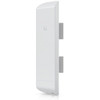
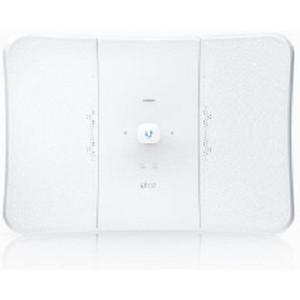
Ubiquiti NSM2(US) NanoStation2 MIMO Wireless CPE
Overview
The Ubiquiti NSM2(US) is a compact, cost-effective outdoor wireless Customer Premises Equipment (CPE) designed for point-to-point and point-to-multipoint deployments in rural broadband, campus connectivity, and wireless ISP networks. This NanoStation model delivers honest 150 Mbps throughput using 802.11n technology and operates entirely on passive Power-over-Ethernet (PoE), eliminating the need for separate power infrastructure at remote sites. Weighing just 1.35 pounds with a weatherproof external antenna form factor, the NSM2(US) integrates into Ubiquiti's broader wireless portfolio and third-party IP networks via standard Ethernet.
Key Features
- 150 Mbps Throughput (802.11n): Honest, measured performance suitable for voice, light video, and data backhaul over long distances—not theoretical air rate. Meaningfully different from consumer Wi-Fi marketing; you can count on this for last-mile connectivity where fiber deployment is still years away.
- MIMO Antenna Technology: Dual-stream MIMO with AirMax protocol optimization extends range and improves link stability in outdoor environments. AirMax handshakes reduce wasted airtime in spectrum-congested deployments, making multi-unit networks more efficient.
- Passive PoE Power (no AC required): Draws power from standard 802.3af PoE injectors or switches. No separate power supply, no AC line runs to the mounting pole or tower—real friction reducer when the site is remote and power infrastructure doesn't exist.
- Weatherproof Panel Antenna Design: Focused directional coverage rated for outdoor mounting. Housing and antenna survive rain, dust, and temperature swings typical of rooftop and tower installations. Not submersible, but adequate for vertical surface or pole mounting in most climates.
- 1.35 lbs, Compact Form Factor: Minimal wind load on mounting surfaces. Easy transport and installation on existing tower, pole, or wall infrastructure without structural upgrades. Matters on retrofit projects where additional load capacity is limited.
- Web GUI and CLI Management: Remote configuration and monitoring without site visits. CLI enables scriptable provisioning if you're managing 50+ units across multiple sites—real time saver for ISP-scale rollouts.
Integration and Deployment Scenarios
Deploy the NSM2(US) as a remote subscriber unit connecting to a central base station, or pair multiple units for point-to-multipoint expansion. The 150 Mbps spec is your realistic throughput ceiling; this is not a gigabit device, so size your backhaul expectations accordingly. Integrates seamlessly into Ubiquiti ecosystems but also works with any third-party IP network device via standard Ethernet. Ideal for rural broadband extension where fiber or copper backbone deployment is impractical, offering rapid provisioning and minimal site preparation. Use standard Cat5e or Cat6 cabling—passive PoE means a single run from an injector or PoE switch delivers both data and power. Mount with clear line-of-sight to the remote access point; obstruction and distance degrade signal and throughput significantly. The external antenna points toward the target AP, so orientation matters. Firmware updates via web interface keep the unit current; Ubiquiti publishes security patches regularly.
Specification Summary
- Wireless Standard: 802.11n
- Data Rate: 150 Mbps
- Power Input: Passive PoE (no AC required)
- Weight: 1.35 lbs
- Antenna Type: External panel antenna, directional
- Management: Web GUI, CLI
- Connectivity: 1x Ethernet port (RJ-45)
- Operating Temperature: Standard industrial range, outdoor-rated housing
When to Choose a Different Model
If your link requires gigabit performance or sub-100ms latency optimization, look for higher-specification wireless bridges in the Ubiquiti lineup, such as models supporting 802.11ac or newer standards. If you need PoE+ power consumption or have sites where passive PoE budget is insufficient, evaluate models with active power supplies. For indoor-only campus bridging, consider Ubiquiti's indoor Wi-Fi access point line instead. If directional outdoor CPE functionality is the priority but you operate in extremely harsh environments (coastal salt spray, extreme cold), consult Ubiquiti's ruggedized industrial variants.
Frequently Asked Questions
Q: Does the NSM2(US) support 802.11ac (Wi-Fi 5)?
A: No. The NSM2(US) is an 802.11n device delivering 150 Mbps. It does not support 802.11ac or newer standards. If you require gigabit-class performance, you will need a newer model.
Q: What PoE injectors are compatible with the NSM2(US)?
A: The NSM2(US) uses passive PoE, compatible with standard 802.3af PoE injectors and switches. Any off-the-shelf PoE injector or managed PoE switch supporting passive mode will power the unit. No proprietary power supply is required.
Q: What is the maximum distance the NSM2(US) can operate?
A: Maximum distance depends on antenna gain, transmit power, and line-of-sight conditions. The directional panel antenna supports long-range links typical of wireless ISP backhaul (several kilometers under ideal conditions), but actual range is site-dependent. Conduct a site survey or consult Ubiquiti's coverage planning tools before deployment.
Q: Can I use the NSM2(US) indoors?
A: Yes, but it is designed and optimized for outdoor deployment. The weatherproof housing and directional antenna are overkill for indoor use. For indoor campus bridging, an indoor Wi-Fi AP or bridge is more practical.
Q: Does the NSM2(US) support VLAN tagging or advanced network features?
A: Yes. The web GUI and CLI allow configuration of IP addressing, SSID security settings, and basic network parameters. VLAN support depends on firmware revision; consult the datasheet or Ubiquiti documentation for your specific firmware version.
Q: What is the warranty on the NSM2(US)?
A: Ubiquiti typically includes a 1-year manufacturer warranty on this model. Verify current warranty terms with your specialty distributor or Ubiquiti directly.
Ted PerryPerspective based on aggregated IP Security Depot and affiliated engineering team experience.
The Ubiquiti NSM2(US) remains the workhorse of rural wireless backhaul deployments—and for good reason. At 1.35 pounds, passive PoE power, and 150 Mbps honest throughput, it removes friction from sites where infrastructure is thin. The MPN NSM2(US) is easy to track in inventory, and CLI scripting lets you provision dozens of units efficiently if you're building out an ISP network.
Technical Highlights:
- 150 Mbps 802.11n Throughput: Realistic performance, not air rate. Suitable for voice, light video, and data backhaul. Don't promise gigabit speeds; this is a last-mile bridge, not a backbone.
- Passive PoE (802.3af): Standard PoE injector or switch powers the unit. No AC line runs, no separate supply. Single Cat5e or Cat6 run delivers data and power—major cost and labor win on retrofit tower projects.
- MIMO + AirMax Optimization: Dual-stream antenna and protocol tuning extend range and reduce airtime waste in congested spectrum. Real benefit when you're deploying multiple units in the same area.
- Directional Panel Antenna: Focused coverage requires line-of-sight, but that focus gives you range and interference rejection. Orientation matters; plan mounting carefully.
Deployment Considerations:
- This is an 802.11n device, not 802.11ac. If your backhaul requires gigabit performance or you're bridging to gigabit client networks, plan for throughput bottlenecks. 150 Mbps is the ceiling.
- Passive PoE power budget is tight. If your run exceeds 100 meters or you have voltage drop concerns, validate your PoE injector's output and wire gauge. No room for surprises.
- Firmware and CLI management are accessible but require some systems-level comfort. SNMP and syslog are available; plan monitoring if you're running 20+ units.
Position the NSM2(US) for rural ISP backbone extension and campus-to-campus bridging where fiber is years away and 150 Mbps meets the load. Not a fit for high-capacity metropolitan backhaul or gigabit-dependent workflows, but for budget-conscious wireless extension in low-density areas, it delivers predictable, maintainable performance.