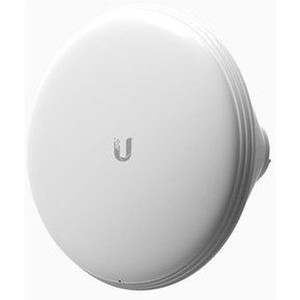
Ubiquiti HORN-5-90 90° Horn Antenna for UISP Wireless
Overview
The Ubiquiti HORN-5-90 is a directional horn antenna engineered for point-to-point and point-to-multipoint wireless deployments within the UISP Wireless ecosystem. The 90-degree beamwidth balances focused RF coverage with broad-enough aperture to serve sector cell sites and geographic coverage areas — meaning you get directionality without the extreme gain concentration that comes with parabolic dishes. This middle-ground positioning makes it practical for campus networks, rural broadband, and licensed spectrum operations where controlled radiation patterns matter for minimizing co-channel interference.
Key Features
- 90-degree beamwidth: Covers a sector-width RF footprint, eliminating the need for multi-unit parabolic arrays on smaller sites while still rejecting off-axis interference better than omnidirectional antennas.
- Horn form factor with sidelobe suppression: Horn geometry inherently suppresses side lobes and delivers predictable radiation patterns — essential for spectrum-efficient deployments where stray RF can cause co-channel problems or regulatory headaches.
- Standard RF connectors: Integrates directly with UISP radio units via industry-standard interfaces; no proprietary adapters or impedance-matching boxes needed in most installations.
- 50Hz electrical specification: Designed for outdoor stationary use; the 50Hz rating indicates suitability for standard mains-frequency electromagnetic environments common in tower and mast deployments.
- Lightweight at 2.65 pounds: Mounts on standard brackets without heavy structural reinforcement, reducing installation cost and allowing deployment on existing light-duty mast hardware.
- Outdoor-hardened construction: Weather-sealed connectors and corrosion-resistant housing tolerate extended exposure to rain, salt spray, and temperature extremes without pattern degradation or connector oxidation.
Integration and Compatibility
Mount the HORN-5-90 on a mast or tower structure with proper polarization alignment and azimuth orientation. Secure all RF connectors per manufacturer torque specifications to prevent leakage and environmental ingress. The antenna's gain and 90-degree beamwidth characteristics define link budgets and coverage footprints — critical inputs for radio link analysis and site surveys before deployment. Maintain clearance from metallic structures and other antennas to avoid pattern distortion, which can reduce effective range and create dead zones.
This antenna works within the broader wireless network equipment category for ISP and enterprise campus deployments. Pair it with Ubiquiti UISP Wireless radios to establish sector coverage or backhaul links. For multi-sector sites or where higher directionality is needed, consider complementary antenna options in the UISP product family.
When to Choose a Different Model
If you need extremely narrow gain and maximum range for long-distance point-to-point backhaul, a higher-gain parabolic dish antenna delivers tighter beamwidth and greater gain concentration. Conversely, if your deployment spans 360 degrees around a single point (omnidirectional coverage), a vertically polarized omni antenna is the better choice. The HORN-5-90 is optimized for the sweet spot: moderate directionality without extreme complexity.
Deployment Scenarios
Deploy this antenna for sector coverage in multi-sector cell sites where each sector requires a dedicated radio and antenna. Use it for backhaul link installations where moderate directionality reduces interference to and from adjacent networks. Point-to-multipoint networks serving geographic areas benefit from the balanced aperture angle, and licensed spectrum operations (microwave, point-to-point licensed bands) gain from the predictable radiation pattern and sidelobe suppression. Rural broadband networks often employ the HORN-5-90 mounted on a tower to serve a fan-shaped coverage area with minimal interference to neighboring operators.
Installation Considerations
Weight and form factor are straightforward — 2.65 pounds is manageable for single-person installation on standard tower hardware. Pay attention to polarization (vertical or horizontal) alignment relative to the remote antenna; misaligned polarization dramatically reduces link performance. Azimuth orientation determines your coverage footprint, so perform a site survey and RF propagation analysis before final positioning. After installation, inspect all connectors under load and periodically to prevent RF leakage and weathering-related degradation.
Frequently Asked Questions
Q: What radio units does the HORN-5-90 work with?
A: The HORN-5-90 is designed for Ubiquiti UISP Wireless radio units with standard RF connector interfaces. Verify connector type (N-type or SMA) and impedance matching with your specific radio model before purchase.
Q: Can I use this antenna outdoors year-round?
A: Yes. The HORN-5-90 is outdoor-rated with weather-sealed connectors and corrosion-resistant housing, suitable for extended exposure to rain, wind, and temperature extremes. Ensure all connectors are properly torqued and periodically inspected for salt-spray corrosion in coastal environments.
Q: What's the difference between the HORN-5-90 and a parabolic dish antenna?
A: The horn's 90-degree beamwidth provides broader coverage than a dish but with less gain concentration. Dishes excel at long-distance point-to-point links; horns are better for sector coverage and point-to-multipoint scenarios where you need controlled directionality without extreme focusing.
Q: How does beamwidth affect my deployment?
A: Beamwidth determines your coverage footprint and interference rejection. The 90-degree aperture covers a sector-width area, allowing a single antenna to serve multiple subscriber locations. Narrower beamwidth (dishes) means longer range but smaller coverage area; broader beamwidth (omni) means 360° coverage but poor interference rejection.
Q: What mounting hardware is included?
A: The HORN-5-90 ships as an antenna element. You must provide a standard mast bracket and tower-mounting hardware suitable for your site structure. Consult the installation guide for bracket compatibility and torque specifications.
Q: Is this antenna suitable for licensed spectrum deployments?
A: Yes. The horn's predictable radiation pattern and sidelobe suppression are well-suited for licensed spectrum operations where controlled RF behavior is required by regulation or to avoid interference with neighboring licensed operators.
Ted PerryPerspective based on aggregated IP Security Depot and affiliated engineering team experience.
The Ubiquiti HORN-5-90 occupies a practical middle ground in directional antenna selection. Where a parabolic dish delivers narrow gain for long-distance links, the horn's 90-degree beamwidth accommodates sector deployments and point-to-multipoint service areas. At 2.65 pounds, it's straightforward to mount on standard brackets without requiring heavy structural reinforcement — a real advantage when tower space and weight budgets are tight.
Technical Highlights:
- 90-degree beamwidth: Covers a sector-width RF footprint without the complexity and cost of multi-unit parabolic arrays; sidelobe suppression minimizes co-channel interference in congested spectrum bands.
- Horn form factor: Inherent sidelobe rejection and predictable radiation patterns are essential for spectrum-efficient deployments; no surprise nulls or pattern distortion that plague cheaper omnidirectional alternatives.
- Lightweight mounting: 2.65-pound weight reduces installation cost and allows deployment on existing light-duty mast hardware; no structural reinforcement or heavy-equipment rental needed for most tower types.
Deployment Considerations:
- Verify connector type (N-type, SMA, or proprietary) against your UISP Wireless radio before ordering — impedance mismatch or loose connectors introduce RF loss and reduce effective range by 20–40%.
- Polarization alignment is critical: vertical-to-horizontal mismatch can degrade link performance by 15–20 dB. Mark and measure before final installation.
- Monitor for pattern distortion caused by nearby metallic structures or competing antennas; even a weatherproof radome can change beamwidth by 5–10 degrees if positioned incorrectly.
The HORN-5-90 is the workhorse choice for UISP Wireless sector cell sites, rural broadband networks serving fan-shaped coverage areas, and licensed spectrum backhaul where controlled radiation patterns are non-negotiable. It's reliable, proven in outdoor conditions, and predictable in RF performance — exactly what you need when you're managing multi-site deployments and can't afford pattern surprises mid-contract.