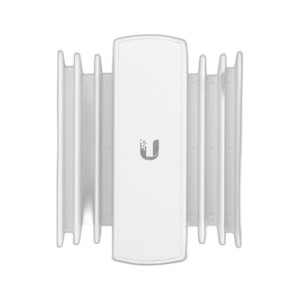
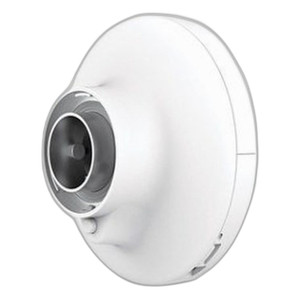
Ubiquiti HORN-5-30 5 GHz Horn Antenna
Overview
The Ubiquiti HORN-5-30 is a directional horn antenna engineered for point-to-point and point-to-multipoint wireless deployments across the 5 GHz band. Purpose-built for wireless infrastructure antennas and last-mile connectivity, this antenna integrates with UISP Wireless access points and radios supporting 802.11a/n/ac standards. The horn geometry delivers focused directional gain with controlled side lobe radiation—a critical advantage in RF-congested environments where adjacent-channel interference degrades throughput and link stability.
Key Features
- 5 GHz operating band: Operates across standard 5 GHz spectrum (802.11a/n/ac), allowing deployment in both licensed and unlicensed wireless access networks without requiring specialized equipment or dual-band radio modules.
- Directional horn form factor: Unlike omnidirectional antennas, the horn design focuses RF energy in a specific direction, reducing wasted radiation and interference to neighboring networks—a practical benefit when site density is high or when isolation between sectors matters for performance.
- Medium-range backhaul capability: Designed for point-to-point links spanning 2–5 miles depending on terrain, propagation conditions, and licensed spectrum availability—suitable for connecting remote access points or outdoor switches to core infrastructure without the footprint or wind load of larger parabolic dishes.
- UISP Wireless ecosystem integration: Mounts directly to Ubiquiti UISP Wireless radios and access points via standard RF connectors, with centralized management through UISP or UniFi controllers for simplified provisioning and alignment verification.
- Robust mechanical design: Engineered for outdoor mounting on standard antenna masts. The 17.350-pound weight requires proper pole infrastructure and grounding considerations, but the rigid construction withstands typical environmental exposure without performance degradation.
- Installation simplicity: Horn antennas offer lower wind loading compared to dish antennas of equivalent gain, reducing structural demands on mounting hardware and simplifying alignment procedures—particularly valuable in retrofit deployments where existing pole infrastructure has load limits.
Deployment Contexts
The HORN-5-30 excels in wireless backhaul aggregation scenarios where multiple remote access points feed data to a centralized distribution point. It is equally effective in sector antenna configurations where operators subdivide coverage areas to isolate interference corridors or serve specific geographic zones. Fixed wireless access (FWA) providers commonly deploy horn antennas like this to establish predictable, directional coverage with repeatable gain characteristics across defined service territories.
Integration & Compatibility
The antenna connects to UISP Wireless equipment via standard RF connectors. Site alignment should account for the directional beam pattern and requires signal strength measurements to confirm optimal orientation before finalizing installation. All RF connectors must be properly grounded and weatherproofed to maintain long-term reliability in outdoor conditions. Consult your radio's impedance and connector specifications to verify mechanical and electrical compatibility before ordering.
What's in the Box
Box contents are not specified in available documentation. Confirm exact inclusion list with the supplier before deployment planning.
Frequently Asked Questions
Q: What frequencies does the HORN-5-30 support?
A: The antenna operates across the 5 GHz band and is compatible with 802.11a/n/ac wireless standards, making it suitable for both licensed and unlicensed spectrum deployments.
Q: What is the effective range of the HORN-5-30?
A: Point-to-point backhaul links typically span 2–5 miles, depending on terrain, line-of-sight conditions, propagation characteristics, and the power and sensitivity of the connected radio equipment.
Q: How much does the HORN-5-30 weigh?
A: The antenna weighs 17.350 pounds, requiring sturdy mast and pole infrastructure rated for that load. Proper grounding and vibration isolation are essential for outdoor installations.
Q: Does the HORN-5-30 work with non-Ubiquiti radios?
A: The antenna uses standard RF connectors and operates across standard 5 GHz bands, but electrical and mechanical compatibility (impedance, connector type, frequency band) must be verified with non-Ubiquiti equipment before integration.
Q: What mounting options are available?
A: The antenna is designed for standard antenna mast mounting. Proper grounding of all connectors and weatherproofing are essential for outdoor reliability.
Q: How do I align the HORN-5-30 after installation?
A: Alignment is verified using signal strength measurements from the connected radio and, where available, UISP controller diagnostics. The directional beam pattern requires careful orientation to maximize link performance and minimize adjacent-channel interference.
Ted PerryPerspective based on aggregated IP Security Depot and affiliated engineering team experience.
The HORN-5-30 addresses a specific deployment need: wireless backhaul over 2–5 miles where you need directional gain without the structural complexity or wind load of parabolic dishes. This antenna stands out because the horn form factor delivers focused RF energy with minimal side lobe radiation—meaning less wasted transmission in congested bands and cleaner isolation between adjacent sectors. If you are building out a UISP Wireless network or integrating remote access points into a core infrastructure, the HORN-5-30 delivers predictable performance at a mechanical footprint smaller than equivalent-gain dishes.
Technical Highlights:
- 17.350-pound weight: Significantly lighter than large parabolic antennas of equivalent gain, reducing structural demands on pole infrastructure and simplifying load calculations for retrofit installations where existing mast capacity is constrained.
- 5 GHz 802.11a/n/ac compatibility: Operates across standard unlicensed and licensed spectrum bands without requiring specialized radio modules or dual-band hardware—a cost and complexity reduction compared to multiband antenna arrays.
- Directional beam pattern with controlled side lobes: Focused RF energy reduces interference into adjacent networks and minimizes reception of out-of-band noise, translating to measurably better signal-to-noise ratio and link stability in dense RF environments.
Deployment Considerations:
- The 17.350-pound mass demands proper mast design and grounding—undersizing pole infrastructure is a common installation error that compromises performance and longevity. Verify mounting hardware load ratings before ordering.
- Alignment is directional and not forgiving; misalignment by just 10–15 degrees can degrade link performance by 3–6 dB. Plan for site survey and signal strength verification before finalizing installation.
- RF connector weatherproofing is non-negotiable in outdoor deployments. Corrosion at the connector interface degrades impedance matching and introduces unpredictable insertion loss. Budget time and materials for proper connector sealing.
Deploy the HORN-5-30 when your backhaul topology calls for medium-range point-to-point or point-to-multipoint links and you want simpler pole infrastructure than dish antennas require. It is not suited for omnidirectional coverage or indoor deployment; for those scenarios, evaluate sector or panel antennas from the same Ubiquiti ecosystem.