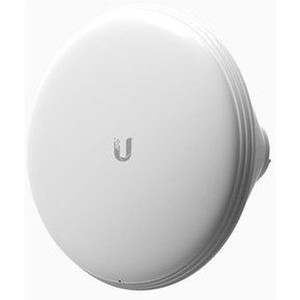
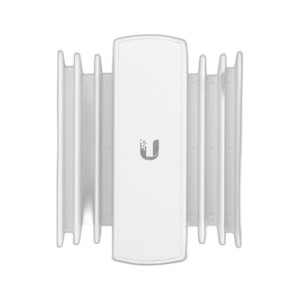
Ubiquiti HORN-5-60 5GHz Directional Horn Antenna
Overview
The Ubiquiti HORN-5-60 is a directional 5GHz horn antenna engineered for wireless backhaul, point-to-multipoint distribution, and mesh network interconnection in fixed wireless access and outdoor broadband deployments. The 60-degree beamwidth balances directional gain with practical coverage area—meaning you get signal concentration that rejects off-axis interference without the extremely narrow coverage of ultra-high-gain designs. This matters in dense deployments where multiple access points or CPE nodes share the same tower or rooftop; the HORN-5-60 reaches multiple endpoints from one mounting location without requiring mechanical beam steering or array complexity.
Key Features
- 5GHz band operation (802.11a/n/ac compatible): Integrates directly into standard WiFi infrastructure using UISP Wireless radios and third-party 5GHz access points or bridges—no proprietary gear required, though Ubiquiti hardware is the natural first choice.
- 60-degree beamwidth: Wider than most directional horns, this pattern serves suburban or campus-scale deployments from elevated points. You trade some forward gain for practical multi-endpoint coverage, reducing the need for antenna arrays or multiple radios at the source.
- Directional rejection of multipath and interference: The horn form factor concentrates energy forward and rejects signals arriving from the side and rear. In congested 5GHz environments or near competing wireless systems, this directional characteristic cuts co-channel and adjacent-channel interference—a real advantage over omnidirectional antennas.
- Lightweight design (2.45 lbs): Weight matters on towers. At 2.45 pounds, the HORN-5-60 reduces structural load and simplifies mounting hardware selection. You won't need heavy-duty brackets or reinforced masts.
- Line-of-sight performance: Horns are non-frequency-agile and require clear paths to remote endpoints. Plan your site survey carefully; obstructions, trees, or dense buildings between transmitter and receiver will degrade range more severely than omnidirectional antennas.
- Connector interface and cable considerations: Verify the antenna connector type (typically N-type or SMA) matches your radio or access point before purchase. Poor or degraded cable runs between radio and antenna will undermine the antenna's directional gain.
Deployment Scenarios
The HORN-5-60 excels in wireless backhaul links connecting remote access points to a central aggregation point—typical in point-to-multipoint fixed wireless access networks serving rural or suburban areas. It is also well-suited for mesh node interconnection where moderate directional gain is required without extreme range demands. Campus deployments benefit from the antenna's ability to cover distributed buildings or outdoor zones from a single elevated tower without multiple radios.
Mounting location and azimuth/elevation alignment are critical. Use professional-grade aiming tools (spectrum analyzers or mobile site survey apps) to confirm optimal alignment toward target endpoints. Wind loading and ice accumulation in your region must be factored into mounting structure selection, although the antenna's modest weight simplifies this analysis compared to larger gain horns.
Integration with UISP and Wireless Infrastructure
The HORN-5-60 integrates seamlessly with wireless networking products in the Ubiquiti UISP platform and works with any 5GHz radio or access point using standard 802.11 standards. Proper azimuth and elevation alignment is critical; site survey tools and alignment software should guide placement decisions. The antenna's directional characteristics help minimize interference by rejecting off-axis signals—valuable in dense deployments or areas with competing wireless operators on adjacent channels.
Installation Considerations
Mounting the HORN-5-60 requires standard antenna mast hardware compatible with your chosen connector interface. Verify cable specifications and connector type before purchase; a poor-quality jumper cable or incorrect termination will waste the antenna's directional performance. Position the antenna to achieve clear line-of-sight with target endpoints, and confirm azimuth and elevation using professional tools rather than guesswork. The antenna's 2.45-pound weight reduces installation complexity, but ensure mounting structures are rated for your regional wind loading and ice accumulation requirements.
Frequently Asked Questions
Q: What connector type does the HORN-5-60 use?
A: Verify the connector interface (typically N-type or SMA) in the product datasheet or with the vendor before purchase. Connector mismatch is a common installation mistake.
Q: Is the HORN-5-60 suitable for point-to-point backhaul links between distant towers?
A: Yes. The 60-degree beamwidth and directional gain make it well-suited for point-to-point links where clear line-of-sight exists. However, extreme distance links may benefit from narrower-beamwidth designs if available in the product family.
Q: Can the HORN-5-60 be used indoors?
A: The antenna is designed for outdoor mounting. Indoor use is not recommended; wall and ceiling materials will attenuate 5GHz signals and reduce the antenna's directional advantage.
Q: What wind loading should I plan for?
A: The 2.45-pound weight is relatively low, but mounting structure must still be rated for your region's peak wind and ice accumulation. Consult your structural engineer or tower provider for load specifications.
Q: Does the HORN-5-60 require any special software or licensing to operate?
A: No. It is a passive antenna and requires no firmware, licensing, or registration. Simply mount it, aim it, and connect it to a compatible 5GHz radio.
Q: What is the typical range of the HORN-5-60?
A: Range depends on radio power, receiver sensitivity, cable quality, and line-of-sight path loss. The directional gain and 60-degree pattern are optimized for medium-range fixed wireless deployments (typically 2–10 km in good line-of-sight conditions). Verify achievable range with your radio vendor and conduct a site survey.
Ted PerryPerspective based on aggregated IP Security Depot and affiliated engineering team experience.
The Ubiquiti HORN-5-60 fills a practical middle ground in wireless backhaul and fixed wireless access deployments. Its 60-degree beamwidth is wider than many directional horn designs, which means you can cover multiple CPE nodes or subscriber endpoints from a single tower location without sacrificing the directional gain that makes horns valuable in interference-heavy 5GHz environments. The 2.45-pound weight is a genuine advantage on aging tower structures where load budgets are tight.
Technical Highlights:
- 60-degree beamwidth: Balances coverage area with directional rejection—you can serve multiple remote sites from one mounting point while still rejecting off-axis interference, a real advantage over omnidirectional designs in dense wireless neighborhoods.
- Lightweight at 2.45 lbs: Reduces structural load on towers, masts, and rooftops. Simplifies mounting hardware and avoids reinforcement costs that come with heavier gain antennas.
- 5GHz band (802.11a/n/ac): Direct compatibility with standard WiFi infrastructure and UISP Wireless platform. No proprietary protocols or licensing—deploy it with Ubiquiti radios or third-party 5GHz access points.
Deployment Considerations:
- Connector type and cable quality are critical. Verify N-type or SMA compatibility before ordering, and use low-loss, properly graded coax jumpers. A degraded cable run will undermine the antenna's directional performance.
- Line-of-sight is non-negotiable. Unlike omnidirectional antennas, horns are intolerant of obstructions. Spend time on site survey with a spectrum analyzer or mobile tool to confirm clear paths to remote endpoints.
- Azimuth and elevation alignment requires professional-grade aiming tools. Guesswork or eyeballing will leave performance on the table. Use alignment software or spectrum tools to lock in optimal bearing and tilt.
The HORN-5-60 is the right choice for rural or suburban fixed wireless networks where you need directional gain and multi-endpoint coverage from a single tower, medium-range backhaul links between access points, or mesh node interconnection on campuses or industrial sites with clear line-of-sight paths. If your deployment is dense urban with significant multipath or requires omnidirectional coverage, you will want to reconsider.