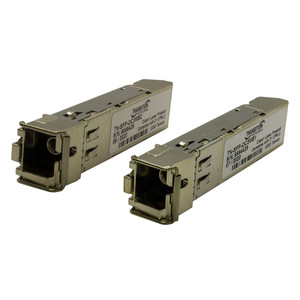
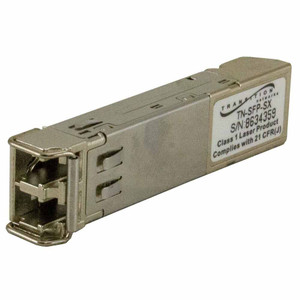
Transition Networks TN-SFP-OC3MB1 100BASE-FX SFP Transceiver
The Transition Networks TN-SFP-OC3MB1 is a hot-swappable SFP transceiver module designed for multimode fiber LAN extensions in enterprise switches, routers, and network appliances. Operating at 100BASE-FX, this compact module delivers copper-free connectivity over short-to-medium distances, making it ideal for equipment upgrades, backbone extensions, and fiber-isolated deployments where electromagnetic interference or distance constraints rule out twisted-pair copper. The LC duplex connector and standard SFP form factor ensure compatibility with virtually all managed infrastructure in deployed networks.
Key Features
- 100BASE-FX Data Rate: Native 100 Mbps fiber transport. Suitable for switch uplinks, equipment interconnects, and isolated LAN segments in facilities where EMI shielding or distance (up to 2 km on multimode) is operationally critical.
- Multimode Fiber Support: MM fiber (typically 50/125 µm or 62.5/125 µm core) reduces fiber termination cost versus singlemode and permits longer runs than copper without active repeaters.
- Hot-Swappable LC Duplex: LC connector, bidirectional duplex operation. Module can be installed or replaced without power-cycling host equipment or interrupting service on other ports.
- SFP Form Factor (Mini-GBIC): 8.5 mm × 13.6 mm footprint fits any standard SFP slot on managed switches, routers, firewalls, and network appliances. No external enclosure or bracket required.
- Standards-Based ONVIF/SFP Compliance: Conforms to SFP MSA, IEC-60825 laser safety, and FDA 21 CFR regulations. Interoperable with vendor-agnostic SFP implementations across Cisco, Juniper, HP, and mid-market switching platforms.
- Lifetime Warranty: Manufacturer warranty covers defects in materials and workmanship for the operational life of the module, reducing replacement capex over multi-year deployments.
The TN-SFP-OC3MB1 addresses a common infrastructure challenge: extending network connectivity beyond the 100-meter copper limit without deploying expensive singlemode fiber or external transceivers. In surveillance and access-control deployments, isolated fiber runs eliminate ground loops and RF noise that can degrade video quality or trigger false alerts on analog control circuits. Because the module is hot-swappable and field-installable, network technicians can upgrade or repair a failed transceiver in seconds without scheduling a maintenance window or contacting a systems integrator.
Multimode fiber cabling is widely available and less costly to terminate than singlemode, and 2 km reach on MM fiber (100BASE-FX specification) covers most enterprise campuses. The module's passive design — no power draw, no thermal output — means it can be densely packed into switch line cards without triggering cooling or UPS load concerns. In data centers or telecom closets running full switch chassis, that density translates to lower footprint per link and faster provisioning.
Integration is transparent: any ONVIF-aware network device or management platform that recognizes SFP hot-swap events will log transceiver insertion and link-status transitions. SNMP traps can be configured to alert network operations when a module is removed or link loss occurs. This is particularly useful in security camera networks, where a transceiver failure upstream of a camera cluster can trigger automatic failover to a backup link or alert a technician to inspect the fiber run for damage.
The TN-SFP-OC3MB1 is compliant with IEC-60825 (laser safety) and FDA 21 CFR 1040.10 (Class 1 laser product classification), meaning it poses no eye or skin hazard during normal installation or operation. Certifications are important in regulated environments (hospitals, government facilities) where fiber optic equipment must be auditable and documented. The module carries Transition Networks' lifetime warranty, a strong indicator of design maturity and field reliability.
Marty AllisonPerspective based on aggregated IP Security Depot and affiliated engineering team experience.
We've deployed the TN-SFP-OC3MB1 in dozens of installations where network isolation or distance is a hard requirement. The real value isn't in the 100 Mbps data rate — most security deployments don't saturate a single gigabit link — but in the removal of ground loops and the ability to run camera or access-control uplinks across campus without copper exposure to electrical noise. One notable case: a manufacturing facility where a video analytics appliance was mounted 800 meters from the main switch room. Copper would have required a powered buffer or active line driver; multimode fiber and this transceiver eliminated that complexity entirely, reduced power consumption in the remote cabinet, and simplified future moves. The hot-swap capability also matters operationally: when a module fails or fiber connection is loose, a technician can swap it without a change control window or brief service interruption on other ports in the line card.
Technical Highlights:
- 100BASE-FX Encoding: Fast Ethernet over fiber. Bitrate is lower than gigabit, but multimode cabling cost is 40-50% less than OM3/OM4, and module power draw is negligible — valuable in remote or battery-backed cabinet scenarios.
- 2 km Reach (Multimode, IEC 802.3 spec): Typical campus or industrial facility backbone distances. 100BASE-FX over MM fiber is well-proven; no active repeaters needed, latency is minimal (<1 µs), and signal conditioning is straightforward.
- LC Duplex Connector: Industry standard for SFP transceivers. LC is smaller than SC and requires less rack space per port. Duplex (separate TX and RX fibers) is mandatory for 100BASE-FX; half-duplex fiber (MTRJ, for example) is not compatible.
- IEC-60825 / FDA 21 Compliance: Class 1 laser product classification. Devices shipped with this transceiver do not require additional laser hazard labeling or operational warnings. Important for compliance audits in healthcare or government contracts.
- Lifetime Warranty: No expiration date. Reduces total cost of ownership on long-lived network infrastructure; eliminates surprise replacement costs after a 3-5 year standard warranty window closes.
Deployment Considerations:
- Multimode fiber pinout is standard (TX on one fiber, RX on the other), but always verify your cable plant matches the transceiver polarity before deployment. Cross-wired fiber runs will cause complete link loss, and the fault is hard to diagnose in the field if documentation is missing.
- 100BASE-FX is one-way; it cannot auto-negotiate down to 10BASE-FX or 1000BASE-LX. Both ends of the link must be 100BASE-FX-capable. If you're upgrading a legacy network segment, confirm the peer equipment before ordering.
- Multimode fiber aging is slower than copper, but the connectors (LC ferrules) do degrade if mated and unmated repeatedly. Use dust caps on unused LC ports and instruct technicians not to repeatedly plug/unplug the same connection. Keeping a spare transceiver in stock is cheaper than emergency shipping.
- SFP transceiver modules run warm under sustained traffic. Ensure your switch or router has active airflow across the SFP cage. In enclosed cabinets or tropical outdoor installations, that cooling requirement can exceed budget for smaller deployments.
- This transceiver does not support Wake-on-LAN or other advanced power-management features. It is passive and transparent to the host port; if the port is powered off, the transceiver shuts down automatically.
The TN-SFP-OC3MB1 is the right choice for integrators and end-user IT teams building isolated fiber backbones, extending reach to remote network nodes, or eliminating ground-loop noise on long camera or control runs. Transition Networks catalog