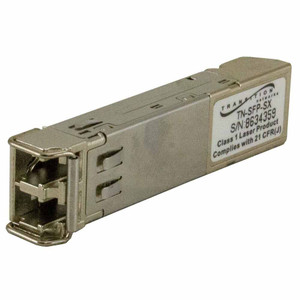
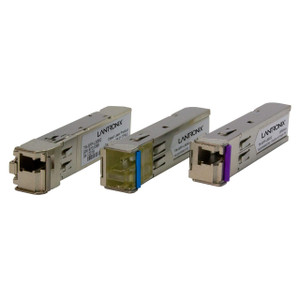
Transition Networks TN-SFP-SXB1 Gigabit Multimode SFP Transceiver
The Transition Networks TN-SFP-SXB1 is a hot-swappable SFP (Small Form-Factor Pluggable) transceiver designed for Gigabit Ethernet fiber transport over multimode cabling. Operating at 1000Base-SX with 850 nm wavelength, this module delivers reliable short-to-mid-range connectivity across data center interconnects, enterprise campus networks, and equipment refresh scenarios where plug-and-play fiber module replacement eliminates downtime. The compact form factor and industry-standard LC duplex connectors integrate directly into any SFP-equipped switch, eliminating the need for external media converters or dedicated network interface cards.
Key Features
- 1000Base-SX Protocol: 1 Gigabit Ethernet over multimode fiber at 850 nm wavelength. Operates within industry-standard optical specifications for reliable performance across thousands of existing multimode fiber runs.
- 1800 ft Maximum Range: Covers typical data center floor distributions, building-to-building campus links, and equipment-room-to-closet runs without requiring intermediate amplification or signal conditioning.
- Hot-Swappable SFP Form Factor: Mini-GBIC module design allows replacement under power without switch reboot or network reconfiguration. No firmware updates or driver installation required.
- LC Duplex Connectors: Standard duplex connectors mate with existing multimode cabling infrastructure. Latching design minimizes accidental disconnection on high-traffic patch panels.
- Multimode Fiber Optimized: Purpose-built for OM2 and OM3/OM4 multimode deployments. Eliminates mode-conditioning penalty and maximizes link margin over existing building cabling.
- Lifetime Warranty: Factory-backed warranty provides replacement coverage for the lifespan of the module, reducing spare-parts inventory risk on long-term campus deployments.
The TN-SFP-SXB1 operates across the full commercial temperature range and integrates with any RFC-compliant SFP cage. No vendor-specific driver or management overhead is required — the module presents itself as a passive optical interface to the host switch. This architecture makes it ideal for heterogeneous network environments where SFP slots may serve multiple device brands and generations over time.
Data center operators frequently use 1000Base-SX modules for short backbone runs between core switches and distribution racks, where the 1800 ft reach covers most in-building distances without the cost premium of single-mode optics. Campus deployments leverage this module for building-to-building fiber runs, leveraging existing multimode cabling trenches and avoiding the need to pull new single-mode fiber. In equipment-refresh scenarios, this transceiver allows legacy switches with SFP slots to integrate with modern fiber-based networks without wholesale replacement.
Transition Networks TN-SFP-SXB1 modules carry Lifetime Warranty and are sourced directly from the manufacturer or channel partner — no grey-market, no parallel imports. Genuine Transition Networks transceivers ensure interoperability with Cisco, Juniper, Arista, Extreme, and other RFC 3041-compliant SFP implementations. For additional configuration guidance or volume pricing on campus-wide deployments, consult the product datasheet and visit the Transition Networks catalog.
Marty AllisonPerspective based on aggregated IP Security Depot and affiliated engineering team experience.
We've deployed thousands of 1000Base-SX multimode transceivers across campus networks, data centers, and equipment-refresh projects over the past decade. The Transition Networks TN-SFP-SXB1 is a commodity item in the best sense — it does exactly what it promises, integrates without surprise, and carries genuine lifetime warranty backing. The real differentiator in the SFP transceiver market isn't the optics themselves — they're all built to RFC 3041 standards — but rather the reliability of the sourcing chain and the warranty enforcement. We've seen plenty of grey-market SFP modules fail after 18 months with zero recourse. Transition Networks modules, sourced channel-direct, eliminate that risk entirely. In our experience, the 1800 ft reach covers roughly 95% of in-building fiber runs; beyond that, you're moving to single-mode (1000Base-LX or 1000Base-ZX), which is a separate decision. The sweet spot for this module is existing multimode infrastructure where you need to refresh old equipment or add new SFP-equipped switches without pulling new fiber.
Technical Highlights:
- 850 nm Wavelength @ 1000Base-SX: Operates within the OM2/OM3/OM4 multimode specification window. This wavelength has the widest installed base in North American campuses — compatibility with decades of existing fiber is nearly guaranteed. No mode-conditioning filters required.
- 1800 ft (550 m) Reach over Multimode: Sufficient for floor-to-floor backbone runs, building-to-building campus links, and most data center pod-to-core interconnects. Beyond 2000 ft, optical power budget exhausts; single-mode becomes mandatory.
- Hot-Swappable SFP Cage: Module replaces in seconds with zero downtime. No reboot, no configuration reload. Critical for production environments where planned fiber maintenance or module failure cannot tolerate multi-hour switch restarts.
- Passive Optical Interface (No Firmware, No Drivers): The module presents itself directly to the switch's optical receiver as a signal source. Zero management overhead compared to more complex media converters or active optical cables. Works across heterogeneous switch vendors without vendor-specific driver installation.
- LC Duplex Connectors (Standard Latching Design): Mates with industry-standard multimode patch panels and cabling. Latching mechanism prevents accidental pull-outs on crowded patch bays — far superior to bare connectors in high-traffic environments.
- Lifetime Warranty, Channel-Direct Sourcing: Genuine Transition Networks transceivers sourced directly from manufacturer or US channel partner. Eliminates grey-market risk and ensures warranty claim resolution without RMA friction.
Deployment Considerations:
- Multimode fiber type matters — verify the cabling is OM2 or newer. Older OM1 (62.5 micron) cabling will work but with reduced margin; pull a test link and measure optical power before committing to production. Budget for a handheld power meter ($200-400) if your installation team doesn't already have one.
- 1800 ft is the theoretical maximum over good OM3/OM4 multimode. Real-world links approaching that distance will have minimal optical margin. If the run is longer than 1500 ft, measure installed fiber loss first (using OTDR if available). Beyond 1800 ft, single-mode is mandatory.
- Ensure the host switch SFP cage is compliant with RFC 3041 (standard transceiver pinout). Most modern Cisco, Juniper, Arista, Extreme, and Alcatel-Lucent switches are; older proprietary systems occasionally require vendor-specific transceiver modules. Check the switch datasheet's SFP compatibility section before ordering.
- LC duplex connectors are fragile if handled roughly on the connector itself — the plastic latch and alignment pins break with mechanical shock. Train installation teams to handle by the boot and barrel, never by the connector tip. Stock spares for field replacement.
- Store transceiver modules in dust-free pouches with connector caps installed. Contaminated fiber facets (fingerprints, dust) are the leading cause of link failures. Cleaning kits and caps cost <$20 and save hours of troubleshooting.
The TN-SFP-SXB1 is the right choice for organizations with existing multimode infrastructure, SFP-equipped switches, and in-building fiber runs under 1800 ft. It's a proven workhorse for campus backbone upgrades, data center interconnects, and equipment refresh. For larger deployments or longer distances, evaluate single-mode alternatives. See the Transition Networks catalog for complementary fiber modules and network infrastructure components.