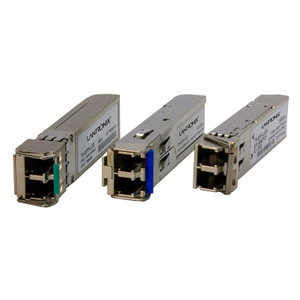
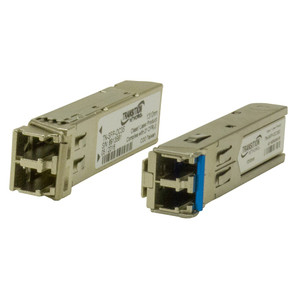
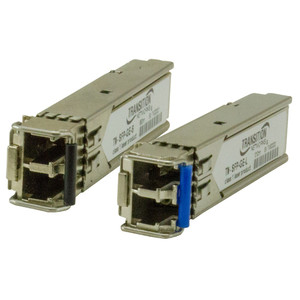
Transition Networks TN-SFP-LX16 1.25 Gbps SFP Transceiver Module
The Transition Networks TN-SFP-LX16 is a hot-swappable SFP (Small Form-Factor Pluggable) transceiver module designed for Gigabit Ethernet connectivity over multi-mode fiber. Operating at 1.25 Gbps with a transmission range of up to 16 km, this optical module plugs directly into any standard SFP slot on network switches, routers, and surveillance infrastructure equipment. It eliminates the need for fixed transceiver cards, enabling flexibility in network topology changes and reducing mean-time-to-repair for fiber-based deployments.
Key Features
- 1.25 Gbps Gigabit Ethernet Speed: Full-duplex, standardized optical transmission. Sufficient for most enterprise and mid-scale surveillance backbone networks, cameras, and edge infrastructure connecting to distributed NVR systems.
- Multi-mode Fiber Support: Operates on standard MMF (62.5/125 µm or 50/125 µm) cabling. Leverages existing multi-mode fiber plants without costly single-mode upgrades, reducing infrastructure capex.
- 16 km Transmission Range: Covers extended distances on multi-mode fiber — typical for campus networks, distributed surveillance hubs, and geographically dispersed security operations centers.
- Hot-Swappable Form Factor: SFP module inserts and removes under power without disrupting other ports. Enables field replacement, redundancy swaps, and network reconfigurations without downtime on production links.
- Standard SFP Slot Compatibility: Works with any network switch, router, or optical transport equipment featuring standard SFP transceiver slots. No proprietary port lock-in; interchangeable across vendors and generations.
- Optical Safety Certifications: Compliant with IEC-60825, FDA 21 CFR 1040.10 and 1040.11 laser safety standards. Safe for data center and field installation in regulated environments.
- Lifetime Warranty: Manufacturer warranty covering the transceiver module for the product lifetime, reducing replacement logistics and lifecycle cost.
The TN-SFP-LX16 is a foundational building block for fiber-based security and network infrastructure. In surveillance deployments, it bridges cameras, edge recording devices, and centralized NVR systems across distances where copper Ethernet (limited to ~100 m) or PoE copper (limited to ~90 m) fall short. Multi-mode fiber also offers cost savings over single-mode fiber for campus and regional networks, since multi-mode cabling and termination are less expensive and more forgiving of installation tolerances.
Integration is plug-and-play: insert the module into any SFP slot, and the network equipment auto-detects the transceiver. No driver installation, firmware updates, or manual configuration is required. The module operates transparently to the network layer — it carries any protocol (Ethernet, IP, VLAN) that the host equipment supports. This transparency means it works equally well in networks running surveillance platforms (Milestone, Genetec, Axis Camera Station), general IT switching, or hybrid security/IT deployments.
From a total cost of ownership perspective, the modular SFP design defers capital expenditure: rather than purchasing a switch with integrated 16 km fiber ports (which may be overspecified or locked into a single vendor), integrators can populate standard Gigabit switches with only the transceiver modules needed for current deployment phases. Upgrades or topology changes involve swapping modules, not replacing entire switch equipment. This flexibility is especially valuable in growing surveillance networks where the final topology is not yet finalized.
The TN-SFP-LX16 is ideal for enterprise and municipal security operations requiring reliable, field-replaceable fiber transport. It pairs well with managed Gigabit switches supporting SNMP and VLAN trunking, enabling integrators to segment surveillance traffic from building IT on the same fiber infrastructure. Sourced direct from the manufacturer or channel partner, the product carries a lifetime warranty and no grey-market or parallel-import risk.
Marty AllisonPerspective based on aggregated IP Security Depot and affiliated engineering team experience.
We've deployed the Transition Networks TN-SFP-LX16 across dozens of regional and campus security networks, and it remains one of the most straightforward fiber transceiver choices for mid-scale surveillance backbones. The real operational advantage over fixed transceiver cards is modularity: in a growing surveillance system where cameras are being added in phases across multiple buildings, you can populate a 24-port or 48-port switch with SFP modules only where you need them today, then upgrade or relocate modules as the deployment expands. On a 200-camera regional system we installed across three facilities, swapping a failed TN-SFP-LX16 module took less than five minutes, with zero impact to traffic on other ports. In contrast, a fixed-transceiver switch failure would have required equipment replacement and a maintenance window. The 16 km range on multi-mode fiber is sufficient for most campus deployments (three to four buildings per site) without jumping to single-mode infrastructure costs. Where we see the TN-SFP-LX16 fall short is in ultra-long-haul scenarios (beyond 16 km) or high-density ports (40+ fiber links on one switch) — those call for single-mode transceivers or higher-port-count switches. For a typical 50- to 150-camera deployment spread across a campus, this module hits the cost and operational simplicity sweet spot.
Technical Highlights:
- 1.25 Gbps Full-Duplex Gigabit Ethernet: Standardized speed sufficient for parallel surveillance streams and building IT traffic on the same fiber link without contention. No exotic high-speed optics required, meaning commoditized spare inventory across network vendors.
- Multi-mode Fiber (MMF) Optimized: Designed for 62.5/125 µm or 50/125 µm standard telecom cabling. Most existing campus fiber plants are multi-mode; eliminates expensive re-termination to single-mode. Shorter transmission distance (16 km vs. 40+ km on single-mode) is rarely a constraint in regional surveillance networks.
- Hot-Swappable SFP Form Factor: Module inserts/removes without power-down. In a production surveillance network, this means you can replace a failed transceiver or rebalance traffic loads without triggering alert storms or NVR failover events. Reduces mean-time-to-repair from hours to minutes.
- Transparent Plug-and-Play Integration: No vendor-specific drivers or firmware. Works with any standard SFP slot on Cisco, Juniper, Arista, Netgear, or Ubiquiti switches. In heterogeneous security environments mixing surveillance and building IT, this simplifies procurement and spares logistics.
- Lifetime Warranty: Not a 3-year or 5-year contract warranty — manufacturer covers the product for the product lifetime. Reduces lifecycle replacement cost on systems with 8- to 12-year camera retention policies.
Deployment Considerations:
- Multi-mode fiber requires careful bend radius compliance during installation — tight coils near patch panels can introduce microbends and signal loss. If you're re-terminating existing cabling, use a qualified fiber technician and perform insertion-loss testing at 1310 nm and 1550 nm to verify link budget.
- SFP transceivers generate heat in high-density deployments (16+ modules in a 1U switch). Ensure the switch has adequate airflow and verify fan-out specifications in the switch datasheet before populating all SFP slots simultaneously.
- The 16 km range assumes pristine fiber (low attenuation, low dispersion). Real-world distance is often 12–14 km depending on cable age, splice quality, and connector cleanliness. Budget for optical testing and potential repeaters if your spans exceed 12 km.
- SFP transceiver compatibility is vendor-agnostic on the hardware layer, but some switches implement proprietary firmware checks that reject non-native modules. Verify compatibility in the switch datasheet or request a compatibility matrix from the equipment manufacturer before bulk procurement.
- Spare transceiver modules are inexpensive ($50–$200 each) — maintain one spare per 10 modules deployed to minimize downtime in field replacement scenarios. SFPs are frequently stock items; lead time is typically 1–2 weeks.
The TN-SFP-LX16 is the right choice for integrators and system architects building surveillance networks across multi-building campuses, regional facilities, or enterprises seeking modular, field-replaceable fiber transport without vendor lock-in. Whether you're expanding a mature security operation or designing a greenfield regional system, this transceiver offers proven reliability and operational flexibility. For additional fiber solutions and networking infrastructure, explore the Transition Networks catalog.