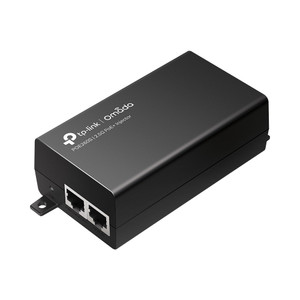
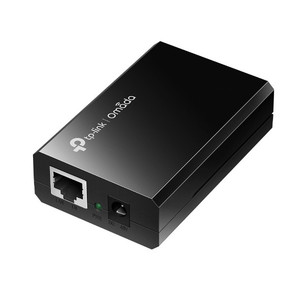
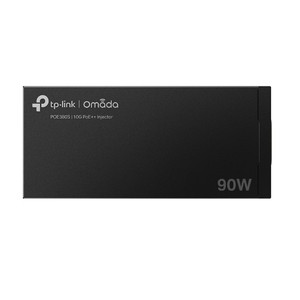
TP-Link TL-POE160S Gigabit PoE+ Injector
The TP-Link TL-POE160S is a single-port PoE injector designed for retrofitting power to IP cameras, wireless access points, intercoms, and networked sensors in locations where adding electrical infrastructure is impractical. It accepts non-PoE Gigabit Ethernet input on one port and outputs PoE+ (802.3at) on a second port, delivering up to 30W to compliant devices. Auto-sensing circuitry supplies only the power the connected device requires—no oversupply, no manual configuration. This is the standard retrofit solution for integrators extending PoE-powered deployments into cabinet-constrained or remote site conditions.
Key Features
- PoE+ Output (802.3at): 30W maximum delivery. Powers both 15.4W PoE (802.3af) and up-to-30W PoE+ devices. Automatic shutdown above 30W protects the injector and prevents undersized power supplies from damage.
- Gigabit Throughput: 1000BASE-T Ethernet speeds up to 100m over standard Cat5e or Cat6 cabling. No speed reduction or latency overhead introduced by PoE injection.
- Auto-Sensing Power Delivery: Detects connected device signature and supplies matching power draw. Simplifies installation—no DIP switches, no firmware, no management interface required.
- Wall-Mountable Form Factor: Compact housing (4.9 × 2.3 × 1.4 in) with included wall-mount hardware. Position near the powered device to minimize Ethernet cable runs and reduce voltage drop over long runs.
- Passive, Non-Managed Design: No software, no login credentials, no SNMP or web interface. Plug-and-play operation—ideal for distributed multi-site deployments where centralized management overhead is unnecessary.
- Standard AC Power Input: 100–240V, 50/60Hz. Operates within 0°C to 40°C (32°F to 104°F) ambient temperature. Low power consumption (15.4W at idle) reduces electrical infrastructure load on site UPS systems.
- RJ45 Cable Included: Ships with Ethernet cable, power cord, wall-mounting kit, and installation guide—ready to deploy immediately upon unboxing.
The TL-POE160S operates downstream of any non-PoE source: a standard network switch, router, NVR Ethernet port, or existing network segment. It does not consume a PoE budget—it is powered by standard AC wall outlets, making it ideal for retrofits where the upstream network infrastructure does not support PoE. For example, a legacy NVR with Ethernet-only ports can be extended to power a camera or wireless access point at a distant location without running new AC lines.
Deployment scenarios include: single-camera additions to existing non-PoE networks; remote wireless access points requiring 802.11ac support (15–20W draw); IP-based intercom stations (8–15W typical); and network-attached environmental sensors (temperature, humidity, door contact) in spaces where adding a PoE-capable switch is prohibitive. The 30W ceiling accommodates compact fixed cameras, pan-tilt-zoom units with modest motor loads, and dual-antenna wireless equipment—but does not support high-power thermal imaging cameras or redundant heater-equipped outdoor housings.
The injector is certified FCC, CE, and RoHS. It integrates with any standards-based VMS or monitoring platform that supports PoE-powered endpoints (Axis Camera Station, Genetec, Milestone, Hikvision, etc.). Because the TL-POE160S is transparent to the network—it adds no latency, no packet loss, and no management overhead—it is suitable for mission-critical camera feeds and interactive devices such as intercoms or door access readers. Total cost of ownership is minimal: no licensing, no batteries, no scheduled maintenance beyond periodic dust removal from ventilation slots.
Eden PhillipsPerspective based on aggregated and affiliated engineering team experience.
We've installed dozens of TL-POE160S injectors on retrofit jobs where running new PoE-capable switch uplinks was either cost-prohibitive or architecturally infeasible. The real win is simplicity: no configuration, no VLAN tagging worries, no power budget spreadsheets. Plug it in, plug in the camera, and it works. We've seen it deployed most often in two scenarios: (1) retrofitting a single camera onto a legacy non-PoE network segment—perhaps an existing office router or an NVR with spare Ethernet ports, and (2) powering a wireless access point or intercom at the far end of a long cable run where the upstream switch PoE budget has been fully consumed. The 30W ceiling is the constraint that matters: it covers 95% of fixed cameras and compact wireless equipment, but undersizing is common when speccing thermal cameras or outdoor domes with integrated heaters. Against alternatives like adding a managed PoE injector switch (higher cost, more complexity) or running new AC lines (higher labor cost), the TL-POE160S is almost always the economics winner on single-device retrofits.
Technical Highlights:
- 30W PoE+ Delivery (802.3at): Sufficient for fixed cameras (8–25W typical), wireless access points (12–20W), and IP intercoms (10–18W). Thermal and PTZ cameras with integral heaters exceed this limit and require external AC power or a higher-wattage injector.
- Gigabit Pass-Through: 1000BASE-T throughput is preserved—no speed bottleneck. On high-bitrate camera streams (4K, 30fps H.265) or bandwidth-sensitive access-point deployments, the gigabit link ensures no packet loss or QoS degradation.
- Auto-Sensing Prevents Overpowering: The injector detects device power class and supplies matching amperage. Undersized devices (e.g., a camera spec'd for 12W) will not experience voltage stress, and the injector won't waste energy oversupplying wattage the load doesn't draw.
- 100m Cable Range: Standard Cat5e/Cat6 cabling. Voltage drop over 100m is minimal at 30W; for very long runs near the 100m limit with full 30W loads, verify end-of-line voltage remains above 44V (IEEE 802.3at minimum).
- Passive Design, Zero Management Overhead: No firmware updates, no IP address assignment, no SNMP polling. Ideal for high-site-count deployments where management complexity compounds across 50+ locations.
Deployment Considerations:
- 30W Ceiling is Hard. Do not spec this for cameras requiring >30W sustained draw. Automatic shutdown will trigger, and the device will not recover until manual power reset—dangerous on remote outdoor surveillance. Check the upstream powered device datasheet, not just manufacturer marketing claims.
- AC Power Placement: Mount the injector within arm's reach of a wall outlet. The included power cord is standard length (typically 6 feet); extension cords are possible but add failure points. On outdoor walls, use weatherproof outlet boxes and ensure AC lines are rated for the installation environment.
- Thermal Management: The 15.4W internal consumption (at idle) plus PoE output heat requires adequate airflow. Don't install in sealed cabinets or direct sunlight without supplementary ventilation. The 0–40°C operating range is strict—outdoor installations in sun-exposed locations may exceed this on summer afternoons.
- Not a Replacement for PoE Switches: If you're powering 5+ cameras at one site, a managed PoE switch is cheaper per port and more flexible than multiple injectors. Reserve the TL-POE160S for 1–3 device retrofits or geographically distributed remote locations.
- Voltage Drop on Long Runs: At 30W output over 100m Cat5e, verify end-of-line voltage with a multimeter on first install. Voltage drop is marginal but cumulative; devices may brownout silently if powered below their minimum threshold.
The TP-Link TL-POE160S is the right choice for integrators and end-user teams extending PoE to single devices on non-PoE segments—especially on retrofit jobs where cost and speed matter more than centralized power management. For multi-camera sites or future-growth scenarios, consider managed PoE switches instead. See the full TP-Link catalog for network switching and PoE infrastructure options.