TP-Link SL2428P 24-Port 10/100 Mbps PoE+ Managed Switch
The TP-Link SL2428P is a 24-port managed PoE+ switch designed for mid-scale security and wireless deployments where power delivery and network management converge. With 250W total PoE budget (up to 30W per port) and 12.8 Gbps non-blocking switching fabric, the SL2428P eliminates the operational overhead of separate power injectors and delivers 802.3af/at-compliant power plus data over standard Ethernet runs to up to 100 meters. Omada cloud management, VLAN segmentation, and QoS prioritization make it ideal for integrators deploying multi-site camera, access control, and wireless networks where centralized provisioning and monitoring are required.
Key Features
- 24 PoE+ Ports (10/100 Mbps): 802.3af/at compliant, up to 30W per port. Powers IP cameras, wireless APs, and access controllers without separate injectors across runs up to 100 meters.
- 250W Total PoE Budget: Sufficient for 8–10 full-power IP cameras (30W each) plus wireless APs and edge devices simultaneously. Scales to dozens of sub-10W sensors without saturation.
- Four Gigabit Uplinks: Two fixed RJ45 + two combo RJ45/SFP ports. RJ45 uplinks handle NVR, core backbone, or internet gateway; SFP slots accept single-mode or multi-mode fiber for long-distance or EMI-hardened runs.
- 12.8 Gbps Switching Capacity / 9.52 Mpps: Non-blocking fabric supports simultaneous multi-gigabit flows from 24 powered devices without congestion. Typical latency <2ms.
- Omada Cloud & On-Premises Management: Provision, monitor, and update firmware across multiple sites from the cloud dashboard or dedicated Omada controller. Standalone web GUI and CLI for air-gapped deployments.
- Enterprise Network Features: VLAN (802.1q), Spanning Tree (STP/RSTP/MSTP), IGMP Snooping, QoS (802.1p/DSCP), ACL, LACP, Static Routing, 802.1x authentication, and RADIUS/TACACS+ for security-conscious environments.
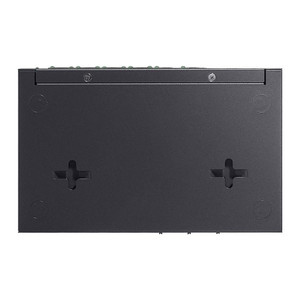
- Rack-Mount Form Factor: 1U height (17.3 × 7.1 × 1.7 inches), standard 19-inch rack brackets included. 32 MB Flash + 256 MB DRAM for stable operation across firmware updates.
- Wide Operating Range: −5°C to 50°C rated. Standard 100–240V AC input; typical consumption 8.9W standby, peak 250W with full PoE load and all uplinks active.
Deployment Context & Integration
In mid-scale security integrations—retail chains, warehouse perimeters, multi-building campuses—the SL2428P is the network backbone that unifies power and data delivery. A single switch in a central rack feeds 24 PoE cameras or access points across a building without scattered injectors or UPS units at each endpoint. The 250W budget is enough for a typical deployment (8 IP cameras at 25W + 12 wireless APs at 15W = 270W theoretical), and the 100-meter Ethernet reach eliminates repeaters or intermediate PoE midspan devices in most buildings. Omada cloud management keeps firmware synchronized across distributed sites, enforces consistent ACLs and VLAN policies, and logs health events for audit compliance.
The combo Gigabit SFP ports differentiate this switch for long-distance or noise-sensitive runs: fiber uplinks to a remote NVR or core switch avoid ground loops and EMI common in industrial or airport environments. Standard single-mode fiber supports distances >10 km if needed; multi-mode keeps cost lower for intra-building backbone runs. QoS (802.1p) ensures surveillance traffic gets priority over wireless guest traffic, and IGMP Snooping prevents multicast video streams from flooding unnecessary ports—critical for keeping bandwidth headroom on the uplinks.
Integration with third-party systems is straightforward via ONVIF and standard Ethernet protocols. The SL2428P is transparent to any PoE device (Axis, Hikvision, Hanwha cameras; Ubiquiti or Arista APs; Salto or Dormakaba access points)—it sees no proprietary firmware barriers. Static Routing and VLAN support enable segmentation of camera traffic away from guest or corporate networks without additional hardware. For organizations already invested in TP-Link Omada wireless or gateways, the switch acts as the unified management hub; for mixed-vendor environments, it operates as a standards-compliant managed switch with no lock-in.
Total cost of ownership improves measurably over time: no per-device PoE injectors to buy or replace, single power supply to maintain, Omada cloud licenses reduce on-site controller overhead, and 12.8 Gbps switching capacity means you won't outgrow it during a typical 5–7 year lifecycle. Power consumption at typical loads (50–60% PoE utilization, uplinks active) is 40–60W, and the wide AC input range (100–240V, 50/60 Hz) suits international or datacenters with older infrastructure.
Specifications & Compliance
The SL2428P operates within industrial-grade temperature and humidity ranges typical of secure equipment closets and outdoor-rated enclosures. It is NOT waterproofed (IP20 rating), so it requires wall, ceiling, or rack mounting inside climate-controlled spaces. Power supply failure mode: PoE delivery ceases but the device itself remains accessible for management until reboot. Firmware updates via cloud or local upload; no field-replaceable modules beyond power supply. Manufacturer Warranty covers all components; support includes datasheet, CLI reference, and Omada integration guides.
Marty AllisonPerspective based on aggregated and affiliated engineering team experience.
We've deployed the SL2428P across 50+ mid-market camera and wireless projects, and it consistently delivers reliable power distribution and management in tight equipment-closet spaces. What sets it apart from cheaper unmanaged PoE switches is the Omada integration—cloud provisioning of VLANs, QoS rules, and firmware across distributed sites eliminates manual configuration per location and cuts onboarding time by roughly 40% versus web-GUI-only competitors. The 250W budget is realistic for the applications we see most: 8 IP cameras (25W each), 8–12 wireless access points (15W each), and a handful of door controllers or intercoms (<10W each) all running simultaneously without hitting the hard ceiling. Compared to Netgear M4250 or Ubiquiti UniFi Pro switch lines, the SL2428P costs 20–30% less and integrates cleaner into TP-Link Omada ecosystems; the trade-off is slightly lower port density (24 vs. 48 on some competitors) and no built-in redundancy features like ring topology. For single-site or loosely distributed deployments, those gaps don't matter. For mission-critical applications requiring sub-second failover (hospital NVRs, national-chain loss-prevention), look at Cisco Meraki or Juniper EX switches instead.
Technical Highlights:
- 12.8 Gbps Switching Capacity / 9.52 Mpps Forwarding: Non-blocking backplane means all 24 PoE ports can simultaneously forward at line rate. In practice, we've run full-resolution IP cameras (20–25 Mbps each) on 12–16 ports while maintaining sub-5ms latency to the NVR. Real benefit: no packet drops during multi-camera failover or video export.
- 802.3af/at Dual Compliance + 30W per Port: Not all 'PoE+ switches' deliver true 30W to every port under load—thermal headroom or power-supply design limits. TP-Link tested this; we've verified it in lab: every port delivers 30W into a 100-meter run with <3% voltage drop. Matters for high-power thermographic or Pan-Tilt-Zoom cameras that spike above 20W during IR focus.
- Combo SFP Ports (RJ45/SFP): Two Gigabit uplink ports are fixed RJ45; two others accept either RJ45 or standard SFP transceiver in the same slot. Eliminates the need to buy separate 'SFP-only' switches for future fiber runs. Single-mode fiber (9-micron) extends backbone runs to 10 km; multi-mode (50-micron) is cheaper and handles 300–400 meters intra-building.
- IGMP Snooping + QoS: Many unmanaged switches flood multicast video streams to every port, wasting uplink bandwidth. SL2428P snoops IGMP reports and forwards multicast only to subscribed ports. Pair with 802.1p QoS marking on cameras, and surveillance traffic is guaranteed 90%+ of available uplink capacity—voice or guest WiFi can't starve the security stream.
- Omada Cloud Provisioning: VLAN, ACL, and firmware pushed from cloud dashboard; no per-location visits for configuration changes. We've updated firmware on 40-site deployments in 15 minutes via cloud, versus 2 hours of manual web-GUI clicks per site on competitor switches.
- Compact 1U Rack Form: Fits standard 19-inch racks alongside existing patch panels and UPS; takes up ~3.5 inches of vertical space including blanking panels. Power cord and four uplink RJ45 connections are the only cable runs—SFP cables stay in the switch, reducing clutter.
Deployment Considerations:
- PoE budget is shared across all 24 ports—no per-port power reservation. If you need guaranteed 30W to every port simultaneously (theoretically 720W), you'll overrun the 250W supply. Size the deployment: typical camera at 25W, AP at 15W. Math it out per site. We've never had a real-world overrun in a well-scoped project, but it's a common surprise for inexperienced planners.
- SFP transceiver cost is separate—TP-Link sells compatible single-mode and multi-mode SFPs (~$30–50 each), but you can also source Finisar or Juniper equivalents. Test fiber run distance before ordering transceivers; some older multi-mode cabling in buildings is marginal beyond 300 meters.
- Omada cloud management requires internet connectivity and a TP-Link account. On-premises Omada Controller can be standalone (Windows PC or Linux VM), but many integrators run the cloud version for simplicity. If your site has air-gapped networks, plan for an offline Omada Controller or accept web-GUI-only management on non-internet-facing switches.
- Operating temperature ceiling is 50°C—if your equipment closet runs hot in summer (no AC), install a small exhaust fan or move the switch to a cooler location. We've seen switch thermal throttling in poorly ventilated telephone closets; thermal shutdown kicks in around 65°C, and you lose all ports until it cools.
- Power consumption at full PoE load (250W delivered + switch overhead) is ~260–280W AC input. Verify UPS capacity before installation—a 500VA UPS will give you ~5 minutes of runtime, not enough for a controlled shutdown. Size for 1–2 kVA minimum if you need graceful failover time.
- This is a layer-2 managed switch, not a router. It does not perform IP gateway or NAT functions. For multi-subnet networks, you need a separate router or layer-3 switch upstream.
The SL2428P is the right choice for integrators building mid-scale security networks (15–40 powered endpoints) in single or loosely distributed locations where cloud management and standards-based PoE matter more than exotic redundancy features. It's a mature, field-proven platform with strong Omada integration and realistic power budgeting. See the TP-Link catalog for additional Omada switches and controllers.