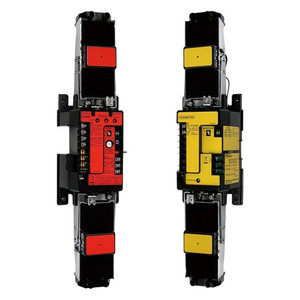
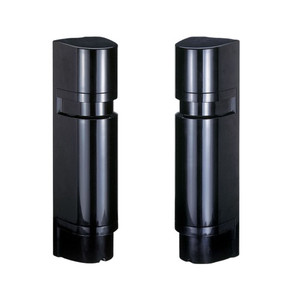
Takex PB-IN-200HFA 200m Outdoor Photoelectric Quad Beam Detector
Overview
The Takex PB-IN-200HFA is a photoelectric beam detector engineered for long-range outdoor perimeter intrusion detection. Its 200-meter detection range and quad beam configuration deliver extended boundary coverage with reduced false-alarm burden—a significant cost driver on 24/7 monitoring operations. The detector integrates into conventional hardwired security panels and IP-based alarm management platforms, supporting both new installations and retrofits into existing layered defense architectures. IP65 environmental sealing ensures year-round reliability across weather-exposed perimeter positions.
Key Features
- 200-Meter Detection Range: Covers extended fence lines, building perimeters, and critical infrastructure boundaries with fewer installation points—directly reducing material costs and commissioning labor on large estates or industrial properties.
- Quad Beam Configuration: Four simultaneous beam paths distinguish human passage (simultaneous multi-beam interruption) from nuisance events (single-beam transients caused by insects, dust, or weather debris). This filtering capability cuts false-alarm response costs and reduces alert fatigue in security operations centers.
- IP65 Environmental Rating: Sealed against dust ingress and low-pressure water spray from any direction. Supports coastal installations, high-humidity regions, and areas subject to irrigation overspray or regular washdown without recalibration or seasonal maintenance cycles.
- Photoelectric Beam Interruption Detection: Infrared beam technology operates consistently regardless of ambient light conditions—day, night, fog, or rain do not degrade detection sensitivity. No lens cleaning or light-dependent tuning required.
- Intelligent Signal Processing: Adaptive monitoring algorithms filter environmental transients while maintaining detection reliability for actual perimeter breaches. Reduces nuisance alarm load and false response dispatch costs.
- Flexible Installation: Supports both transmitter and receiver pole or wall mounting. Quad beam spacing adjustment allows technicians to optimize detection sensitivity for specific perimeter geometry—tighter spacing for pedestrian barriers, wider spacing for vehicle-detection applications.
Integration & Compatibility
The PB-IN-200HFA integrates via relay outputs into conventional hardwired security panels and modern IP-based alarm management systems. When paired with compatible control panels and intrusion platforms, the detector supports event reporting, zone assignment, and response automation. Field installers must verify panel input card compatibility before specification—confirm proper voltage and relay contact rating alignment to avoid integration delays.
Typical Deployments
- Commercial and industrial facility perimeter protection
- Critical infrastructure boundary monitoring (utilities, data centers, transportation hubs)
- Residential estate and property-line protection
- Layered security systems combined with IP cameras and access control
- High-traffic outdoor environments where nuisance alarm reduction is essential
Frequently Asked Questions
Q: What is the difference between quad beam and single-beam photoelectric detectors?
A: Single-beam detectors trigger an alarm on any infrared interruption—a limitation that results in high false-alarm rates from insects, dust, or weather transients. The PB-IN-200HFA's quad beam architecture requires simultaneous interruption of multiple beam paths to register an intrusion event, distinguishing genuine human passage from environmental noise. This filtering significantly reduces false-alarm response costs and alert fatigue.
Q: Is the PB-IN-200HFA suitable for coastal or high-humidity environments?
A: Yes. The IP65 rating confirms dust-sealed and water-spray-resistant construction, supporting continuous outdoor operation in coastal salt spray, high humidity, fog, and rain without lens degradation or seasonal recalibration. It is not rated for full submersion or high-pressure washing jets—those require IP67 or higher ratings.
Q: What mounting options are available for the PB-IN-200HFA?
A: The detector supports both transmitter and receiver pole and wall mounting with adjustment provisions for beam angle alignment. Installation flexibility allows deployment on fence posts, building faces, or gate structures. Consult the technical documentation for specific mounting hardware and clearance requirements.
Q: Does the PB-IN-200HFA work with modern IP-based alarm management platforms?
A: Yes. The detector outputs relay contacts compatible with conventional hardwired security panels and integrates into IP-based alarm management systems through standard relay interfaces. Verify panel input card voltage and contact rating compatibility during specification to ensure proper integration and event reporting.
Q: How does temperature affect PB-IN-200HFA performance?
A: The detector maintains beam alignment and detection sensitivity across a wide operating temperature range without seasonal recalibration. This temperature stability eliminates the need for field adjustments during seasonal transitions, reducing ongoing maintenance overhead.
Q: Can the PB-IN-200HFA beam spacing be adjusted for different detection scenarios?
A: Yes. The quad beam spacing is adjustable, allowing technicians to optimize detection sensitivity for specific perimeter geometry. Tighter spacing is configured for personnel barriers; wider spacing supports vehicle-detection applications.
James EverettPerspective based on aggregated IP Security Depot and affiliated engineering team experience.
The Takex PB-IN-200HFA is a solid long-range perimeter detector for sites where false-alarm reduction directly impacts operational costs. The 200-meter range cuts installation points by roughly 50% compared to shorter-range alternatives, and the quad beam architecture addresses the most common pain point: nuisance alarms from insects and weather transients that drive expensive false responses.
Technical Highlights:
- 200m Detection Range: Covers extended boundaries with fewer transmitter-receiver pairs. On a 1,000-meter perimeter, you deploy 5 units instead of 10—direct savings in hardware, cabling, and commissioning labor.
- Quad Beam Filtering: Simultaneous multi-path interruption requirement cuts nuisance alarms from flying insects and debris by an order of magnitude. Fewer false dispatches mean lower response costs and reduced drain on security staff attention.
- IP65 Sealing: Dust and spray resistance eliminates seasonal maintenance cycles. No lens cleaning, no recalibration after rain events. Temperature stability across the operating range means no drift-tuning needed in spring or fall.
Deployment Considerations:
- Relay Integration Only: The PB-IN-200HFA outputs contact closures, not IP event streams. If your architecture is purely IP-based (e.g., Milestone XProtect, Genetec), plan for a relay-to-IP gateway or conventional hardwired panel as the translator. This is not a limitation—it's the correct topology for long-range outdoor detection—but it does require explicit integration planning.
- Beam Alignment: Outdoor deployment means alignment drift over time due to vibration, thermal expansion, or ground settlement. Quad beam design masks small misalignments, but annual beam-path verification is still prudent on critical perimeters. Budget for occasional field adjustment.
- Not a Motion Camera: Photoelectric beams do not record or identify who crossed the boundary. Pair the PB-IN-200HFA with IP cameras on the same perimeter for evidentiary video and suspect identification. This is a detection layer, not surveillance.
Best suited for industrial estates, critical infrastructure (utilities, data centers), and commercial properties where perimeter size and false-alarm cost justify long-range detection. If your site is small enough for short-range beams or already saturated with IP cameras capable of motion analytics, a shorter-range detector or pure video-based intrusion detection may offer better value. For extended boundary lines on outdoor sites with night-shift operations, the PB-IN-200HFA justifies itself quickly.