


Product images are provided for reference and may not represent the exact model, configuration, or included
components.
Overview
SKU:
D4120
Condition:
New
Availability:
Usually ships in 24 hours
Warranty
Manufacturer Warranty
Write a Review
 27% OFF
Write a Review
System Sensor
System Sensor D4120 4-Wire Photoelectric Duct Smoke Detector
System Sensor D4120 4-Wire Photoelectric Duct Smoke Detector
System Sensor D4120 4-Wire Photoelectric Duct Smoke Detector Overview The System Sensor D4120 is a 4-wire photoelectric smoke detector designed for in…
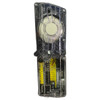
System Sensor D4120 4-Wire Photoelectric Duct Smoke Detector
$375.14
$274.99
Your recommended setup
Review items below — quantities update pricing automatically.
Item
Qty
Status
Price
Optional Add-Ons recommended
Services optional
Bundle Summary
Bundle Subtotal:
$0.00
Optional Add-Ons:
$0.00
Services:
$0.00
Total:
$0.00
Overview
SKU:
D4120
Condition:
New
Availability:
Usually ships in 24 hours
Warranty
Manufacturer Warranty
Description

System Sensor D4120 4-Wire Photoelectric Duct Smoke Detector
Overview
The System Sensor D4120 is a 4-wire photoelectric smoke detector designed for installation in heating, ventilation, and air-conditioning (HVAC) ductwork. This detector uses photoelectric sensing technology to identify smoke particles in air distribution systems, providing early warning capability in concealed spaces where traditional point detectors cannot be effectively deployed. The D4120 integrates into conventional fire alarm systems via standard 4-wire wiring protocols, making it suitable for retrofit and new construction applications where duct-mounted detection is required by code or operational safety standards.
Key Features
- Photoelectric Sensing Technology: Optical smoke detection method optimized for detecting visible smoke particles in duct environments, reducing false alarm susceptibility from dust and fast-flaming fire signatures.
- 4-Wire Configuration: Standard 24 VDC powered detector with separate alarm and supervisory signal lines, compatible with conventional fire alarm control panels.
- Duct-Mounted Design: Compact form factor engineered for integration into HVAC supply and return air ducts without restricting airflow.
- Addressable Integration Ready: Supports connection to conventional or addressable fire alarm systems depending on panel module selection.
- Low Maintenance: Self-cleaning optical chamber design reduces service intervals in typical HVAC environments.
- Quick-Connect Terminals: Field-installable terminal blocks simplify wiring and reduce installation time on jobsites.
Integration & Compatibility
The D4120 operates as a conventional 4-wire detector, requiring 24 VDC power and alarm/supervisory supervision from a compatible fire alarm control panel. Installation requires integration with the building's primary fire detection network. The detector's wiring configuration supports standard Class A or Class B loops depending on panel capabilities and code jurisdiction requirements. Duct mounting brackets are supplied separately to accommodate various duct dimensions and materials (metal, fiberglass, or composite).
Operational Specifications
The System Sensor D4120 operates on 24 VDC nominal supply voltage with current draw approximately 70 mA during normal supervision. The detector responds to smoke conditions within 60 seconds under standard test conditions, meeting UL 268 response time requirements for photoelectric detectors. Alarm threshold is factory-set at approximately 1.6% to 2.0% obscuration per foot of optical path, typical for duct smoke detection applications. The detector provides distinct alarm and trouble signals compatible with standard fire alarm monitoring equipment.
Installation Considerations
Proper duct location selection is critical—detectors should be installed in the first 10 feet of supply air leaving the furnace or air handler, and in return air ducts before filters to ensure representative smoke sampling. Avoid installation in areas subject to temperature extremes beyond 40°F to 100°F operating range. Ensure adequate clearance around the detector head to prevent dust accumulation and optimize optical chamber performance. All field wiring must comply with local electrical and fire code provisions.
Eden Phillips
The System Sensor D4120 duct detector is a straightforward, code-compliant solution for HVAC smoke detection. In my experience evaluating fire detection strategies across institutional and commercial projects, duct detection often gets overlooked until code officials identify the gap during plan review. The D4120 addresses this directly with proven photoelectric sensing and clean 4-wire integration into conventional fire alarm panels.
Technical Highlights:
- Photoelectric Detection Method: The D4120's optical sensing design is effective in duct environments where air velocity and particle density differ significantly from open spaces, reducing nuisance alarms from dust or cooking byproducts common in return air streams.
- 24 VDC 4-Wire Operation: Standard power and supervision scheme that works seamlessly with legacy and current fire alarm panels without requiring special modules or addressable loop infrastructure.
Deployment Considerations:
- Verify duct sizing and airflow characteristics before installation—the detector must be positioned where representative smoke-laden air passes through the optical chamber, typically 10 feet downstream of the air handler.
- Coordinate duct mounting location with HVAC design to avoid interference with dampers, filters, or acoustic insulation that could block sensor access.
- Plan for annual cleaning and functional testing per NFPA 72 standards; optical chamber debris buildup is the most common cause of detector desensitization on older installations.
For integrators standardizing on conventional fire detection systems without addressable loops, the D4120 remains a practical, cost-effective choice for bringing duct detection into compliance. Ensure supervisory signals are properly wired through your control panel's monitor modules, and document duct location clearly in your as-built fire alarm prints.
Specifications
Product Type:
Photoelectric Duct Smoke Detector
Communication:
4-Wire
Voltage:
24 VDC
Have Questions?
Ask an Expert.
RELATED PRODUCTS
System Sensor
System Sensor D4120W 4-Wire Watertight Duct Smoke Detector NEMA 4
$505.70
$367.99
Save $137.71

System Sensor
System Sensor 4WTA-B i3 Series 4-Wire Photoelectric Smoke Detector ...
$122.85
$93.99
Save $28.86
System Design, Deployment & Technical Support
Support services and planning resources for commercial surveillance, access control, and infrastructure deployments.
Fixed scope • Fixed price
System Design Assistance
- Get help validating product compatibility
- Coverage requirements
- Storage planning and deployment architecture before you buy.
Deployment & Configuration Support
- Access fixed-scope support for rollout planning
- User setup guidance
- Migration and system standardization across single-site or multi-site deployments
Guides, Tools & Calculators
- PoE requirements
- Storage retention
- Camera selection and deployment methodology