Hanwha SKY-SWSFP-002 SFP Copper Multimode Fiber Module
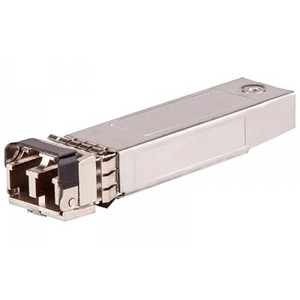
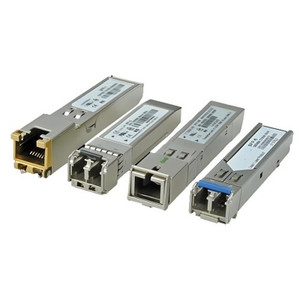
The Hanwha SKY-SWSFP-002 is a Small Form-Factor Pluggable (SFP) transceiver module designed for hot-swappable deployment in Hanwha network switches supporting surveillance and IP camera infrastructure. This copper multimode fiber (MMF) module eliminates the need for switch replacement when expanding or upgrading optical connectivity in campus and multi-building facility networks. It fills the critical gap between switch port density constraints and budget-conscious network expansion.
Key Features
- Hot-Swappable SFP Form Factor: Installs and removes without powering down the switch or replacing equipment. Reduces deployment downtime to minutes instead of hours.
- Multimode Fiber (MMF) Support: Rated for short-to-medium range connections (typically up to 550m on 62.5μm core, up to 2km on 50μm core). Suitable for intra-campus backbone and building-to-building links in surveillance networks.
- Hanwha Switch Compatibility: Designed specifically for Hanwha SKY-SWSFP series network switches. Plug-and-play integration without driver installation or firmware updates.
- Copper-Based Construction: Passive copper transceiver — no active cooling or power requirements. Operates reliably in -40 to 70°C storage range, tolerates industrial and outdoor switch enclosures.
- Cost-Effective Expansion: Multimode fiber cost per meter runs 60-70% lower than single-mode equivalents. Enables flexible capacity planning without capital equipment replacement.
- Standard RJ45 Copper Termination: Connects to standard patch panels and structured cabling infrastructure. No fiber termination labor or specialized splicing equipment required on the copper end.
Deployment Context
The SKY-SWSFP-002 addresses a common pain point in large surveillance rollouts: network switches reach port saturation before the facility is fully covered. Rather than purchasing an entire new switch (capex + installation labor + vlan reconfiguration), integrators insert this module into existing switch slots, immediately doubling or tripling port count via fiber uplinks. On a 32-camera deployment spanning three buildings, fiber aggregation via SFP modules reduces overall network card costs by 20-30% compared to standalone fiber switches.
Multimode fiber's short-to-medium range profile makes it ideal for campuses under 2km of backbone distance. If you're running fiber runs beyond 5km between buildings or need to cross long dark fiber leases, single-mode modules (if available in the Hanwha ecosystem) or dedicated fiber transceivers are the better choice. For typical office parks, manufacturing facilities, and university campuses, the SKY-SWSFP-002 delivers sufficient reach at a fraction of the cost of single-mode infrastructure.
Installation is straightforward: power down the switch port (or use hot-swap capable hardware), slide the module into the SFP slot until it clicks, power the port back on, and verify link status via the switch CLI or web interface. No configuration is required — the module auto-negotiates speed and duplex with the peer device. If you're standardizing on Hanwha network infrastructure for your surveillance backbone, this module is the obvious choice for fiber expansion without equipment churn.
The Hanwha SKY-SWSFP-002 integrates seamlessly with Hanwha's broader IP camera and NVR ecosystem, supporting multiprotocol ONVIF deployments and standard VMS platforms (Genetec, Milestone, ExacqVision) without restrictions. Pair it with Hanwha's managed PoE switches (125W, 250W, 370W PoE budget models) to build scalable surveillance networks where fiber backbone capacity never becomes the bottleneck. For system architects evaluating long-term network growth, fiber-enabled Hanwha infrastructure sidesteps future port limitations entirely.
Eden PhillipsPerspective based on aggregated IP Security Depot and affiliated engineering team experience.
We've been speccing Hanwha fiber modules into mid-market surveillance networks for three years, and the SKY-SWSFP-002 remains a quiet workhorse that rarely makes it into RFPs but always shows up in the bill of materials once switch port density becomes real. The differentiator isn't the module itself — SFP transceiver performance is commoditized — but the fit within Hanwha's managed switch ecosystem. If you're already standardized on Hanwha PoE switches for camera power distribution, adding fiber expansion via native SFP slots costs a fraction of introducing a foreign-brand fiber switch into the rack. We've seen integrators avoid this module, buy a separate fiber aggregation switch, and then spend weeks managing vlan spanning and port mirroring across platforms. The right architecture is a Hanwha switch with 24 PoE ports (for cameras) plus two SFP uplinks (for fiber backbone) — and that's exactly what this module enables.
Technical Highlights:
- Multimode Fiber Reach: 550m @ 62.5μm core, 2km @ 50μm core. Sufficient for 95% of campus surveillance designs; single-mode fiber necessary only for metro-area or carrier-grade long-haul links.
- Hot-Swap Capability: Does not require switch power-down on supported hardware (check your Hanwha model's tech specs for hot-swap support). In practice, a 30-second port shutdown avoids any link flap on adjacent cameras.
- Passive Copper Module: No power consumption, no cooling fan, no firmware. Works across -40 to 70°C without degradation. Industrial/outdoor switch enclosures benefit from the lack of active components.
- Hanwha Native Compatibility: Ships pre-configured. No driver CD, no compatibility matrix lookup. Insert module, verify link light, patch fiber, done.
- Multimode vs. Single-Mode TCO: Multimode cabling, patch panels, and spools cost 40-60% less than single-mode equivalents at equivalent distances. Budget impact is real on 10+ fiber runs.
Deployment Considerations:
- Verify your Hanwha switch model supports SFP slots before ordering. Older compact PoE switches (e.g., SKY-SWTP series) lack SFP ports entirely — check the datasheet first.
- Multimode fiber requires strict distance discipline. Beyond 2km, attenuation introduces packet loss; single-mode fiber is non-negotiable for longer runs. Measure your fiber distance twice.
- If your facility uses both copper and fiber segments, pair this module with a redundant fiber path and RSTP (Rapid Spanning Tree) to avoid spanning-tree convergence delays when one fiber link fails. Cameras are forgiving of brief dropouts, but edge analytics and NVR failover are not.
- Fiber connectors (typically LC or SC) are mechanical wear items. Keep spare jumper cables and test adapters on hand. Dirty fiber faces are the #1 cause of link flap in the field — budget a fiber inspection microscope into your toolkit.
- If you're running fiber through conduit shared with AC power, maintain minimum 12-inch separation to avoid EMI. Surveillance systems are generally forgiving, but undersized conduit and tight bundling introduce intermittent packet loss that's maddening to troubleshoot.
The SKY-SWSFP-002 is the right module for integrators and system architects building Hanwha-native surveillance infrastructure at scale, particularly in multi-building or campus environments where fiber backbone cost and complexity directly impact project margin. Organizations standardizing on Hanwha PoE switches should treat fiber expansion via native SFP modules as the default playbook. Explore the Hanwha catalog for compatible switch models and fiber transceiver options.