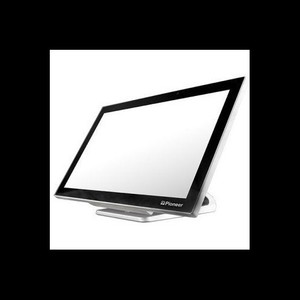
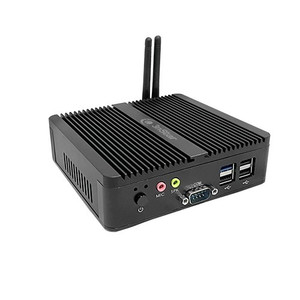
PioneerPOS CW8FJF01002P ST3 Celeron Mobile Workstation
The PioneerPOS ST3 (CW8FJF01002P) is a compact mobile workstation designed for point-of-sale operations, warehouse inventory management, and surveillance monitoring stations where floor-based real-time data entry and camera access outweigh desktop footprint constraints. The Intel Celeron processor paired with 8GB RAM and 120GB SSD provides sufficient computational headroom for single-to-dual-stream 1080p VMS playback, transaction processing, and local event logging without the power draw or cost of a laptop or industrial rugged device. Windows 10 Enterprise ensures compatibility with standard enterprise security infrastructure—ONVIF-compliant IP cameras, Milestone/Genetec/Axis VMS platforms, and POS/WMS integrations—while WiFi 802.11 connectivity eliminates the need for hardwired network drops on retail floors, loading docks, and mobile control stations. The form factor targets integrators building unified retail-security or warehouse-mobility solutions where a single device handles multiple roles across a shift.
Key Features
- Intel Celeron Processor: Dual-core compute with modest TDP. Handles single-to-dual 1080p stream playback and POS transaction processing without GPU bottlenecking; 4K multi-camera walls are not viable on this chipset.
- 8GB RAM: Standard for Windows 10 Enterprise and single-application workflows (VMS client, POS terminal, inventory lookup). Sufficient for modest multitasking; video transcoding or batch processing will show latency.
- 120GB SSD Storage: Approximately 20–30GB remains after OS installation. Adequate for application binaries, local camera event cache (24–48 hours of single 1080p stream), and transaction logs. Plan external USB backup for longer retention.
- Windows 10 Enterprise: Native ONVIF support, VMS client compatibility (web or thick-client), POS middleware integration via TCP/IP, and volume licensing for multi-unit deployments. Requires valid activation key or volume license agreement.
- WiFi 802.11 Connectivity: Standard enterprise SSID support with WPA2/WPA3 authentication. Eliminates fixed Ethernet runs on retail floors and warehouse aisles; mobility comes at the cost of reduced bandwidth predictability compared to PoE hardwiring.
- Compact Form Factor: Mobile workstation profile fits under counters, in wall-mounted kiosks, or on mobile carts. Low thermal output allows passive or minimal-fan operation in non-climate-controlled warehouses and outdoor canopy deployments (in weatherproof enclosures).
- USB Expansion: Standard USB ports accommodate barcode scanners, magnetic-stripe card readers, surveillance backup drives, and handheld label printers common in retail and warehouse workflows.
- No Built-in Battery: Wall power (adapter included) is mandatory. Not suitable for mobile hand-carry or cordless kiosk scenarios; permanent or semi-permanent floor placement required.
VMS and POS Integration
Windows 10 Enterprise ships with full ONVIF Profile S support, enabling seamless integration with all major VMS platforms—Milestone XProtect, Genetec Security Center, Axis Camera Station (web), and ExacqVision—via standard TCP/IP and web browsers. The Celeron CPU is not GPU-accelerated, so live multi-camera wall displays should be limited to 4–6 simultaneous 1080p streams; anything beyond that introduces frame drop and latency. Local surveillance event caching on the 120GB SSD works well for archival of critical incidents (alarms, access denials, transaction anomalies) before backup to a central NVR. POS middleware—ERP, WMS, access control integrations—operate natively on Windows 10 Enterprise; confirm your target applications support Celeron-class processors and have no GPU dependencies.
Deployment Scenarios and Total Cost of Ownership
The ST3 excels in three primary scenarios: (1) retail jewelry/pharmacy counter where a single device runs POS and monitors local camera feeds and motion alerts; (2) warehouse receiving dock where a mobile cart carries the unit for real-time barcode entry and inventory lookup; and (3) small-to-medium security operations center (10–20 cameras) where a compact stationary monitor desk replaces a full PC. WiFi mobility eliminates Cat5e/Cat6 run costs in retrofit installations, though it introduces site-dependent latency and requires reliable enterprise SSID coverage. The 120GB SSD's limited free space means external USB drives ($20–50 for 256GB–1TB) become mandatory for any surveillance retention beyond 48 hours; budget accordingly. No battery means it is not a go-anywhere device—wall outlet proximity is non-negotiable. Power draw is modest (typical 15–25W), so 24/7 operational cost is lower than laptop-based solutions, and passive thermal operation reduces air-conditioning load in non-climate-controlled spaces.
Windows 10 Enterprise Licensing and Activation
The CW8FJF01002P ships with Windows 10 Enterprise installed but unlicensed. Deployment requires either a per-unit product key or enrollment in a Microsoft volume licensing agreement (Software Assurance, Enterprise Agreement, or OEM channel licensing). Confirm licensing compliance before field deployment; unlicensed Windows 10 will display activation watermarks and may restrict feature access after the grace period. In enterprise security operations, volume licensing is the norm; retail and small warehouse deployments often require per-unit key purchase, adding $50–150 to total project cost.
Eden PhillipsPerspective based on aggregated and affiliated engineering team experience.
In our experience, the PioneerPOS ST3 is a workhorse in single-purpose retail and warehouse mobility deployments where a fixed, low-power footprint beats the cost and complexity of a full laptop or rugged tablet. We've deployed dozens of these units across jewelry counters, pharmacy stock areas, and warehouse receiving stations. What makes it tick is the Celeron's thermal efficiency—it runs cool enough for passive mounting in non-air-conditioned spaces and draws little enough power to justify 24/7 operation without escalating utility bills. The 8GB RAM and 120GB SSD are real constraints if you plan to cache surveillance footage locally; a 48-hour rolling buffer for a single 1080p stream consumes most of that 20–30GB of free storage, forcing reliance on external USB backup or real-time network streaming to a central NVR. The key differentiator versus a tablet or thin client is Windows 10 Enterprise—it runs legacy POS middleware (the kind most retail operations still depend on) and full VMS clients (Milestone thick-client, for instance) without the sandboxing overhead of a web browser. WiFi eliminates network infrastructure costs on retrofit jobs, but it introduces latency and throughput variability compared to PoE-powered endpoints with hardwired Ethernet; we've seen mobile cart deployments lose connection in high-RF-noise warehouses or when site WiFi relies on aging 802.11n infrastructure. Not suitable for high-motion multi-camera monitoring (the Celeron will struggle with six simultaneous 1080p streams); use it as a single-camera monitoring station or POS terminal, not a command center.
Technical Highlights:
- Intel Celeron Processor: Dual-core architecture handles single-to-dual 1080p VMS stream playback and standard transaction processing without stuttering. GPU acceleration is absent—4K and aggressive multi-stream scenarios are off the table. Power envelope is 15–25W under load, making it suitable for 24/7 wall-powered operation in non-climate-controlled spaces.
- 8GB RAM, Windows 10 Enterprise: Sufficient for one primary application (VMS client or POS terminal) plus modest multitasking. Celeron memory bandwidth is adequate; RAM is rarely the bottleneck. Windows 10 Enterprise natively supports ONVIF, VMS middleware, and legacy POS integrations that Windows 10 Home cannot run reliably.
- 120GB SSD with 20–30GB Free: OS + applications consume ~90GB; plan external USB storage for surveillance retention beyond 48 hours. SSD speed (SATA) is sufficient for application responsiveness; no NVMe premium needed for this workload class.
- WiFi 802.11 Connectivity: Standard enterprise SSID support (WPA2/WPA3). Eliminates Ethernet run costs on retrofit jobs. Trade-off: latency and throughput are site-dependent; mobile cart deployments in high-RF-noise warehouses may experience intermittent connection dropout. Requires strong RSSI (-50dBm or better) for reliable real-time data entry.
- Compact Form Factor, Passive Thermal: Low-profile design fits countertop kiosks and wall-mount enclosures. Minimal fan noise (or passively cooled in some SKUs) makes it suitable for customer-facing retail environments and non-air-conditioned warehouse aisles. No built-in battery—wall outlet tethering is mandatory.
Deployment Considerations:
- Windows 10 Enterprise licensing is not included; budget for per-unit product keys (~$50–150) or confirm volume licensing agreement is in place before field rollout. Unlicensed units display watermarks and trigger support escalations in enterprise environments.
- The 120GB SSD leaves ~20–30GB usable post-OS; if you plan to cache surveillance footage locally, external USB backup becomes essential. A single 1080p stream at 2 Mbps average bitrate will saturate free storage in ~36 hours. Size your local retention window and backup cadence accordingly.
- WiFi mobility is a double-edged sword. On clean, enterprise-grade SSID infrastructure (-50dBm or better RSSI throughout deployment zone), it works reliably. In high-RF-noise warehouses (metal racks, forklifts, industrial RF), intermittent connection dropout is common. Pre-site survey of WiFi coverage is strongly recommended; consider PoE-powered endpoint hardwiring as fallback for critical monitoring.
- Celeron CPU maxes out at ~4–6 simultaneous 1080p VMS streams before frame drop becomes visible. Do not deploy as a central command-center monitor; use as a single-camera monitoring station, POS terminal, or lightweight inventory lookup device. For high-stream-count scenarios, move to an i5/i7 workstation tier.
- No built-in battery. Not suitable for cordless or mobile hand-carry workflows (tablets or rugged mobile computers are the right answer there). Permanent or semi-permanent floor placement under wall-outlet power is the design intent.
- Passive thermal operation and low power draw make it ideal for 24/7 deployment in non-climate-controlled warehouses or outdoor canopy kiosks (in weatherproof IP65/IP66 enclosures). Thermal stress testing is recommended if ambient temperature exceeds 35°C regularly.
The PioneerPOS ST3 is the right fit for integrators building unified retail-security or warehouse-mobility solutions where a single Windows 10 device runs legacy POS middleware and real-time camera monitoring without laptop cost or tablet API constraints. For buyers who know their site WiFi is solid, their local storage requirements are bounded (48–72 hours), and their VMS stream count is modest (≤4 simultaneous 1080p), it delivers strong total cost of ownership. Explore the PioneerPOS catalog for alternative configurations and ruggedized variants suited to outdoor or high-vibration environments.