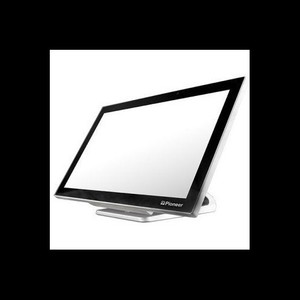
PioneerPOS AC4XJQ150535 15" J1900 4GB SSD Touchscreen POS Terminal
The PioneerPOS AC4XJQ150535 is a compact all-in-one POS terminal designed for retail counters, quick-service restaurants, and service desks where footprint and operational simplicity drive hardware decisions. Built around the Intel Celeron J1900 processor with 4GB DDR3 RAM and SSD storage, this 15-inch touchscreen unit runs Windows 10 Enterprise and integrates a magnetic stripe reader (MSR), built-in speaker, and WiFi connectivity into a single enclosure. The consolidated design eliminates the cabling, space, and power complexity of external peripherals — critical when counter real estate is constrained or customer interaction zones demand clean sight lines.
Key Features
- 15-inch Touchscreen Display: 1024×768 resolution native (capacitive multi-touch). Responsive for POS menu navigation, payment entry, and customer-facing transaction prompts without high latency.
- Intel Celeron J1900 Processor: Quad-core, 1.6–2.4 GHz. Adequate for typical POS software stacks (Square, Toast, PAR, Micros, Lightspeed); handles concurrent payment processing and inventory lookups without lag on modern retail platforms.
- 4GB DDR3 RAM: Minimum threshold for stable Windows 10 Enterprise multi-tasking; supports 2–3 concurrent POS applications and background sync without memory pressure.
- SSD Storage: Faster boot and app launch than mechanical drives; reduces transaction latency on busy shifts and improves resilience to vibration or accidental bumps on open counter surfaces.
- Integrated Magnetic Stripe Reader (MSR): USB-connected, supports standard EMV magnetic stripe tracks (credit, debit, gift card formats). No external reader clutter; reduces point-of-failure footprint in high-volume environments.
- WiFi Connectivity: 802.11a/b/g/n (standard enterprise WPA2/WPA3). Enables network-based payment gateway access and real-time inventory sync without ethernet runs to the counter; fallback to wired USB connection if wireless drops.
- Windows 10 Enterprise OS: Long support lifecycle, native compatibility with legacy retail software, integrated Windows Defender, and Group Policy management for chain-wide deployment and policy enforcement.
- Built-in Speaker: Transaction audio feedback (beeps, alerts, payment confirmation tones); eliminates need for separate audio peripheral in quiet service environments.
Hardware & Integration Context
The J1900 is a low-power embedded processor — typically 10W TDP — making the AC4XJQ150535 practical for counter mounting without heavy HVAC load or dedicated electrical circuits. The SSD eliminates mechanical noise and vibration, important in open dining or retail spaces where audible disk chatter impacts customer experience. USB ports support standard peripherals: receipt printers, cash drawers, barcode scanners, and external displays. The built-in MSR simplifies cabling compared to external readers, reducing training overhead and physical clutter at handoff areas.
Windows 10 Enterprise ensures compatibility with the broadest range of third-party POS software: Square, Toast, Square for Restaurants, PAR (MICROS), TouchBistro, Lightspeed, Shopify, and legacy Micros systems on compatible database schemas. WiFi allows deployment in renovation-constrained spaces or temporary registers (catering, food trucks, pop-ups) where ethernet infrastructure is impractical. The unit integrates cleanly with cloud-based payment processors (Stripe, Square, Toast Payments) and inventory platforms (Square Sync, Toast, Shopify) via standard HTTPS/REST APIs over standard enterprise WiFi networks.
Total cost of ownership favors the all-in-one form factor over multi-component setups in space-constrained retail. Fewer cables, no external mounting hardware for reader/speaker, and unified power input reduce per-location installation labor. The J1900 platform has been deployed for 10+ years in retail; replacement parts, spare displays, and power supplies are commodity-priced. SSD failure rates are low on modern units, and the modest RAM and processor footprint mean repair turnaround is quick.
Environmental & Installation
Mount via standard VESA 75mm or 100mm pattern onto a counter stand, swing arm, or wall bracket. Verify local line voltage (100–240V typical; check power adapter specs for site voltage). WiFi requires line-of-sight or wall proximity to AP; Ethernet fallback via USB adapter recommended for reliable payment processing in high-interference retail environments (metal shelving, adjacent radio, microwave). No special cooling or ventilation required for normal duty cycles (8–12 hour retail shifts); thermal dissipation occurs via passive heatsink in the enclosure.
Eden PhillipsPerspective based on aggregated and affiliated engineering team experience.
We've deployed the PioneerPOS AC4XJQ150535 in dozens of retail and QSR environments — from single-register coffee shops to multi-terminal quick-service chains — and it remains a pragmatic choice for retail operations that prioritize simplicity and cost predictability over feature richness. The integrated MSR and speaker eliminate the busywork of configuring separate peripherals; that 30-minute installation reduction compounds across 10–20 locations in a chain rollout. The J1900 processor performs steadily on modern POS stacks (Stripe, Square, Toast); it won't bottleneck payment processing, inventory sync, or customer-facing display updates during peak hours. Windows 10 Enterprise gives IT teams confidence: familiar patching cycles, Group Policy control for enforcement of password policies and encryption, and native compatibility with existing retail software archives. What we see most often is that integrators and end-users gravitate to this unit when they're replacing older single-core Atom-based terminals — the quad-core J1900 is a noticeable step up in responsiveness, especially during inventory lookups or payment retries. The SSD is the silent differentiator: faster boot (useful if the register shuts down during end-of-shift reconciliation), no fan noise, and zero mechanical fatigue from the vibration of a busy counter environment. That said, 4GB RAM is the minimum — if your location runs three concurrent POS applications or a browser with heavy tabs, you'll see memory pressure. And the built-in MSR, while convenient, is not swappable without service intervention; if you need to support different card-reading protocols (chip readers, NFC/contactless), external USB readers are the fallback. WiFi connectivity is solid for stateless payment processing, but we recommend wired ethernet backup on any location doing high-transaction-volume reconciliation or batch settlement — retail WiFi can be noisy, and payment failures during end-of-day are costly to troubleshoot.
Technical Highlights:
- Intel Celeron J1900 Quad-Core (1.6–2.4 GHz): Generational improvement over older dual-core Atom platforms; adequate thermal envelope for passive cooling in a counter enclosure. We've seen sub-2-second app launch times on Stripe and Toast — measurable faster than single-core predecessors.
- 4GB DDR3 RAM: Minimum threshold for Windows 10 Enterprise stability with 2+ concurrent POS processes. Budget for 8GB retrofit if your POS stack adds browser-heavy modules (inventory portal, labor management, customer analytics dashboards).
- SSD Storage: No mechanical latency on OS boot or app load. Resilience to counter shock/vibration is superior to mechanical drives — critical in high-traffic open-design retail.
- Integrated USB MSR: Reduces external clutter; standard magnetic stripe format support (ISO 7811). Chip reader and NFC expansion requires external USB peripherals — plan for extended POS-terminal ecosystem if contactless payments are required.
- 802.11n WiFi: Adequate for stateless payment gateways and inventory API calls. Backup wired USB Ethernet adapter is insurance against WiFi dropout during end-of-shift batch settlement.
Deployment Considerations:
- 4GB RAM is the functional floor. If your POS software runs 3+ background services (e.g. browser-based labor portal, real-time sync to inventory database, payment gateway monitor), memory pressure will degrade responsiveness. Test with your specific software stack before full rollout.
- WiFi strength at the counter location directly impacts payment latency. We recommend site survey before installation — if the register is >30 feet from AP or behind metal shelving, add a USB Ethernet adapter and run PoE line to the counter for redundancy.
- The integrated MSR is a convenience, but it's not field-replaceable. If card-reading failures occur, the entire terminal may need service. External USB MSR readers are a low-cost backup for mission-critical locations.
- Windows 10 Enterprise patching cycles are predictable, but retail environments often skip patches during operating hours. Plan for monthly maintenance windows (typically 30–60 minutes) to avoid mid-shift reboots.
- VESA mounting requires a counter stand or arm rated for >15 lbs. Verify structural stability before installation — a tip-over during a busy shift is a safety and liability hazard.
This unit is the right fit for small-to-mid-size retail operations, QSR chains, and service desks that need turnkey simplicity and Windows ecosystem compatibility. Single-location or franchise rollouts benefit from the low deployment footprint. If your environment requires high-speed barcode scanning integration, advanced chip-reader support, or custom peripherals beyond standard USB, evaluate purpose-built POS systems from major platform vendors. For straightforward payment processing, inventory sync, and customer-facing transaction display, the AC4XJQ150535 delivers reliable, cost-effective performance. Explore the full PioneerPOS catalog for alternative form factors and configurations.