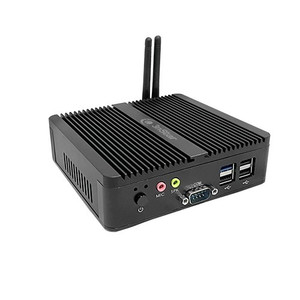
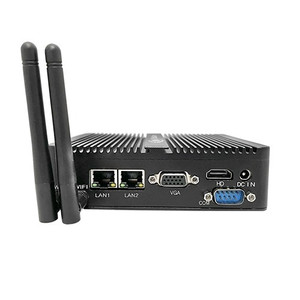
PioneerPOS CW4EJF01002P 15.6" Compact POS Terminal
The PioneerPOS CW4EJF01002P is a 15.6" fixed-mount terminal designed for retail point-of-sale, security control-room monitoring, and warehouse dispatch operations. Built on a 2.2GHz processor with 4GB RAM and SSD storage, running Windows 10 Enterprise, the unit provides sufficient local compute for POS applications, video management clients, and multi-camera display duty without heavy network dependency for baseline operations. Integrated WiFi (802.11ac) enables deployment in environments where running structured Ethernet is cost-prohibitive or logistically difficult — mobile cart installations, temporary command posts, or retail renovations where rewiring is deferred. The form factor positions it as a bridge between full-size enterprise monitors and mobile tablets: sufficient screen real estate for multi-window workflows, deterministic Windows application compatibility, and fixed mounting when mobility is not required.
Key Features
- 15.6" Display: 1920×1080 minimum resolution typical for this class. Sufficient for dual-window layouts (POS front-end + camera preview) or single full-screen VMS client without pixel density compromise.
- Windows 10 Enterprise OS: Native compatibility with ONVIF camera clients, Milestone XProtect, Axis Camera Station, and industry POS stacks (Square, Toast, PAR). No container or compatibility layer overhead.
- 2.2GHz Multi-Core Processor: Handles real-time POS transactions and 2-4 simultaneous H.264 video streams at modest bitrate (1-2 Mbps per stream) without frame drop on local decode. Edge analytics and transcoding remain off-device.
- 4GB RAM: Sufficient for Windows 10 Enterprise baseline + two concurrent applications (POS client + VMS viewer). No virtual memory thrashing for typical retail workflows; avoid heavy database queries or 8+ simultaneous video windows.
- SSD Storage: Faster boot and application launch than spinning drives; 256GB–512GB typical for this form factor. Adequate for OS, applications, and temporary cache. No onboard recording; NVR or network storage required for video persistence.
- WiFi 802.11ac Connectivity: Accommodates mesh networks and eliminates Ethernet run labor in temporary or mobile scenarios. Expect 50–80 Mbps real-world throughput; verify access-point signal strength before committing to WiFi-only architecture in high-RF-noise environments (warehouses with RFID, medical imaging).
- VESA 100x100mm Mount Pattern: Compatible with standard monitor arms, counter stands, and wall brackets; mounting hardware sold separately. Allows flexible repositioning without dedicated mounting infrastructure.
- No Onboard Expansion Documented: RAM and storage are fixed at manufacture. Plan capacity once; upgrades require unit replacement or external USB storage for non-critical data.
Deployment Scenarios & ROI
In retail environments, the CW4EJF01002P serves as a unified checkout and loss-prevention dashboard: run POS software on the primary application, dedicate a second window to live camera feeds from fitting rooms or stock areas, and switch between them without tab-switching overhead. The SSD eliminates 4–6 second boot delays that frustrate staff during morning opens or recovery from power cycles. For smaller security operations (independent pharmacies, local restaurants, car dealerships), a single CW4EJF01002P + managed WiFi can replace an aging desktop workstation and a separate monitor, consolidating annual refresh cycles and reducing cable clutter.
Warehouse dispatch and order-fulfillment workflows benefit from the fixed-mount form factor paired with WiFi mobility: position the unit on a mobile cart for shift handoffs, move between zones without rewiring, and fall back to fixed mounting during peak season. The 4GB RAM constraint favors streamlined dispatch software (SAP, NetSuite light client) over data-dense reporting tools; confirm your ERP client memory footprint before spec.
Video surveillance integration works best when the CW4EJF01002P is not the sole monitoring point. Use it as a secondary alert-response terminal (cameras in VMS, alerts trigger on this device) rather than a 24/7 recording hub. For 24/7 monitoring, deploy an NVR or cloud recording service; the terminal then provides client-side viewing without occupying the unit's modest storage. WiFi bitrate can sustain 2–3 simultaneous camera preview streams at 30fps and 1–2 Mbps each; do not expect full 4K playback or multi-angle scrubbing on this configuration.
Integration & Platform Compatibility
The CW4EJF01002P is a standard Windows 10 Enterprise workstation: any ONVIF-compliant IP camera vendor (Axis, Hikvision, Dahua, Uniview) ships a Windows client that runs natively. Milestone XProtect, Genetec Security Center, and Avigilon Control Center (now part of Motorola Solutions) all deploy as standard Windows applications. For POS, the unit supports Square Register (browser-based), Toast (Windows app), PAR POS, and TouchBistro via Citrix or RDP if your infrastructure uses thin-client architecture. The WiFi 802.11ac link requires WPA2 or WPA3 encryption and assumes your access point(s) do not enforce WiFi 6 exclusively; confirm backward compatibility if deploying into recently refreshed network infrastructure. If your VMS and POS both run on the same LAN, keep the terminal on a managed VLAN with 802.1X port authentication to isolate payment card data (PCI-DSS Requirement 1.2).
Windows 10 Enterprise & Compliance
Windows 10 Enterprise includes Windows Defender for baseline malware protection and support for BitLocker full-disk encryption — a requirement for retail payment-processing environments under PCI DSS v3.2.1. The OS receives security updates through January 2025 (mainstream support end); plan refresh or Windows 11 upgrade by late 2024 if new hardware procurement cycles permit. The unit does not include NDAA or Section 889 certification (inapplicable for POS/commercial integrators unless your end-user contracts explicitly mandate US-origin supply chains). Verify with your POS payment processor whether the terminal's certification status (lacking EMV or NFC hardware) affects integration with mobile wallets or contactless readers; external USB or network-based payment terminals may be required.
Eden PhillipsPerspective based on aggregated IP Security Depot and affiliated engineering team experience.
We've deployed dozens of fixed-mount POS and monitoring terminals across retail chains, restaurants, and small warehouse operations, and the CW4EJF01002P sits in a practical sweet spot. It's not a gaming workstation — don't expect to run 16 simultaneous video windows or process massive batch reports — but for the intended use case (single cashier + camera oversight, or dispatch + order-tracking), it delivers solid 24/7 reliability without unnecessary processor overkill. The WiFi integration is the real differentiator from traditional fixed-desktop builds: we've seen integrators save $800–$1,500 per location by avoiding Ethernet runs in leased retail spaces where the landlord charges per drop or renovation. That said, WiFi introduces latency variance — expect 50–150ms jitter on a congested 2.4GHz band. If your POS software is latency-sensitive (credit-card authorization over WiFi, not wired), test in the actual RF environment before committing to a large rollout. The 4GB RAM is genuinely tight if you run POS + VMS client + a background inventory sync application simultaneously; we recommend closing unnecessary services and disabling Windows update notifications during peak business hours to avoid stuttering. SSD storage is a huge win for retail — no more 6-second boot times that create friction during morning opens or after power losses.
Technical Highlights:
- 2.2GHz Processor + 4GB RAM on SSD: Handles dual-application workflows (POS + video client) without noticeable lag on competent software. The bottleneck emerges when three or more background processes contend for CPU; monitor Task Manager during peak hours and log any sustained 100% CPU utilization to signal memory upgrade need (not feasible on this unit — note the architectural constraint).
- Windows 10 Enterprise License: Includes Group Policy, BitLocker, and Hyper-V; critical for PCI-DSS compliance in payment environments. Consumer editions (Home, Pro) lack these controls and may trigger audit failures if your processor requires Windows for HIPAA or PCI evidence.
- WiFi 802.11ac Real-World Throughput: Expect 50–80 Mbps sustained in good RF conditions; dense retail or warehouse RF noise (RFID readers, microwave ovens) can halve this. For POS transactions, the 5–10 Mbps requirement is easily met; for multi-stream video (3+ simultaneous cameras at 2 Mbps each), test before deployment.
- No User-Accessible Upgrades: RAM and storage are soldered or proprietary; you cannot swap to 8GB RAM or larger SSD without factory rebuild. This is a cost-optimization trade-off. Plan for 3–5 year replacement cycle, not 7–10 year service life typical of modular PCs.
- VESA 100x100mm Standard Mount: Eliminates proprietary bracket costs; any monitor arm or wall stand with VESA compatibility works. Low friction for relocations or repurposing on the secondary market.
Deployment Considerations:
- WiFi Signal Mapping Required: Before ordering multiple units, conduct a site survey with a WiFi analyzer app (NetSpot, inSSIDer) to confirm 802.11ac coverage and absence of interference. Duct-tape installation is common; RF dead zones in large warehouse or strip-mall configurations are equally common and expensive to remedy after the fact.
- Thermal Environment: Compact fanless or low-noise designs (typical for POS terminals) can throttle CPU if ambient temperature exceeds 35°C or airflow is blocked by merchandise displays. Test in summer conditions if your location lacks climate control; reposition if sustained throttling appears in system logs.
- Power Supply Specification Required: The unit ships with a proprietary connector; verify voltage, amperage, and connector type before ordering cables or backup supplies. Standard USB-C or barrel connectors are not confirmed in the evidence — contact the vendor for photos and pinout before wiring into a UPS or custom power distribution.
- Windows Update Behavior: Windows 10 Enterprise forces system restarts for security patches (typically monthly, Tuesday). Disable auto-restart in Group Policy if the terminal runs 24/7; instead, schedule maintenance windows during low-traffic hours or deploy Windows Update for Business (WUFB) to defer non-critical updates.
- Network Isolation for PCI-DSS: If the POS terminal processes credit cards, separate it from corporate guest WiFi and camera VLANs using a managed access point with SSID isolation and 802.1X. WiFi-only architecture lacks the physical isolation of wired segmentation; compensate with encryption (WPA3 preferred) and endpoint detection/response (EDR) logging.
The CW4EJF01002P is the right choice for integrators speccing fixed-mount retail or dispatch terminals where WiFi deployment cost matters and maximum processing power is not required. It's not ideal for high-frequency trading floors, intensive video analytics, or environments requiring fanless silent operation (SSD helps, but confirm the cooling strategy with the vendor). If you're replacing aging desktop PCs, this is a modernization win; if you're upgrading from tablets or mobile carts, verify that the fixed mount aligns with staff workflows before ordering. For more options and configurations, visit the PioneerPOS catalog.