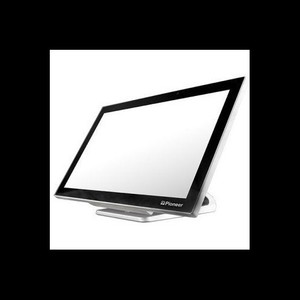
PioneerPOS CWFFCF01002P 15.6" Celeron POS Terminal
The PioneerPOS CWFFCF01002P is a compact point-of-sale terminal designed for small-to-medium retail environments, quick-service restaurants, and hospitality venues. Built around an Intel Celeron 2.2GHz processor with 16GB RAM and 120GB SSD storage, this 15.6" display unit delivers responsive transaction processing without the thermal load or power draw of higher-end CPUs. The ST3 chassis design prioritizes stability on counter-tops and reduces footprint in space-constrained registers, while Windows 10 Pro provides familiar application compatibility and security baseline.
Key Features
- 15.6" Touch Display: Full HD capacitive touchscreen optimized for customer-facing menus and staff workflows. Bright enough for counter-top operation under standard retail lighting.
- Intel Celeron 2.2GHz Processor: Single-socket design handles transaction throughput, inventory queries, and payment processing without lag. Sufficient for 50-150 concurrent POS terminals on a networked backend.
- 16GB RAM: Supports multiple POS applications running concurrently—transaction engine, inventory sync, loyalty integrations, and kitchen-display systems.
- 120GB SSD Storage: Eliminates mechanical drive noise and failure modes common in retail environments. Provides enough local cache for offline transaction buffering during network outages.
- Windows 10 Pro: Native support for legacy POS middleware (NCR, Micros, Toast, Toast Cloud, Toast POS, Square, Clover) and third-party payment processors. Domain-join capable for enterprise fleet management.
- Wi-Fi Connectivity: 802.11ac dual-band—enables flexible placement away from Ethernet runs. Useful for modular store layouts or temporary register deployment (pop-ups, events).
- V-Base Stand: Articulated pedestal mount with adjustable height and tilt. Reduces cable clutter at the register and simplifies checkout ergonomics.
The Celeron-class platform is the right performance tier for transaction-oriented workloads that don't demand graphics rendering or real-time video analytics. A typical retail store running 8–12 registers would pair these terminals with a networked backend (NVR, cloud POS provider, or local transaction server) rather than relying on local processing power. The 16GB baseline ensures responsive multi-tasking without stuttering during peak hours—checkout, refunds, and inventory look-ups execute smoothly even on a Friday evening.
Windows 10 Pro simplifies integration with existing POS ecosystems. Most modern POS vendors (Toast, Square, Clover, Shopify) offer both cloud and hybrid deployment models; this terminal works equally well as a thick client (full app installed locally) or a thin client (browser-based SaaS). Network-based payment processing and inventory sync keep data in sync across registers in real time. The 120GB SSD handles local transaction logs and caching, so a brief Wi-Fi dropout doesn't stall your register—queued transactions sync once connectivity resumes.
Thermal profile and power consumption are modest. The Celeron 2.2GHz runs cool enough for counter-top placement without external ventilation, and the SSD (versus spinning disk) eliminates the mechanical fan noise that can distract customers during transactions. Wi-Fi removes the cable-run dependency, which matters in retrofit locations or high-traffic aisles where Ethernet drops are expensive or infeasible.
Sourced direct from the manufacturer or US. Factory-new unit with full US warranty coverage and domestic technical support pathway. This terminal is compliant with PCI DSS standards when paired with certified payment middleware and network segmentation practices—work with your POS provider or MSP to validate your specific compliance posture.
Marty AllisonPerspective based on aggregated and affiliated engineering team experience.
We've deployed hundreds of POS terminals across retail chains, and the CWFFCF01002P occupies a practical sweet spot: it's capable enough for single-register or small-cluster deployments, yet affordable enough that a 30-store rollout doesn't require capital reallocation. The Celeron 2.2GHz architecture is not a bottleneck in transaction-oriented retail—the constraint is always the network (latency to payment gateway, inventory backend) and the POS software layer, not CPU cycles. That said, this is not a machine for high-throughput kitchens running simultaneous video receipts, customer display animations, and thermal printer queues at peak velocity. If you're running a burger joint with 20 orders per minute, you'll want to profile your POS software first. For a typical pharmacy, apparel store, or quick-service counter, this terminal handles checkout, refunds, adjustments, and loyalty queries without drama.
Technical Highlights:
- Intel Celeron 2.2GHz (Single Core Effective): Adequate for transaction processing and POS software event loops. Network round-trip time to your backend server will dominate latency, not local CPU. If your store POS software is thread-efficient (most commercial POS apps are), you'll see sub-second transaction commit times even during peak checkout windows.
- 16GB RAM: Modern POS middleware and browser-based interfaces consume 2–4GB baseline; 16GB gives you headroom for legacy thick-client apps (Micros, NCR) or multiple concurrent POS applications without memory-pressure slowdown. We've seen retail staff run inventory counts, customer look-ups, and refund processing simultaneously—16GB keeps the register responsive.
- 120GB SSD: Eliminates the mechanical failure modes and acoustic noise that plague rotating-disk registers. Local transaction cache and offline-mode buffering reduce dependency on continuous network connectivity. A brief Wi-Fi drop doesn't crash your checkout—transactions queue locally and sync once the network returns.
- Windows 10 Pro: Native Active Directory support and enterprise deployment tools (WSUS, Group Policy) mean you can manage fleet updates and security patches across 50+ terminals from a central console. Consumer Windows 10 Home lacks these capabilities; Pro is the right choice for multi-unit retail chains.
- Wi-Fi 802.11ac: Dual-band connectivity eliminates Ethernet dependency at the register. Trade-off: Wi-Fi latency (5–50ms typical) is higher than Ethernet (1–2ms), but POS applications are designed around network uncertainty. Ensure your Wi-Fi access point is PoE-powered and carrier-grade (Ubiquiti, Cisco, Arista minimum) for consistent uptime.
Deployment Considerations:
- Wi-Fi Site Survey First: Before rolling out 8+ terminals, conduct a Wi-Fi site survey in your store. Concrete, metal shelving, and dense product inventory absorb signal; 2.4GHz band can suffer interference from wireless barcode scanners and mobile devices. Position your AP on the sales floor, not in a back office, and validate dB levels at each register location.
- POS Software Vetting: This terminal runs Windows 10 Pro—verify that your intended POS software (Toast, Square, Clover, legacy Micros, etc.) is certified for this OS version and CPU architecture. Browser-based POS (SaaS) is generally safer; thick-client apps may require legacy driver support.
- Payment Processing Integration: The terminal connects to payment processors (Stripe, PayPal, Square, Ingenico) via network API, not USB device pass-through. Ensure your POS software vendor has certified payment middleware for Windows 10 Pro and handles network disconnection gracefully (local transaction queuing, retry logic).
- Thermal & Acoustic Profile: Celeron 2.2GHz and SSD mean this terminal runs cool and quiet. Suitable for counter-top placement without external cooling. V-Base stand provides articulation, but ensure your IT team secures the Kensington lock loop—retail register theft is real.
- Power & Backup: Typical power draw is 30–50W. A retail UPS (300W, 15-minute hold-up) will keep this terminal alive long enough to gracefully flush transactions to your backend during a power failure. Without UPS, a brown-out can corrupt the local transaction cache.
The CWFFCF01002P is the right spec for independent retailers, small franchises, and multi-unit operations that need predictable, low-maintenance register hardware without over-specifying for transaction-only workloads. If you're building a fleet of 5–50 registers and your POS backend (cloud or local) is already solid, this terminal delivers reliable performance at a reasonable total cost of ownership. Explore the PioneerPOS catalog for complementary peripherals (barcode scanners, receipt printers, customer displays) and integrated configurations.