Speco Technologies VID2412CONV 24VAC to 12VDC Power Converter
Overview
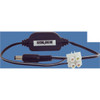
The Speco Technologies VID2412CONV is a regulated AC-to-DC power converter engineered for security camera installations where 12VDC auxiliary power is required from a 24VAC backbone. This compact converter transforms 24VAC input (standard across professional CCTV systems) into a stable 12VDC regulated output at 500mA maximum current. At just 0.9 ounces, the unit fits into tight equipment racks, wall-mounted panels, and integrated security enclosures without consuming valuable real estate. The VID2412CONV addresses a specific integration gap: sites that already invest in 24VAC distribution infrastructure but need 12VDC for motorized lens controllers, pan-tilt motors, IR illuminators, alarm relay outputs, or sensor interfaces.
Regulated output matters. Voltage sag under load—common in long wire runs or when multiple accessories draw current simultaneously—can degrade motor performance, dim IR illuminators, or trigger false relay transitions. The VID2412CONV maintains output stability across load fluctuations, extending the service life of connected accessories and eliminating performance drift in the field.
Key Features
- Input Voltage: 24VAC (standard security system voltage) — no need for a separate external power supply at remote equipment locations, simplifying wiring and reducing cable runs.
- Output Voltage & Current: 12VDC regulated at 500mA maximum — supports motorized lens drives, pan-tilt mechanisms, IR illuminators, and sensor circuits without a dedicated secondary supply.
- Regulated DC Output: Maintains stable voltage across varying load conditions, protecting sensitive electronics and preventing the voltage sag that can disable motor functions or dim IR arrays in extended field deployments.
- Compact Form Factor: 0.9 oz weight enables flexible installation in crowded racks, wall enclosures, and integrated security panels where space is constrained.
- AC/DC Conversion: Accepts standard alternating current input and delivers direct current output, bridging legacy 24VAC systems to modern 12VDC auxiliary devices.
- Continuous Duty Rating: Engineered for round-the-clock operation in professional surveillance environments without derating or thermal management complexity.
Integration & Compatibility
The VID2412CONV integrates into existing 24VAC surveillance systems with minimal effort. Security integrators deploy this converter to extract stable 12VDC from centralized 24VAC supplies, eliminating the need for dedicated low-voltage power supplies at remote camera locations or equipment nodes. Installation is straightforward: connect 24VAC input leads to an existing 24VAC distribution block or power supply terminal, then route the 12VDC output to target devices.
Typical auxiliary loads include motorized zoom and focus lenses (which draw variable current during lens operation), pan-tilt motors on speed domes or wall-mount turrets, infrared illuminator arrays, and alarm relay circuits. The 500mA regulated output protects downstream electronics from voltage fluctuation damage—a critical factor when IR illuminators must maintain consistent brightness or when motor-driven accessories require stable torque delivery in the field.
For system designers planning CCTV power solutions, the VID2412CONV offers a cost-effective alternative to deploying multiple standalone power supplies. When combined with a primary 24VAC distribution backbone, it centralizes power management and reduces installation labor.
What's in the Box
Speco Technologies VID2412CONV power converter unit.
Frequently Asked Questions
Q: Can the VID2412CONV power multiple devices at once?
A: Yes, provided the combined current draw of all connected devices does not exceed 500mA at 12VDC. Sum the amperage specifications of motorized lenses, IR illuminators, and relay circuits before commissioning. If total load exceeds 500mA, a dedicated power supply rated for the full load is required.
Q: What happens if I exceed the 500mA output limit?
A: Excessive load will cause the converter's internal regulation to degrade, resulting in voltage sag that may disable motorized accessories or dim IR illuminators. Verify all device specifications during installation planning.
Q: Is the VID2412CONV suitable for outdoor camera enclosures?
A: The converter itself is not rated for outdoor exposure. Mount it inside weatherproof equipment cabinets, wall-mounted panels, or central distribution boxes, then run 12VDC output leads to outdoor cameras or accessories.
Q: Can I use the VID2412CONV with non-Speco cameras and accessories?
A: Yes. The VID2412CONV provides standard 12VDC regulated output compatible with any camera or auxiliary device that accepts 12VDC input, regardless of manufacturer.
Q: How do I position the converter in a crowded equipment rack?
A: At 0.9 ounces and compact form factor, the converter can be mounted directly on a DIN rail, panel-mounted with adhesive backing, or integrated into a custom enclosure. Position it near the 24VAC input source to minimize wiring distance and voltage drop.
Ted PerryPerspective based on aggregated IP Security Depot and affiliated engineering team experience.
The VID2412CONV solves a recurring integration challenge: extracting stable 12VDC from a 24VAC backbone without deploying a separate dedicated power supply at the camera or auxiliary device location. In mixed-voltage deployments—where the primary surveillance infrastructure runs 24VAC but individual motorized lenses, pan-tilt mechanisms, or IR illuminators require 12VDC—this compact converter keeps wiring simple and cost-controlled. It's particularly valuable in retrofit jobs where 24VAC cable is already in place and adding a second power supply run would double labor and materials cost.
Technical Highlights:
- 500mA Regulated Output: The regulation circuit maintains stable 12VDC delivery even when load current fluctuates—critical for motorized lens controllers that draw peak current during focus/zoom transitions and IR illuminators that must hold consistent brightness across ambient temperature swings.
- 24VAC Input Acceptance: Standard security-grade alternating current input eliminates any compatibility questions in retrofit and new-build deployments where 24VAC power distribution is already established.
- 0.9 oz Footprint: Extremely compact form factor allows installation in tight equipment racks, wall-mounted distribution panels, and integrated security enclosures without requiring dedicated shelf space or bulky mounting brackets.
Deployment Considerations:
- Sum all connected auxiliary device current ratings before commissioning. Motorized lenses typically draw 200–400mA during operation; IR illuminators add 150–300mA depending on array size. Total load must not exceed 500mA, or voltage regulation will collapse and motor/IR performance will degrade.
- Position the converter close to the 24VAC supply source. Long input wire runs (over 50 feet) can introduce voltage drop on the AC side, reducing output voltage stability. Consider the converter's location during rack or panel layout.
- Mount in an enclosure or protected location; the unit itself has no environmental rating and must not be exposed to direct moisture, dust, or temperature extremes. Use weatherproof junction boxes or cabinet interiors for outdoor installations.
Ideal for warehouse automation integrations where motorized dome cameras oversee loading docks (24VAC already distributed for access control), retail security deployments using turret cameras with motorized lenses (single 24VAC supply serving multiple locations), and bank teller areas where IR illuminators enhance facial recognition—the VID2412CONV keeps auxiliary power clean and avoids the complexity of secondary supplies.