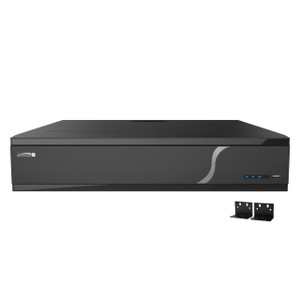
Speco Technologies SB01M 256-Channel Network Video Recorder
Overview
The Speco SB01M is a centralized network video recording platform designed to handle large-scale security deployments. The system supports simultaneous recording from up to 256 IP camera channels, making it suitable for enterprise campuses, municipal infrastructure, multi-site retail operations, and distributed facilities where unified monitoring and evidence management are critical. Unlike edge-based recorders tied to individual cameras, the SB01M consolidates recording infrastructure into a single controllable system, reducing points of failure and simplifying forensic workflows across large deployments.
Built on proven server architecture, the SB01M scales efficiently across networked environments while maintaining the redundancy and reliability expected in professional security operations. The platform operates as a network appliance over standard Ethernet, eliminating proprietary cabling requirements and allowing flexible placement relative to camera distribution points across your facility.
Key Features
- 256 Simultaneous Camera Channels: Manages recording streams from up to 256 IP cameras without requiring additional server hardware. For operations spanning a warehouse complex or multi-building campus, this consolidation avoids the cost and administrative overhead of deploying separate recorders per zone while keeping all video under one management interface.
- Centralized Recording and Storage: Unified video storage and retrieval across multiple recording zones simplify administration and eliminate the need to query footage across physically dispersed systems. A single archive point reduces the likelihood of losing forensic evidence to misconfiguration or isolated hardware failure.
- Network-Based Deployment: Operates as a standard network appliance over Ethernet infrastructure. No specialized cabling or local camera connections are required, and the system can be placed in a climate-controlled server room or network rack separate from camera locations. This flexibility is especially valuable when retrofitting existing facilities or integrating with geographically distributed sites.
- ONVIF Profile Compatibility: Integrates with ONVIF-compliant cameras from multiple manufacturers without proprietary codec limitations. This openness reduces vendor lock-in and allows integrators to mix camera brands across a deployment without compatibility concerns or forced ecosystem upgrades.
- Adaptive Bitrate Recording: Handles continuous and event-triggered recording streams with adaptive bitrate management to optimize storage utilization. When scene complexity is low (static hallway overnight), bitrate drops; during high activity (crowded entrance), bitrate increases to preserve detail. This approach extends your retention window without oversizing storage hardware.
- Modular Storage Expansion: Supports scalable storage configuration to accommodate extended retention windows and high-resolution camera streams. As your facility adds cameras or increases retention requirements, storage capacity can be expanded without replacing the entire system.
- Remote Access and Management: Authorized personnel retrieve footage, configure recording profiles, and monitor system status from networked workstations without on-site presence. Security operations centers can manage the SB01M alongside other networked devices using familiar interfaces, reducing training overhead.
- Standard Ethernet Connectivity: Leverages existing IT network infrastructure, allowing deployment in distributed locations without additional cabling investments. The system integrates into your network spine using standard PoE switches and managed network segments.
Integration and Compatibility
The SB01M is engineered around open standards to ensure compatibility with existing security ecosystems. ONVIF Profile support allows the server to accept streams from third-party cameras, preserving flexibility in camera selection and avoiding forced equipment replacement when adding capacity to an existing deployment.
Integration with popular VMS platforms occurs through standard APIs and ONVIF interfaces. Security operations centers manage the SB01M alongside other networked devices using familiar workflows—no specialized software training or proprietary management dependencies. Integrators configure recording profiles, manage user access controls, and archive forensic footage without workflow disruption.
Deployment Considerations
The SB01M is designed for climate-controlled server room or network rack deployment. Standard Ethernet connectivity simplifies cabling and permits flexible placement relative to camera distribution points. For integrators managing multiple properties or geographically distributed facilities, the centralized architecture reduces point-of-failure risk by consolidating recording infrastructure into a single controllable system while maintaining network redundancy and failover capabilities where IT infrastructure supports them.
When selecting a network video recorder, consider your facility's scale, retention requirements, and camera resolution mix. The SB01M's 256-channel capacity is appropriate for enterprise campuses, municipal networks, and retail chains; smaller single-building installations may not require this scale. Consult bandwidth and storage planning guides to ensure your network infrastructure and disk capacity align with your recording resolution and retention policy.
Frequently Asked Questions
Q: Does the SB01M work with cameras from multiple manufacturers?
A: Yes. The SB01M supports ONVIF-compliant cameras from any manufacturer, allowing you to integrate equipment from different vendors without compatibility concerns or forced ecosystem lock-in.
Q: What is the maximum number of cameras the SB01M can record simultaneously?
A: The SB01M supports up to 256 IP camera channels recording simultaneously. This channel count is sufficient for large enterprise campuses, municipal infrastructure, and multi-site retail deployments.
Q: Can the SB01M be accessed remotely for footage retrieval and system management?
A: Yes. Authorized personnel can retrieve footage, configure recording settings, and monitor system status from any networked workstation. Remote access eliminates the need for on-site presence to manage recording operations.
Q: What network connectivity does the SB01M require?
A: The SB01M operates over standard Ethernet infrastructure. It connects to existing network switches and IT infrastructure without requiring specialized cabling, allowing flexible placement in server rooms or network racks separate from camera locations.
Q: Can I expand storage capacity if my retention requirements increase?
A: Yes. The SB01M supports modular storage expansion to accommodate extended retention windows and high-resolution camera streams. Storage capacity can be scaled as your facility adds cameras or increases retention policy requirements without replacing the entire system.
Q: What VMS platforms integrate with the SB01M?
A: The SB01M integrates with popular VMS platforms through standard APIs and ONVIF interfaces. Configuration and management occur using familiar workflows without proprietary software dependencies.
Ted PerryPerspective based on aggregated IP Security Depot and affiliated engineering team experience.
The Speco SB01M consolidates a common architectural challenge: how to manage forensic video across 256 camera channels without deploying separate recorders in each zone and losing unified storage and management. The centralized approach cuts administrative overhead and eliminates the fragmentation risk inherent in distributed recording systems. If your deployment spans multiple buildings or sites, a single SB01M instance simplifies failover logic and reduces the likelihood of orphaned footage stranded on isolated hardware.
Technical Highlights:
- 256 Simultaneous Channels: Handles recording from up to 256 IP cameras without additional server infrastructure. For large campuses or multi-site retail operations, this scale avoids the cost and complexity of deploying edge recorders per location.
- ONVIF Compatibility: Integrates with cameras from any manufacturer without codec lock-in. This flexibility is essential when retrofitting existing mixed-brand deployments or integrating third-party equipment into your security ecosystem.
- Adaptive Bitrate Management: Records continuous and event-triggered streams with bitrate optimization based on scene complexity. Lower bitrate during static overnight periods extends your retention window without oversizing disk capacity.
- Standard Ethernet and Network-Based Deployment: Operates over existing IT infrastructure; no proprietary cabling required. Placement in a climate-controlled server room isolates recording hardware from camera mounting locations, reducing environmental stress and simplifying maintenance access.
Deployment Considerations:
- The SB01M requires adequate network bandwidth to handle simultaneous 256-channel recording. Pre-sizing your Ethernet infrastructure and validating PoE switch capacity is essential before commissioning. Consult your IT team on network load and redundancy requirements.
- Storage planning is critical: calculate total bitrate across all cameras, apply your retention policy (e.g., 30 days, 90 days), and confirm disk capacity before installation. Adaptive bitrate helps, but high-resolution or high-motion scenes still consume significant storage.
- If you operate geographically distributed facilities, the centralized SB01M architecture simplifies evidence management but introduces single-point-of-failure risk if the network link or recorder goes down. Coordinate with your IT infrastructure team on network redundancy and failover strategy.
The SB01M is the right choice for enterprise campuses, municipal networks, and retail chains where consolidation of recording infrastructure and unified forensic management outweigh the need for distributed edge recording. For smaller single-building installations, a lower-channel NVR may deliver better cost efficiency and similar operational value.