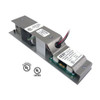
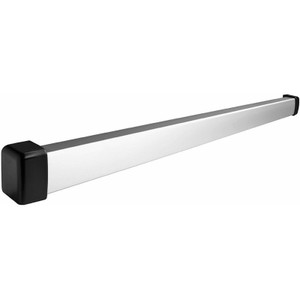
SDC LR100HK Hager 4500 Series Exit Controller
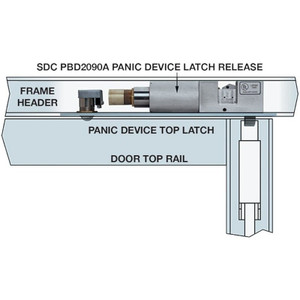
The SDC LR100HK is an OSDP-enabled access control controller designed to integrate NFC/13.56MHz proximity readers and keypads with Hager 4500 Series mechanical exit devices. The pairing of OSDP protocol compliance with dual-credential input (proximity + keypad) enables integrators to retrofit panic hardware with modern access control logic without replacing the physical exit device. This is particularly valuable in high-traffic facilities—retail, healthcare, institutional—where exit device reliability and fire rating cannot be compromised, but access audit trails and multi-factor authentication are required.
Key Features
- OSDP Protocol Support: Industry-standard Open Supervised Device Protocol (OSDP) communication enables integration with major access control platforms (Genetec, Hirsch, Salto, Software House, Lenel) and third-party management suites without proprietary gateway middleware.
- NFC/13.56MHz Proximity Reader: Supports ISO/IEC 14443A and ISO 15693 credential formats. Dual-credential input (proximity card + integrated keypad) allows PIN backup or multi-factor authentication workflows without additional hardware.
- Hager 4500 Series Compatibility: Direct mechanical integration with Hager 4500 panic and fire-rated exit devices. Maintains UL/NFPA compliance and exit device certification while adding access control intelligence.
- Wired Connectivity: Hardwired design eliminates battery dependency and wireless interference concerns. Standard RJ45 or terminal-block wiring depends on the specific VMS integration module (verify with your platform).
- Low-Energy Operator Compatible: Works with ADA-compliant low-energy operators on Hager 4500 devices. Integrators can deploy power-assist exits without adding separate credential readers outside the device footprint.
- Dual-Input Flexibility: Proximity reader + keypad in a single controller simplifies installation on high-traffic doors where card loss or occasional PIN-only access is operationally necessary.
- Lifetime Warranty: Manufacturer lifetime warranty on the controller eliminates mid-life capex surprises on exit device hardware replacements.
The LR100HK bridges the gap between mechanical exit hardware and modern access control infrastructure. Panic hardware is engineered for reliability and code compliance—exit devices are inspected, tested, and certified for fire egress, and replacing them purely to gain access control functionality is wasteful. The LR100HK retrofits that intelligence onto existing Hager 4500 devices, preserving the certified mechanical performance while adding audit trails, credential deactivation, and multi-factor authentication without a forklift upgrade.
OSDP communication is the critical differentiator here. Unlike older Wiegand or RS-485 protocols that require custom drivers or serial-to-Ethernet converters, OSDP is built into modern VMS and ACS platforms natively. This means your integrator doesn't need to maintain proprietary middleware, doesn't risk serial-port broker crashes on older server hardware, and can migrate VMS platforms without rewriting door logic. On a retrofit project with 30+ exits, that's meaningful operational simplification.
Credential flexibility—proximity + keypad in one controller—addresses real-world high-traffic scenarios. Retail entry doors often see lost badges or forgotten PINs. A dual-input system lets you enforce "card OR PIN" logic at the VMS level, reducing lockouts during shift changes and eliminating the need to mount a separate keypad beside a reader. For healthcare facilities, it supports clinical workflows where staff may need rapid egress during emergencies but also audit trails for controlled areas.
Wired deployment with low-energy operator compatibility is essential on ADA-compliant doors. Battery-powered or wireless readers introduce single-point failures on accessible entrances; a hardwired OSDP controller tied to building-wide PoE or power rails ensures the door function persists even if the credential system restarts. Low-energy operators draw minimal power (typically <1A @ 24VDC), so capex on UPS or redundant power rails is often unnecessary.
The LR100HK is OSDP-compliant and carries no NDAA or Section 889 sourcing restrictions. It does not include biometric processing, encryption keys, or cloud connectivity—credential validation and unlock/deny decisions remain under your VMS control. Verify Hager 4500 device UL/NFPA listing with your jurisdiction before installation; the controller does not alter the exit device's fire rating, but improper electrical integration (loose 24V wiring, shared neutrals) can invalidate certification.
Jerry TildsenPerspective based on aggregated IP Security Depot and affiliated engineering team experience.
In our experience, the LR100HK solves a genuine retrofit challenge: integrators often inherit facilities with well-maintained Hager 4500 exit devices but no linked access control layer. Replacing the entire exit device just to add credentials is expensive and operationally disruptive—facility teams often push back on the capex and downtime. The LR100HK lets you preserve the mechanical reliability and certification of the Hager hardware while bolting on modern credential logic and audit trails. OSDP compliance is the real win here. We've seen too many projects hamstrung by Wiegand interfaces that required serial drivers, custom VMS plugins, or proprietary gateway hardware that became orphaned when the VMS vendor went through an acquisition cycle. OSDP is open, it's in the OS kernel drivers of Genetec and Milestone, and it survives platform migrations. On a 40-door retrofit across multiple buildings, that standardization is not a luxury—it's the difference between a maintainable system and a technical debt spiral.
Technical Highlights:
- OSDP Protocol Native Support: No proprietary drivers, no serial-to-Ethernet converters, no VMS plugin maintenance. OSDP is standardized, widely supported, and survives ACS platform changes. We've migrated OSDP-based systems from one VMS to another in under 24 hours; Wiegand retrofits often took a week of custom integration work.
- Dual-Credential Input (Proximity + Keypad): On high-traffic doors, lost badges and forgotten PINs are operational reality. A single controller supporting both inputs eliminates the need to mount two separate readers, reduces clutter on the door frame, and lets your VMS logic enforce "card OR PIN" policies without double-tap delays.
- NFC/13.56MHz Format Flexibility: ISO/IEC 14443A (typical MIFARE classic) and ISO 15693 (iCLASS, HID Prox) support means you're not locked into a single credential format. If you need to migrate to a higher-security format (like DESFire EV2), the reader firmware often supports it; you're not ripping out hardware.
- Hager 4500 Mechanical Preservation: Exit devices are certified hardware—UL, NFPA, ADA compliance are serious business. The LR100HK integrates as a control layer without altering the mechanical function. Fire rating, panic-bar sensitivity, and door closer performance remain unchanged and auditable. This matters in regulated facilities (healthcare, schools, government).
- Low-Energy Operator Compatibility: On ADA-accessible entrances, power consumption and reliability are non-negotiable. The controller works with sub-1A operators, so you avoid the capex of oversized 24V power supplies and redundant UPS branches just to run the access control layer.
- Lifetime Warranty: Controller hardware failures are rare, but when they happen, you're not hunting for a replacement on secondary markets or negotiating lead times. Lifetime coverage means spares on hand or next-day depot repair.
Deployment Considerations:
- OSDP communication requires a compatible VMS or ACS controller (Genetec, Hirsch, Salto, Software House, etc.) as the upstream intelligence layer. If you're using a legacy, Wiegand-only system, the LR100HK will not communicate without an OSDP-to-Wiegand converter; verify VMS support before ordering.
- Power and signal wiring must be carefully planned. The controller draws 24VDC; integrate it into a dedicated exit-device power circuit, not a shared building automation network. Loose grounds or shared neutrals can degrade the OSDP signal and cause credential reader timeouts.
- Hager 4500 installation is critical. The LR100HK is a retrofit module—it bolts onto the exit device but does not replace the mechanical latch or closer. Verify the exit device is correctly installed and functioning before connecting the controller. A mis-hung door with binding friction will cause operator strain and false unlock attempts.
- NFC reader range is typically 4-8 inches depending on card type and antenna tuning. On high-traffic doors with tailgating risk, position the reader at chest height and angle it to discourage multi-card reads. For PIN-only access during badge outages, test keypad tactile feedback and illuminate it if the installation is dimly lit.
- Fire egress logic: the LR100HK should be wired so that loss of 24V power or OSDP communication does NOT de-energize the electric strike or operator. Hager 4500 devices are mechanical—if power is lost, the door should remain in its last commanded state (typically unlocked for fire egress). Verify the electrical design with your local AHJ before commissioning.
The LR100HK is purpose-built for retrofit integrations on Hager 4500 hardware in mid-to-large facilities (retail, healthcare, education, government) where exit device reliability and code compliance are non-negotiable but access audit trails and credential control are required. It's particularly valuable when your client wants to avoid a full exit-device replacement capex. Learn more in our SDC catalog.