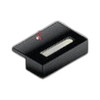
SDC EZ-D-10 Relock Delay Timer Input Module
The SDC EZ-D-10 is a distributed door-level timer controller designed for field installation in networked access control systems. It provides adjustable relock delay timing (1–30 seconds) for electromagnetic locks without requiring centralized programming or panel management. Deploy this module when you need per-door hold-open timing control across multi-entrance facilities where dwell-time requirements vary by entrance type—main lobbies demand longer egress windows, emergency exits require faster relock, and loading docks may need intermediate timing. The modular architecture scales from single-door retrofit to campuswide multi-door rollouts without architectural redesign.
Key Features
- Field-Installed Modular Design: No central panel reprogramming required. Timing adjustment (1–30 seconds) is configurable on-module via potentiometer or dip switch. Deploy and tune at the door location itself.
- TCP/IP Networked Communication: Integrates with distributed door controllers over standard TCP/IP infrastructure. Works alongside HID-format credential readers and compatible access control platforms.
- Electromagnetic Lock (EMLock) Control: Direct output wiring to EMLock solenoid circuits. Timing applies to lock release/relock sequencing independent of controller firmware.
- Distributed Architecture: No bottleneck at a central NVR or access control server. Each door runs its own timing logic, reducing latency and improving fault isolation.
- Adjustable Hold-Open Delay: 1–30 second range covers standard egress codes (typically 5–15 seconds for ADA compliance) with headroom for high-traffic lobbies or dock operations.
- Lifetime Warranty: Factory-backed coverage for the product lifecycle, no annual renewal fees.
- 12–24 VDC Power Input: Standard low-voltage supply. Compatible with existing door controller power architecture in most installations.
- Scalable Multi-Door Deployment: Add identical modules at each door without reconfiguring central infrastructure. Linear capex scaling—no licensing fees per door.
Electromagnetic lock timing is one of the most common field tuning tasks in access control. Standard practice is to set a delay long enough for traffic flow (wheelchair, cart, or crowd egress) but short enough to prevent tailgating or extended hold-open abuse. The EZ-D-10 shifts that tuning decision from the central panel to the door, where installers can observe real traffic patterns and adjust on the spot. A 5-second delay may work at a secure loading dock; the main employee entrance might need 12 seconds during shift change. Spreading timing control across door-level modules eliminates the operational friction of opening a central panel for each site adjustment.
In multi-reader or multi-credential environments, the EZ-D-10 pairs seamlessly with HID-format readers integrated into your door controller platform. TCP/IP networking means no proprietary cabling—standard Ethernet connects the distributed door modules back to access control backend systems (Genetec, Honeywell MAXPRO, or equivalent). Credential validation still happens at the reader/controller level; the EZ-D-10 simply manages lock timing after a valid badge is presented. This separation of concerns reduces single points of failure and keeps each door's timing logic independent of network latency or central server downtime.
Installation footprint is minimal. The module mounts at or near the door controller location, requiring only 12–24 VDC power and a low-voltage output wire to the EMLock solenoid driver. Field configuration via on-module adjustment means zero software deployment, zero VPN access to a central management portal. For facilities with legacy or heterogeneous readers (older HID proximity, newer mobile credentials via Bluetooth bridge), the EZ-D-10 remains agnostic—it responds to timing signals from whatever controller is running the show. Verify compatibility with your specific door controller model before purchase; this module is designed for platforms that support external timer input modules and can route control signals to electromagnetic locks.
Total cost of ownership is favorable for distributed deployments. No licensing per door. Lifetime warranty eliminates end-of-life refresh cycles. Field-tunable timing means no return trips to reprogram the central panel or pay service calls for minor adjustments. In a 20-door facility, that's measurable operational savings across the install and maintenance lifecycle. The modular design also future-proofs the system—if you expand to 50 doors in year three, you simply add more EZ-D-10 modules without architectural overhaul.
Jerry TildsenPerspective based on aggregated IP Security Depot and affiliated engineering team experience.
We've installed the EZ-D-10 across a range of multi-door facilities—office parks, warehouses, healthcare campuses—and it consistently solves the same problem: eliminating the operational overhead of managing electromagnetic lock timing from a central panel. In our experience, the real value isn't just the modular hardware; it's the shift in control philosophy. When timing lives on the door itself, site managers can respond in real time to operational feedback. A loading dock with frequent cart traffic might need a 20-second hold-open; the security office can request a quick on-site adjustment, and an installer with a screwdriver can dial in the potentiometer without scheduling a service call or touching firmware. That agility pays dividends over a 5–10 year lifecycle, especially at facilities with seasonal traffic spikes or changing operational requirements.
The distributed TCP/IP architecture is also a departure from older central-panel models. Each door runs its own timing logic, which means that if your central access control server goes down, the locks still relock on schedule. That resilience matters in high-security environments or critical infrastructure sites where a central failure can't cascade into a physical security incident. We've seen integrators pair the EZ-D-10 with failover reader configurations, so credential validation continues even if the main network segment is unavailable.
Technical Highlights:
- Adjustable Relock Delay (1–30 seconds): On-module tuning via potentiometer or dip switch eliminates the need to reprogram a central controller. For ADA egress compliance (typically 5–15 seconds) plus operational headroom, 30 seconds maximum is sufficient for nearly all deployment scenarios. We typically land between 8–12 seconds for standard office/retail entrances.
- Field-Installed Modular Design: No firmware updates, no VPN provisioning, no central panel workflow. Mount the module, wire the EMLock output, dial in your timing, and you're live. Installation complexity is minimal compared to panel-based timing logic or software-managed delay sequences.
- TCP/IP Networking: Integrates over standard Ethernet infrastructure. No proprietary cabling, no dedicated serial lines to each door. That reduces capex significantly on distributed sites and simplifies troubleshooting—a network engineer can trace connectivity without specialized access control training.
- Electromagnetic Lock (EMLock) Direct Control: Output drives solenoid circuits directly. The EZ-D-10 doesn't mediate credential validation—your reader and controller handle that. The module is a pure timing engine for lock release/relock, which keeps its failure domain narrow and its logic predictable.
- Distributed Fault Tolerance: Central server outage doesn't affect relock timing at individual doors. Each module operates independently, so site-wide network failure doesn't turn your electromagnetic locks into permanent holds.
- Lifetime Warranty: No annual renewal, no surprise end-of-life discontinuation. For a facility planning 10+ year cycles, that's a hard cost advantage over subscription-model or annual-refresh hardware.
Deployment Considerations:
- Verify your existing door controller platform explicitly supports external timer input modules. The EZ-D-10 is designed for distributed architectures; older central-panel systems may not have the hardware connector or firmware logic to accept it. Check the controller datasheet or contact the manufacturer's technical support before purchase.
- HID credential reader integration assumes your readers are already networked via your controller platform. If you're running legacy parallel wiring (Wiegand or RS-485 directly to a panel), confirm that your new distributed setup will migrate those readers to TCP/IP-compatible endpoints.
- Power availability at the door location is essential. Ensure 12–24 VDC supply is installed or can be run as part of the retrofit. If power distribution is sparse, plan conduit and supply runs before the field installation date to avoid change orders.
- Test the timing interval under realistic traffic conditions before finalizing the deployment. A 10-second delay might be tight during shift changes or emergency evacuation drills. We recommend a 2–3 day observation period with adjustable timing before locking in the final setting.
- In high-security environments, consider adding a manual override or emergency unlock button wired in parallel to the EMLock circuit. The EZ-D-10 controls solenoid timing, but facility policy may require a hardwired manual egress path independent of the electronic delay logic.
The EZ-D-10 is ideal for integrators and facility managers building or expanding distributed access control systems where per-door timing flexibility is a requirement. If you're scaling from single-door controllers to multi-entrance deployments, or if your current central panel is becoming a bottleneck for timing adjustments, this module is a practical solution. Explore the SDC catalog for compatible door controllers and related networked access hardware.