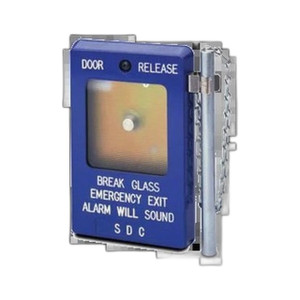
SDC 491 Blue Break Glass Emergency Door Controller
Overview
The SDC 491 is a wired access control controller designed for multi-door deployments requiring redundant emergency egress. This unit handles up to 10 doors and operates on 30VDC, communicating via both OSDP and TCP/IP — meaning you can integrate it into modern IP-based security architectures without laying dedicated RS-485 runs to every reader. The blue break-glass emergency function provides a hardwired override activation point, critical for life-safety scenarios where network or power anomalies might otherwise trap occupants. If you're building a distributed access system across a warehouse, office complex, or critical infrastructure site, the 491's dual-protocol support and emergency function address the practical constraints of large installations.
Key Features
- 10-Door Capacity: Manages access control logic for up to 10 discrete door points — enough for small-to-medium facilities or a single zone within a larger campus. Reduces the number of controller units you need to purchase and manage compared to single-door alternatives.
- OSDP + TCP/IP Connectivity: OSDP (Open Supervised Device Protocol) ensures vendor-neutral reader interoperability; TCP/IP allows network-based deployment without serial cable infrastructure. This dual approach means you can migrate readers and panels gradually without equipment replacement.
- 30VDC Operating Voltage: Standard in the access control industry, 30VDC powers both the controller and connected readers/locks. Simplifies power distribution — a single 30VDC supply can feed multiple devices, reducing PSU count and complexity on the rack or in the cabinet.
- Credential Format Support (DESFire, MIFARE, NFC @ 13.56MHz, 125kHz Proximity): Handles both high-frequency (13.56MHz) and low-frequency (125kHz) card technologies, plus NFC. This flexibility lets you deploy a single controller across facilities using mixed legacy and modern credential ecosystems without a forklift upgrade.
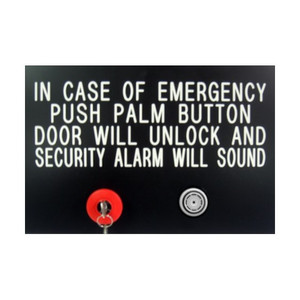
- Blue Break Glass Emergency Activation: Physical button or contact closure that triggers emergency unlock on all controlled doors. In a power failure, network outage, or system lockdown scenario, authorized personnel can press the button to unlock the space immediately — no software, no network dependency. Meets building codes requiring manual emergency egress.
- OSDP Compliance: Ensures the 491 works with certified OSDP readers and panels from multiple vendors — locks you out of no ecosystem. Critical if you're standardizing on OSDP for a multi-site, multi-vendor environment.
Integration & Compatibility
The 491 integrates into both legacy serial-based access control networks and modern IP-based VMS/ACS platforms. OSDP readers from Salto, HID, Anviz, and other certified manufacturers will communicate with the 491 without custom drivers or middleware. TCP/IP connectivity means the unit can sit on your enterprise network alongside IP cameras, intercoms, and access control panels, reducing infrastructure complexity. If you're implementing access control across distributed sites, the 491's support for both protocols means you're not locked into a single vendor's ecosystem.
When to Choose a Different Model
If you need to control more than 10 doors in a single logical zone, SDC offers higher-capacity controllers in the same family. If your facility doesn't require break-glass emergency activation (for example, a low-security storage area with manual unlock capability already in place), a simpler controller may reduce cost. If you're deploying exclusively in a cloud-first environment with no legacy RS-485 infrastructure, evaluate whether the 491's OSDP support is necessary or if a native-IP alternative would simplify maintenance.
Frequently Asked Questions
Q: Does the SDC 491 work with my existing OSDP readers?
A: Yes. The 491 supports OSDP-compliant readers from any certified manufacturer. Confirm your reader is OSDP certified; if it is, communication is guaranteed.
Q: What happens to the doors if the network goes down?
A: Network loss affects credential verification and remote commands, but the break-glass emergency function remains active as a hardwired override. Doors locked in the secured state will stay locked unless the break-glass button is pressed or power is lost.
Q: Can I mix 13.56MHz and 125kHz readers on the same 491?
A: Yes. The 491 supports both frequencies simultaneously, letting you deploy DESFire/NFC readers on some doors and legacy proximity readers on others without separate controllers.
Q: How much power does the 491 draw?
A: The controller and readers together must be sized to the 30VDC supply. The 491 itself is low-draw; your main load is the readers and electric locks. Consult the datasheet for typical wattage and size your PSU accordingly.
Q: Is the blue break-glass button weatherproof for outdoor mounting?
A: The 491 is a wired controller typically mounted indoors or in a protected cabinet. The break-glass button mounting and enclosure rating depend on your specific installation. Verify IP/IK ratings for your deployment environment.
Ted PerryPerspective based on aggregated IP Security Depot and affiliated engineering team experience.
The SDC 491 sits at an interesting intersection: it's old-school wired architecture (30VDC, OSDP serial roots) with modern IP networking bolted on. That's not a weakness — it's the whole point. If you're integrating access control into a facility that already has legacy RS-485 reader networks, the 491 lets you run IP to the controller without ripping out every reader. The break-glass function is equally pragmatic — not flashy, but non-negotiable for any door that needs manual emergency unlock independent of network state.
Technical Highlights:
- 10-Door Dual-Protocol Support: OSDP + TCP/IP means you deploy without dedicated serial runs. One Ethernet run feeds the 491 and its readers; everything else is wired to the unit locally. In a distributed warehouse or multi-floor office, that cuts cabling and termination labor significantly.
- Credential Agility (13.56MHz + 125kHz simultaneous): You aren't forced to migrate all legacy 125kHz prox readers at once. Deploy NFC/DESFire on new doors, keep the old 125kHz infrastructure on others, manage both from one controller. Real-world deployment flexibility that reduces capital spend and disruption.
- Emergency Bypass (Break Glass): Hardwired override — no network, no software, no authentication bypass exploits. Press it and doors unlock. It's life-safety redundancy, and it's a code requirement. Don't under-estimate its importance in your risk assessment.
Deployment Considerations:
- The 491 expects a robust 30VDC supply. If you're daisy-chaining readers and locks, calculate the full load early — a 5A supply is not the same as a 10A supply when you have eight readers and four magnetic locks pulling power. Under-spec here and you'll get intermittent unlock failures and reader dropout, especially under cold-start conditions.
- TCP/IP and OSDP are both on the table, but they're not automatically interchangeable. OSDP readers require OSDP configuration; TCP/IP assumes you have network infrastructure and VMS/ACS software listening. Map your reader ecosystem before buying — a mix of pure TCP/IP readers and OSDP readers on the same 491 will require dual middleware or careful segmentation.
The 491 is the right choice for a medium-scale, mixed-credential environment where emergency egress is non-negotiable and you want to avoid a forklift upgrade of reader hardware. Pair it with a solid 30VDC PSU, plan your credential types in advance, and the break-glass function ensures you're never locked in by software failure.