SDC 492 Emergency Door Release Controller
Overview
The SDC 492 is a dedicated emergency door release controller built for access control systems where redundant egress capability must coexist with credential-based authentication. This wired controller addresses a specific deployment need: facilities that require emergency pull-station override alongside networked access control infrastructure. The 492 integrates into distributed door management architectures, whether you're retrofitting an existing multi-door site or commissioning a new mixed-credential environment.
Key Features
- Manages up to 63 doors per controller — meaningful scale for mid-to-large facilities. If you're running a warehouse, parking structure, or multi-floor office with dozens of electronically controlled exits, a single 492 eliminates the need for multiple smaller controllers. At larger scales (100+ doors), you'd chain multiple units or step up to a panel with higher door capacity.
- Supports 250,000 user credentials — sufficient for enterprises with turnover or multi-site deployments. This credential depth removes the need to frequently purge inactive users or manage multiple credential databases across controllers.
- Operates at 30VDC — standard for access control lock power supplies. Your existing door strike and magnetic lock infrastructure likely already uses 30VDC; the 492 aligns with that power ecosystem, reducing separate supply requirements.
- OSDP and TCP/IP connectivity — two paths into your security ecosystem. OSDP (Open Supervised Device Protocol) isolates reader communication from your primary network; TCP/IP lets the 492 sit directly on your IP backbone. Choose based on your VMS architecture and risk posture. Many integrators prefer OSDP for reader traffic isolation, especially in high-security facilities.
- Multi-credential support: DESFire, MIFARE, NFC (13.56MHz), and 125kHz proximity cards — no forced migration to a single card technology. This flexibility is critical if you've inherited a mixed-card environment or need to transition legacy proximity systems to modern NFC without replacing every reader and card in circulation simultaneously.
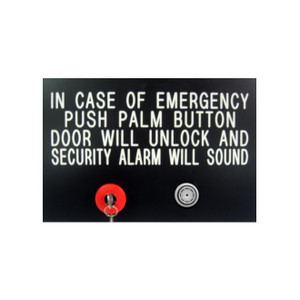
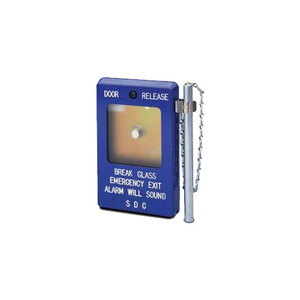
- Blue pull-station interface — emergency egress override. In code-compliance scenarios, this provides the required manual emergency release pathway independent of network status. The physical pull design ensures staffing can trigger egress without authentication, meeting fire code mandates in most jurisdictions.
Integration & Compatibility
The 492 is compatible with OSDP-compliant access control panels and IP-networked security management systems. If your VMS (such as access control systems platforms) supports OSDP readers or TCP/IP device management, the 492 integrates directly. Facilities using mixed-credential reader infrastructure—where some access points use 125kHz and others use 13.56MHz NFC—can deploy a single 492 to arbitrate all of them without separate controllers per card type. Standard 30VDC power supplies commonly deployed in distributed access control already meet the 492's power requirements; no specialized PSU procurement necessary.
When to Choose a Different Model
If you require management of more than 63 doors per controller, explore a higher-capacity SDC panel or a multicontroller deployment strategy. If your facility is entirely IP-native with no legacy proximity infrastructure and no need for mixed-credential support, a simpler single-technology controller may reduce cost. For facilities where emergency egress is handled via hardwired push-buttons or mechanical releases rather than networked control, the 492's credential logic overhead becomes unnecessary.
Frequently Asked Questions
Q: Can the SDC 492 operate over PoE, or does it require a dedicated 30VDC supply?
A: The 492 operates at 30VDC and requires a dedicated power supply rated for that voltage. It does not draw power from PoE; plan for a separate 30VDC supply in your access control infrastructure.
Q: Does the 492 support encrypted credential transmission?
A: Yes. The 492 supports DESFire and MIFARE cards, both of which use encryption for credential data. For 125kHz proximity cards, encryption is not available at the card level—those are read-only, open protocols.
Q: What happens if the network connection fails on the 492?
A: The blue pull-station emergency release on the 492 operates independently of network status—it provides hardwired override. Standard credential-based access may be cached locally depending on your panel configuration, but verify offline failover policy with your VMS administrator.
Q: Can a single 492 handle readers of different credential types on the same system?
A: Yes. The 492 supports DESFire, MIFARE, NFC (13.56MHz), and 125kHz proximity simultaneously, allowing you to mix reader types across the 63 doors it manages without separate controllers.
Q: Is the 492 suitable for outdoor emergency exits?
A: The 492 is a controller designed for indoor installation in electrical enclosures. Outdoor-rated readers and pull stations can connect to it, but the controller itself should be mounted indoors or in a weatherproof cabinet.
Q: Does the 492 integrate with existing access control systems?
A: Yes, if your system supports OSDP or TCP/IP device management. Confirm OSDP or Ethernet compatibility with your current VMS or control panel before procurement.
Ted PerryPerspective based on aggregated IP Security Depot and affiliated engineering team experience.
The SDC 492 is a solid fit for mid-scale facilities where emergency egress and access control must coexist without conflict. The 63-door capacity per unit and 250,000-credential pool make it realistic for warehouses, multi-tenant office buildings, and hospitality properties where you need both compliance-driven emergency release and network-managed credential validation. The credential diversity—DESFire, MIFARE, NFC, and 125kHz in one controller—removes a common integration headache: mixed-card migrations. I've seen too many projects stumble because they chose a single-tech controller and then inherited legacy proximity infrastructure on retrofit.
Technical Highlights:
- 63-door scalability: One 492 eliminates multiple smaller controllers. If you've got a 40-door warehouse, a single unit handles it cleanly. At 100+ doors, chain multiple 492s or consider a larger panel—don't force one controller to exceed its design intent.
- OSDP + TCP/IP dual-path connectivity: OSDP isolates reader traffic from your IP backbone, improving network segmentation. TCP/IP lets the 492 sit on your managed LAN if you prefer centralized monitoring. Pick the path that fits your security policy.
- 30VDC operation aligns with existing lock infrastructure: No power supply surprises. Your magnetic locks and door strikes already run 30VDC; the 492 plays well with standard industry PSUs.
Deployment Considerations:
- Emergency pull-station override is hardwired and independent of network status—code-compliant, but verify offline behavior with your VMS. Some implementations cache credentials locally; others fall back to manual entry. Clarify failover during design.
- Multi-credential support is real, but mixed environments require careful reader provisioning. Don't assume the 492 auto-detects card type on every reader—some readers are single-tech. Confirm reader specs during door design.
Best suited for facilities with distributed doors (40–100 range per site), mixed legacy and modern card infrastructure, and a need for code-compliant emergency override that doesn't depend on network uptime. If you're moving a single building from entirely hardwired emergency release to networked access control, the 492 gives you the transition path without ripping out every door station simultaneously.