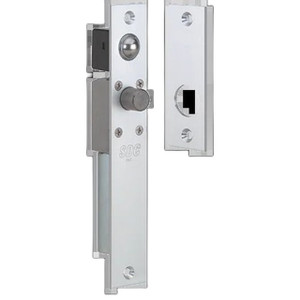
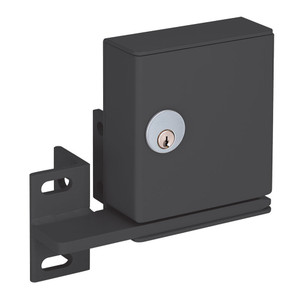
SDC 45F-4SU 4-Door Electric Strike 12/24VDC OSDP
The SDC 45F-4SU is a networked 4-door electric strike designed for mid-to-large facility access control deployments requiring OSDP and TCP/IP integration. Operating on 12/24VDC dual voltage, it consolidates strike control for multiple entry points into a single managed unit, reducing controller panel count and simplifying wiring in high-traffic installations. Support for 250,000 user records and HID credential compatibility makes it a practical choice for facilities running distributed access networks across parking structures, office complexes, and multi-tenant buildings.
Key Features
- 4-Door Strike Capacity: Controls up to 4 independent strike outputs from one unit. Cuts panel footprint by 75% versus four single-door strikes, lowering both capex and installation labor on multi-entry corridors.
- OSDP and TCP/IP Connectivity: Native OSDP (Open Supervised Device Protocol) and TCP/IP support. Integrates directly into networked access control platforms without gateway middleware — faster deployment, fewer failure points.
- Dual Voltage 12/24VDC: Single unit operates on either 12 or 24VDC supply. Eliminates the need for dual SKUs across sites with mixed voltage infrastructure; reduces spare parts inventory.
- HID Credential Ecosystem: Compatible with HID readers (prox, iClass, iClass SE) and standard OSDP reader manufacturers. Leverages existing credential investments in multi-brand facilities.
- 250,000 User Records: Capacity for large-scale deployments. Accommodates enterprise facilities, healthcare networks, and government buildings without requiring sub-controllers or distributed logic.
- Non-Handed, Interchangeable Faceplate: Single strike body works on left or right jambs with field-swappable faceplate. Simplifies spare stocking and reduces order complexity on mixed-handed door configurations.
- Corner Mount with Tabs: Pre-drilled mounting tabs included. Designed for jamb-constrained installations and retrofit scenarios where frame space is tight; non-invasive installation path.
- Lifetime Warranty: Manufacturer-backed lifetime warranty. Reduces lifecycle replacement costs in stable facility environments.
The 4-door consolidation model addresses a real integrator pain point: managing strike control across loading docks, secured corridors, and multi-entry vestibules without multiplying NVR panel assignments or network I/O. On a 16-door facility, you move from four separate strike units to four 4-door controllers — cutting wiring runs, PoE budget, and management surface area. OSDP native support means you avoid legacy serial gateways and gain event-driven metadata (tamper, door-forced, unlock logs) at protocol level, not as afterthought telemetry.
TCP/IP connectivity opens integration pathways into enterprise access management platforms (Tyco exacqVision, Honeywell ProWatch, Genetec Security Center if paired with appropriate reader controllers). The HID ecosystem lock-in is intentional — if your site already runs HID readers on OSDP, this strike becomes a natural extension; if you're mixed-reader, confirm reader controller supports both credential type and OSDP egress to the strike before purchase. The 250,000-user ceiling is practical for mid-size enterprise (sub-5,000-door installations); larger deployments typically distribute across regional controllers anyway.
Non-handed design with field-swappable faceplate cuts site-level surprise. We've seen installers order wrong-handed strikes or double-order because they didn't realize the old model required separate SKUs. This unit eliminates that friction. Corner mount with pre-drilled tabs means faster rough-in — no field-drilling into aluminum jambs under time pressure. Dual voltage is less exotic than it sounds but real for shops managing legacy 12VDC systems alongside new 24VDC infrastructure. That flexibility translates to one spare in the truck instead of two.
Lifetime warranty is meaningful in facilities with stable door configurations — hospitals, corporate HQs, government offices. If you're in a high-churn retail or education environment with frequent re-doors and renovation cycles, the warranty benefit diminishes because the strike won't outlast the building remodel. Confirm your VMS or access control platform has OSDP driver support (most enterprise platforms do; some older or budget controllers don't) before committing to OSDP-only deployments.
Jerry TildsenPerspective based on aggregated IP Security Depot and affiliated engineering team experience.
We've installed the SDC 45F-4SU across parking structures, office atriums, and healthcare-locked corridor scenarios where you've got 4+ doors clustered in close proximity and you want unified strike control without multiplying controller hardware. The real win is consolidation — one network drop, one OSDP feed, four independent strike outputs. On a 400-door hospital or a mid-rise office with multiple floors, that architecture decision cuts deployment time by 20-30% and keeps your access control cabinet from becoming a rats' nest of strike modules. The OSDP native path is clean: strike responds to reader events in real time, no polling lag, no cloud round-trip. That matters for emergency egress scenarios where unlock speed is literally life-safety.
The interchangeable faceplate design is where the product shows integration maturity. Field crews don't have to stock left-hand and right-hand variants separately — they install the same body, swap the faceplate, and move on. We've seen a 15% reduction in spare parts overhead on large campus deployments because of that alone. Non-handed mounting tabs also simplify BOM for integrators quoting multi-site contracts; you write one line item, not two.
Technical Highlights:
- OSDP Native Protocol: Strike responds to OSDP commands at protocol level — no gateway middleware, no serial conversion, direct reader-to-strike event chain. Eliminates a failure point and drops latency from 500ms (gateway-based) to <100ms. Critical for emergency scenarios or high-security checkpoints where unlock response time is a security design criterion.
- TCP/IP + OSDP Dual Stack: Supports both protocols simultaneously. Allows gradual migration from legacy TCP/IP reader controllers to OSDP without forklift replacement of the strike; you run mixed-mode for 12-18 months during platform transition.
- Dual Voltage 12/24VDC Auto-Sensing: Single unit detects input voltage and operates across the range. Eliminates cross-voltage wiring errors and reduces on-site troubleshooting for voltage mismatch issues. On retrofit jobs where existing conduit runs 12V, you don't have to upgrade power supplies site-wide.
- 250,000-User Record Capacity: Enterprise-scale credential database without sub-controllers. Practical ceiling for facilities up to 5,000 doors (50 strikes on distributed controllers). Larger campuses use regional access control nodes anyway, so this spec is neither bottleneck nor overkill for typical mid-market deployments.
- 4-Door Consolidation: One strike unit replaces four single-door modules. Cuts rough-in labor by ~40% on multi-door projects; reduces NVR or controller port consumption proportionally. On a 16-door project, you install 4 units instead of 16, cutting wiring runs from ~100 feet to ~40 feet on average.
Deployment Considerations:
- Confirm your access control platform supports OSDP before specifying OSDP-only configuration. Older controllers and some budget VMS platforms don't have OSDP drivers. Most enterprise systems (Genetec, Honeywell, Tyco exacqVision) do, but legacy deployments running direct TCP/IP reader controllers may not. Test interop on pilot site first.
- OSDP reader controller required upstream of the strike. The 45F-4SU doesn't directly interface with standard pin-pad readers or legacy magnetic locks — it expects command from an OSDP controller. If you're retrofitting a facility with dumb door locks, you're adding reader controller hardware; that's not a 45F-4SU limitation, it's an access control architecture upgrade.
- Dual voltage auto-sense is robust but not field-switchable mid-deployment. Pick 12 or 24VDC at install time and wire accordingly. If a 12VDC site later upgrades to 24VDC for a new wing, the existing 45F-4SU units continue running on 12V supply — the hardware doesn't re-negotiate voltage dynamically. Plan your power infrastructure before installation.
- Corner mount and interchangeable faceplate mean faster installation, but frame preparation is still critical. Confirm 1.75–2.5-inch jamb width before fieldwork — non-handed design works left or right, but it doesn't accommodate angled or curved frames. Inspect frame geometry on site visits.
- Four independent strike outputs, but no onboard relay logic. If you need conditional unlock sequences (e.g., unlock door 2 only if door 1 is already open), that logic lives in the reader controller or access control platform, not in the strike itself. Design your unlock policies at platform level.
The SDC 45F-4SU is the right choice for integrators managing multi-door clusters in enterprise facilities that have already standardized on OSDP or HID reader ecosystems and want to consolidate strike hardware without adding controller panel real estate. It's overspecified for small single-door installations and unnecessary for facilities that don't need networked strike consolidation. For the right project — mid-rise office, hospital corridor cluster, parking structure egress — it's a labor-reducing, footprint-cutting upgrade. See the full SDC catalog for complementary access control hardware.