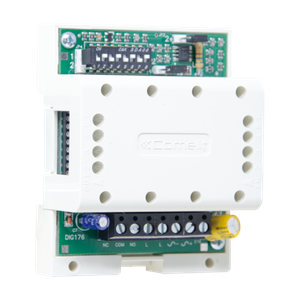
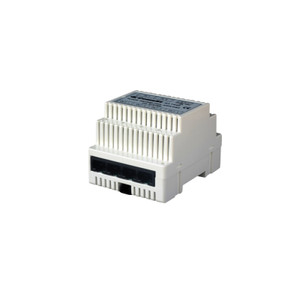
Comelit 1424 SB Top Network Switch
The Comelit 1424 is a compact network switching module engineered for Simplebus intercom system scaling and multi-kit consolidation. Designed as a backbone device for large distributed installations, it enables you to cluster up to 500 separate Comelit Simplebus kits into a single unified system supporting 120,000 individual users. The 1424 eliminates the operational complexity of managing multiple independent systems by centralizing switchboard logic, alarm routing, and inter-kit communication through a single control point. Its compact footprint (2.36" × 3.35" × 1.38") DIN rail mount integrates seamlessly into control room distribution panels without consuming significant cabinet space, making it ideal for retrofit deployments and new construction where real estate is constrained.
Key Features
- Multi-Kit Clustering: Consolidates up to 500 Comelit Simplebus kits into a single logical system. Eliminates separate switchboard consoles and simplifies call routing across geographically distributed buildings or zones.
- User Scalability: Supports up to 120,000 individual intercom users within a single system. Enables large-scale campus, hospitality, and multi-tenant deployments without fragmentation.
- Dual Switchboard Architecture: Main and secondary switchboards can operate independently within the same system. Alarm events route to designated boards based on configurable logic, improving incident response and redundancy.
- Self-Powering LS|LS Input: Integrated self-power function for riser cable management eliminates the need for a separate secondary external power unit. Reduces BOM cost and simplifies cable runs in tall buildings.
- Flexible Topology Support: Configurable cascade (daisy-chain) or star (hub-and-spoke) bus line distribution. Cascade mode optimizes pre-mixer cable runs before downstream mixers (Models 4888 and 4888C); star mode centralizes distribution for easier troubleshooting.
- Compact DIN Rail Mounting: Houses 4 DIN modules on standard 35mm DIN rail. Footprint 2.36" × 3.35" × 1.38" fits tight control room and distribution panel layouts without requiring custom mounting brackets.
- Low-Voltage Power Input: 12 VAC (via Comelit Art. 1200 supply) or −20 VDC. Single power source simplifies PSU selection and reduces installation labor on distributed riser architectures.
- Simplebus Protocol Native: Purpose-built for Comelit Simplebus ecosystem. Operates with all Simplebus intercom controllers, entry systems, and auxiliary devices; not compatible with non-Simplebus or analog-only Comelit systems.
The 1424 is the cornerstone device for integrators scaling Comelit Simplebus deployments from single-kit test systems to enterprise multi-building installations. Unlike standalone switchboards, the 1424 consolidates control logic and alarm dispatch into a centralized hub, reducing operational overhead and lowering per-user cost at scale. Large hospitality groups, healthcare campuses, and multi-tenant residential properties benefit most from its clustering capability — you avoid managing separate system licenses, switchboard consoles, and call routing tables across physical locations.
Installation planning hinges on power supply capacity. Each additional kit and connected device increases system load; confirm your Comelit Art. 1200 supply (or equivalent −20 VDC source) can deliver adequate current before commissioning. For cascade-topology deployments (common in vertical riser runs), position the 1424 upstream of downstream mixers to optimize signal integrity and reduce cable runs. Star topology deployments centralize the 1424 in a main distribution panel, improving testability and reducing troubleshooting time if a riser fails.
Before installation, verify that your existing Comelit infrastructure uses Simplebus architecture. The 1424 is not compatible with non-Simplebus or analog-only Comelit legacy systems. Consult your system documentation or contact Comelit support to confirm that all existing controllers, entry devices, and auxiliary units operate on the Simplebus protocol. Retrofitting a mixed-protocol environment will require replacement or bridging adapters — plan integration testing accordingly.
The 1424 is fully compatible with Comelit's native intercom software and third-party ONVIF-compliant integration platforms. System-level event streaming (alarm routes, call logs, user registrations) exports over Ethernet for archival, reporting, or downstream VMS integration. No external licensing is required; the device operates as part of your existing Simplebus license pool.
Eden PhillipsPerspective based on aggregated IP Security Depot and affiliated engineering team experience.
We've installed the Comelit 1424 across multi-building campuses and mid-market hospitality groups where Simplebus was the existing foundation. The unit is refreshingly straightforward once you lock in your topology choice upfront — cascade versus star. Where we've seen friction is integrators underestimating power budgets at scale. The 1424 itself draws minimal current, but each kit and auxiliary device added to the cluster consumes power from that single 12 VAC or −20 VDC input. A 500-kit system with entry readers and door release solenoids will demand a properly sized supply; undersizing the PSU leads to random node dropouts and a nightmare commissioning cycle. The self-powering LS|LS input is genuinely useful in tall buildings — it eliminated a second external box on three multi-story projects we've done. Operationally, the biggest win is consolidating alarm dispatch across independent switchboards. We had a 250-room hotel where front desk and security needed different alarm routing; the dual-board architecture let us implement that without duplicate hardware or cumbersome network logic. One caveat: the 1424 is strictly Simplebus. If your site has legacy Comelit analog intercom panels or newer SIP-based Comelit equipment, this device won't bridge that gap. Confirm protocol homogeneity before specifying.
Technical Highlights:
- 120,000-User Cluster Capacity: Supports 500 Comelit Simplebus kits in a single logical system. On a 200-unit apartment building or 40-floor office tower, this means one switchboard logic instance, one call routing table, and one alarm escalation policy — versus multiple separate system licenses and management consoles. Real cost savings on software licensing and training.
- Self-Powering LS|LS Function: Eliminates the external secondary power unit required on older Comelit architectures. On a 10-story riser run, this saves one device in the basement cabinet, reduces wiring labor, and cuts BOM cost by approximately 200–300 USD per installation.
- Flexible Cascade or Star Topology: Cascade mode (daisy-chain) optimizes cable runs in linear buildings or vertical risers; star mode (hub-and-spoke) centralizes distribution for easier segment isolation if a riser fails. Choose based on your building layout and cable routing constraints — no re-engineering required.
- Dual Independent Switchboards: Main and secondary switchboards can coexist within the same system with separate alarm routing. A hospital might route patient-call alarms to nursing staff and facility alarms to engineering — both from one unified 1424 system, eliminating redundant hardware and cross-system call confusion.
- Compact DIN Rail Form Factor: 4 DIN modules in 2.36" × 3.35" × 1.38" footprint. Fits into cramped control room cabinets and distribution panels without requiring custom mounting or taking up expensive floor space in retrofit projects.
Deployment Considerations:
- Power Supply Sizing is Critical: The 1424 itself is low-draw, but clustered kits, entry readers, door release solenoids, and auxiliary devices all pull from the single 12 VAC or −20 VDC supply. Undersizing the Comelit Art. 1200 (or equivalent) leads to brown-out conditions and random node failures during commissioning. Calculate total connected load before ordering the PSU.
- Simplebus Protocol Exclusivity: The 1424 will not interoperate with non-Simplebus Comelit equipment or analog-only legacy panels. Audit your entire site infrastructure before installation to confirm all existing controllers and auxiliary devices speak Simplebus. Mixed-protocol sites require bridging adapters or equipment replacement — budget accordingly.
- Topology Lock-In Early: Decide cascade versus star topology during design phase. While both are supported, retrofitting from one to the other mid-project requires significant rewiring and re-commissioning. Cascade favors tall buildings with vertical risers; star favors distributed campuses with geographically separate distribution points.
- Alarm Routing Requires Planning: The dual-switchboard and per-board alarm routing features demand upfront operational design. Misconfigured routing leads to alarms firing to the wrong console or missing escalation chains. Document your alarm logic and test it in a pilot segment before rolling out across 500 kits.
- No External ONVIF Video Integration: The 1424 is an intercom-network switch; it does not interface directly with IP cameras or video management systems. System-level events export over Ethernet for third-party integration, but real-time video correlation requires a separate VMS link.
The Comelit 1424 is the right choice for integrators scaling multi-kit Simplebus deployments into enterprise systems, particularly in hospitality, healthcare, and residential markets where switchboard consolidation and alarm routing flexibility drive operational efficiency. For single-kit or small-cluster installations under 50 units, the 1424's capabilities may exceed project scope. For sites needing SIP-based intercom, video integration, or non-Simplebus protocol bridging, evaluate your broader Comelit roadmap first — the 1424 is a pure Simplebus device. See the Comelit catalog for additional Simplebus controllers and entry-system components.