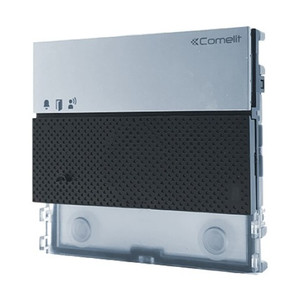
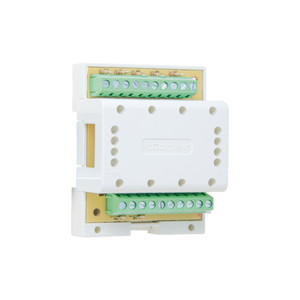
Comelit 1256 Simplebus Network Relay
The Comelit 1256 is a Simplebus-compatible network relay module engineered for distributed switching in access control, door automation, and building management installations. It handles 12–24 VAC/VDC loads up to 10A, eliminating the need to run dedicated control wiring back to a central panel. The module mounts to standard DIN rail (4 modules wide, 66×85×35 mm) and draws its control logic power directly from the Simplebus line, making it ideal for retrofit and new construction deployments where control topology flexibility matters. Whether you're integrating door strikes, gate operators, alarm outputs, or auxiliary relay-driven loads into a distributed Simplebus network, the 1256 simplifies wiring and reduces installation labor.
Key Features
- Relay Switching Capacity: 10A maximum at 12–24 VAC/VDC. Handles door strikes, gate motors, and alarm relay outputs without oversizing control infrastructure.
- DIN Rail Mount: 4-module-wide form factor (66×85×35 mm). Fits standard utility and equipment closets with minimal footprint.
- Simplebus Line-Powered Control: Draws logic power from the Simplebus network itself (12 VAC or 20 VDC phantom). No separate power supply required in most installations.
- Simplebus 1 and 2 Compatible: Integrates with both generations of Comelit Simplebus architecture. Works with residential multi-unit buildings, commercial access control systems, and hybrid security–building automation deployments.
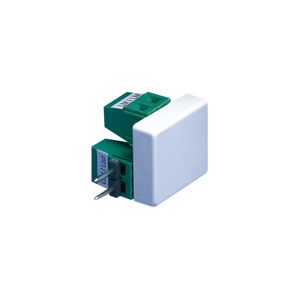
- Branch Terminal Connection: Uses Comelit art. 1214/2C line branch terminal for clean, isolated signal connection to the Simplebus topology.
- Retrofit and New Construction: DIN rail mounting and modular design accommodate both retrofit installations in existing cabinets and green-field system builds.
- Independent Load Power: Relay load terminals accept 12–24 VAC/VDC independently of Simplebus line voltage, allowing flexible switching control without dependency on system phantom power.
System Integration and Deployment Context
The 1256 is purpose-built for Comelit Simplebus installations where distributed relay switching reduces central panel load and simplifies multi-building or multi-zone control. In a typical residential or small commercial access control retrofit, you might place the 1256 in a utility closet or cabinet near the load (e.g., a door strike or gate operator) and run only low-voltage Simplebus signal wiring from the main panel. This topology cuts installation time compared to long-run control cables and enables future expansion without rewiring the entire control loop.
The relay module integrates via standard Simplebus line branch terminal art. 1214/2C, which provides galvanic isolation between the control signal and the relay coil. Programming is handled through Comelit system configuration tools or your integrated VMS platform — address assignment and relay function logic (normally open, normally closed, pulsed, etc.) are defined during network commissioning. The module responds to commands from the Simplebus master controller or networked access control application.
Power architecture is flexible: if your Simplebus line supplies 12 VAC or 20 VDC phantom power (common in modern Comelit installations), the 1256 requires no external power source. Load circuits accept independent 12–24 VAC/VDC, allowing you to switch controlled devices that operate on different voltage rails without cross-connection risk. Verify your Simplebus power source spec and relay load voltage before wiring to avoid control logic dropout or relay coil damage.
The 1256 is fully compatible with Comelit Simplebus 1 and Simplebus 2 platforms and integrates with building automation systems that support Comelit protocol. It is particularly valuable in retrofit scenarios where adding a central relay bank would require cabinet upsizing or where distributed control reduces the risk of single-point failure in critical strike or gate circuits. Comelit technical documentation (available via the datasheet link below) details relay function programming, address assignment, and wiring best practices for your specific system architecture.
Marty AllisonPerspective based on aggregated IP Security Depot and affiliated engineering team experience.
In our experience with Comelit Simplebus deployments across residential and small commercial access control installations, the 1256 relay module is the unsung workhorse that transforms a centralized control architecture into a distributed one. We've installed dozens of these in retrofit scenarios where running new control wiring back to a main panel would have been prohibitively expensive or architecturally awkward. The combination of DIN rail form factor, line-powered logic, and independent relay load terminals makes it genuinely flexible. What differentiates it from generic relay modules is tight Simplebus integration — the module expects command frames native to the Comelit protocol, not ONVIF or generic IP signaling. That's a feature for Comelit shops (no protocol translation overhead) but a constraint if you're mixing vendors. We've also found the 10A load limit well-suited to electronic door strikes and smaller gate operators; if you're driving high-inrush 3-phase loads or large motor starters, this module isn't the right fit. The phantom power model is elegant when your Simplebus line is properly provisioned, but on retrofit sites with aging or under-spec'd power supplies, we recommend injecting dedicated DC power at the module terminals to avoid control logic glitching during high-load transients.
Technical Highlights:
- 10A Relay Switching at 12–24 VAC/VDC: Covers 99% of electronic strike and small gate operator loads. Higher-amperage loads require an external contactor or step-up relay, adding cost and panel real estate — know your load spec before committing.
- Line-Powered Control Logic: Draws <100 mA from the Simplebus 12 VAC or 20 VDC phantom rail. Eliminates a separate 24 VDC power supply in most installations, reducing BOM and cabinet clutter. Verify your Simplebus supply can handle the aggregate draw if you're daisy-chaining multiple 1256 modules.
- DIN Rail, 4-Module Width (66×85×35 mm): Fits neatly into standard utility cabinets and 19-inch sub-panels. Modular stacking means you can add distributed relay capacity without cabinet upsizing — a real cost win on retrofit projects.
- Simplebus 1 and 2 Backward Compatibility: Works with both legacy (Simplebus 1) and modern (Simplebus 2) Comelit architectures. Upgrade path is clear; no replacement needed if you're migrating a building's control system incrementally.
- Branch Terminal Isolation (art. 1214/2C): Galvanic isolation between Simplebus signal and relay coil prevents ground loop hum and protects sensitive access control logic from inductive kick-back. Standard best practice in Comelit topology, but worth confirming on mixed-voltage sites.
- Independent Load Power: Relay terminals accept 12–24 VAC/VDC independent of Simplebus line voltage. Means you can switch a 24 VDC strike off a 12 VAC Simplebus line, or vice versa — eliminates the need for separate low-voltage power distribution to the load site.
Deployment Considerations:
- Verify Simplebus line voltage (12 VAC or 20 VDC) and aggregate load before installation. If phantom power is borderline, inject dedicated DC power at the module terminals to keep control logic stable during relay switching transients.
- The 1256 responds to native Simplebus command frames. If you're integrating with non-Comelit VMS or building automation systems, ensure your middleware or gateway can translate commands into valid Simplebus protocol — generic IP relay modules won't work here.
- 10A relay limit is real. Test load inrush current on electronic strikes and gate operators; if it exceeds 10A at activation, you'll need an external contactor. Comelit technical support can advise on relay function programming to soften switching transients, but that's a workaround, not a fix.
- DIN rail mounting assumes you have available cabinet space and proper rail preparation. Retrofit sites sometimes have cramped or non-standard rail layouts — measure twice, spec once.
- The module draws its control logic from the Simplebus line. If your main panel power supply is undersized or has poor regulation, consider a dedicated 24 VDC supply injected locally to avoid dropout during high-load peaks across the network.
The 1256 is the right choice for access control and gate automation integrators who are already committed to Comelit Simplebus architecture and need distributed relay switching without central panel expansion. For multi-building residential complexes or small commercial campuses where control latency and single-point failure risk matter, the distributed topology justifies the module cost. Explore the full Comelit catalog for complementary control and communication modules that round out your Simplebus deployment.