


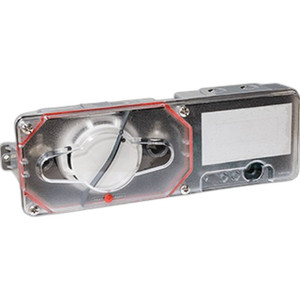

Product images are provided for reference and may not represent the exact model, configuration, or included
components.
Overview
SKU:
PAD200-DUCT
Condition:
New
Availability:
Usually ships in 24 hours
Warranty
Manufacturer Warranty
Potter PAD200-DUCT Analog Addressable Duct Detector
Potter PAD200-DUCT Analog Addressable Duct Detector Overview The Potter PAD200-DUCT is an analog addressable duct smoke detector designed for integra…

Potter PAD200-DUCT Analog Addressable Duct Detector
$332.55
$243.99
Your recommended setup
Review items below — quantities update pricing automatically.
Item
Qty
Status
Price
Optional Add-Ons recommended
Services optional
Bundle Summary
Bundle Subtotal:
$0.00
Optional Add-Ons:
$0.00
Services:
$0.00
Total:
$0.00
Overview
SKU:
PAD200-DUCT
Condition:
New
Availability:
Usually ships in 24 hours
Warranty
Manufacturer Warranty
Description

Potter PAD200-DUCT Analog Addressable Duct Detector
Overview
The Potter PAD200-DUCT is an analog addressable duct smoke detector designed for integration into fire alarm and life safety systems. This detector monitors HVAC ductwork for early smoke detection, enabling rapid alarm response in commercial and institutional facilities. The PAD200-DUCT delivers addressable reporting capability, allowing system operators to pinpoint the exact detector location triggering an alarm condition without manual polling.
Key Features
- Analog addressable detector for precise location identification within fire alarm networks
- Purpose-built for duct smoke detection in HVAC systems and return air plenums
- Compliant with UL 268 and UL 521 fire detection standards
- Addressable protocol integration with compatible fire alarm control panels
- Low-cost, scalable deployment for multi-zone fire alarm systems
- Integral or remote LED status indicator for visual confirmation
- Straightforward installation in standard duct mounting applications
Design and Operational Characteristics
The PAD200-DUCT employs analog addressable architecture, which means each detector communicates its individual address and smoke level to the control panel in real time. Unlike conventional detectors that operate as open or closed circuits, analog addressable detectors provide continuous feedback, allowing facility managers to monitor trends and detect marginal smoke conditions before they reach alarm thresholds. This granular visibility is particularly valuable in large facilities where pinpointing the source of smoke quickly is critical to life safety response.
Duct detectors are essential components of fire alarm systems because they sample air from return air ducts and plenums before that air is recirculated. Early detection in these spaces prevents smoke from spreading through the HVAC system and allows faster evacuation and suppression response. The PAD200-DUCT integrates seamlessly into existing fire alarm networks that support analog addressable protocols, eliminating the need for separate polling loops or legacy wiring schemes.
Installation and Integration
Installation of the PAD200-DUCT follows standard fire alarm practices. The detector mounts directly into return air ducts or plenums using appropriate ductwork brackets and fittings. Wiring connects to the addressable loop of a compatible fire alarm control panel, and the detector receives its address assignment through the panel's programming interface. Once commissioned, the detector requires periodic maintenance—typically annual or biennial—including lens cleaning and functional testing per NFPA 72 guidelines.
The analog addressable reporting model means there is no need for dedicated contact closures or separate alarm circuits for each detector. Instead, all communication flows through the addressable loop, reducing overall panel I/O requirements and simplifying circuit design. This approach is particularly efficient in facilities with many duct detection points, such as hospitals, data centers, and large commercial buildings where multiple HVAC zones require monitoring.
Specification Summary
The PAD200-DUCT operates on standard 24 VDC fire alarm power, compatible with redundant, synchronized, or single-loop configurations depending on control panel design. The detector is rated for typical duct temperature ranges encountered in commercial HVAC systems. Response time and sensitivity are calibrated to UL 268 standards, ensuring early detection while minimizing nuisance alarms from dust and transient airflow conditions.
James Everett
I've specified the Potter PAD200-DUCT on projects ranging from small office buildings to larger institutional facilities. The analog addressable architecture removes guesswork from duct smoke detection—you know exactly where smoke is detected and at what concentration level in real time, which accelerates alarm verification and response.
Technical Highlights:
- Addressable Reporting: Each detector sends individual address and analog signal level to the panel, enabling precise location identification without separate polling circuits.
- UL 268 and UL 521 Compliance: Meets standards for smoke detection and duct detector applications, ensuring code acceptance and insurance compliance.
- Low System Load: Addressable loop integration reduces control panel I/O requirements compared to conventional detector circuits.
Deployment Considerations:
- Verify that your fire alarm control panel supports analog addressable duct detectors before specifying this product—not all systems are compatible with addressable protocols.
- Plan for accessible duct locations that allow for periodic lens cleaning, as dust buildup in return air ducts can degrade sensitivity over time.
- In facilities with multiple HVAC zones, staging addressable duct detectors across zones provides early warning of smoke intrusion before recirculation occurs.
The PAD200-DUCT is a reliable choice for facilities that prioritize early duct smoke detection and system efficiency. Addressable reporting gives you confidence that alarm events are genuine and precisely located, supporting faster and more confident response procedures.
Specifications
Product Type:
Duct smoke detector, analog addressable
Communication:
Analog addressable loop
Voltage:
24 VDC
Have Questions?
Ask an Expert.
RELATED PRODUCTS


System Design, Deployment & Technical Support
Support services and planning resources for commercial surveillance, access control, and infrastructure deployments.
Fixed scope • Fixed price
System Design Assistance
- Get help validating product compatibility
- Coverage requirements
- Storage planning and deployment architecture before you buy.
Deployment & Configuration Support
- Access fixed-scope support for rollout planning
- User setup guidance
- Migration and system standardization across single-site or multi-site deployments
Guides, Tools & Calculators
- PoE requirements
- Storage retention
- Camera selection and deployment methodology