


Product images are provided for reference and may not represent the exact model, configuration, or included
components.
Overview
SKU:
PAD100-SLCE
Condition:
New
Availability:
Usually ships in 24 hours
Warranty
Manufacturer Warranty
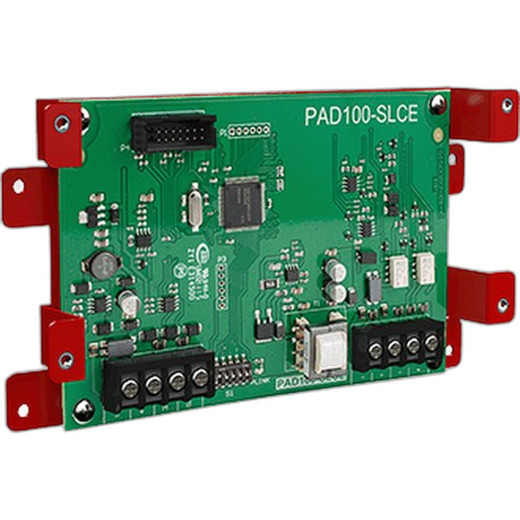
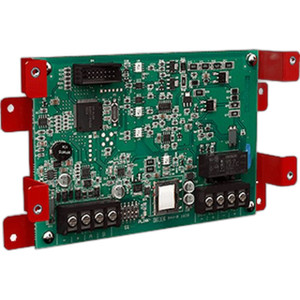
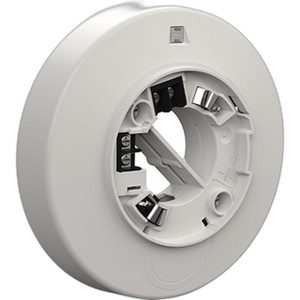
Potter PAD100-SLCE Addressable Loop Expander
Potter PAD100-SLCE Addressable Loop Expander Overview The Potter PAD100-SLCE is an addressable loop expander designed to extend the addressable devic…

Potter PAD100-SLCE Addressable Loop Expander
$791.05
$587.99
Your recommended setup
Review items below — quantities update pricing automatically.
Item
Qty
Status
Price
Optional Add-Ons recommended
Services optional
Bundle Summary
Bundle Subtotal:
$0.00
Optional Add-Ons:
$0.00
Services:
$0.00
Total:
$0.00
Overview
SKU:
PAD100-SLCE
Condition:
New
Availability:
Usually ships in 24 hours
Warranty
Manufacturer Warranty
Description

Potter PAD100-SLCE Addressable Loop Expander
Overview
The Potter PAD100-SLCE is an addressable loop expander designed to extend the addressable device capacity of fire alarm control panels. This module integrates seamlessly into addressable systems, enabling integrators and facility managers to expand detection and signaling capability without requiring panel replacement or major system reconfiguration. The PAD100-SLCE operates within standard addressable loop protocols, supporting mixed device types across expanded zones.
Key Features
- Addressable loop expansion capability for fire alarm panels
- Compatible with standard addressable device protocols
- Allows integration of multiple detection and signaling devices
- Simplifies system scaling for larger facilities
- Maintains addressable device addressing and reporting
- Supports facility retrofits and system upgrades
Integration & Compatibility
The PAD100-SLCE (often searched as PAD100 SLCE) integrates directly into addressable loop networks, allowing the addition of new addressable devices—such as smoke detectors, heat detectors, manual stations, and notification appliances—without exhausting panel loop capacity. Integration does not require programming changes to existing devices on the loop, simplifying deployment and commissioning timelines.
This expander is designed for retrofit applications, new system installations, and facility expansions where loop device capacity has been reached. It functions as a transparent extension within the addressable loop architecture, enabling technicians to maintain system integrity while increasing device density across multiple zones and areas.
Typical Applications
The PAD100-SLCE addresses capacity challenges in:
- Multi-floor commercial buildings requiring expanded detection coverage
- Retrofit projects adding detection to new spaces
- Campuses and distributed facilities with multiple zones
- Facilities planning long-term growth without panel replacement
- Mixed-use environments with varying detector and signaling requirements
Karl Wilson
During system planning for a mid-sized retrofit project, the PAD100-SLCE proved valuable for extending addressable capacity without control panel replacement. This module is particularly useful when existing loop capacity has been saturated but the panel itself remains appropriate for the facility's operational needs.
Technical Highlights:
- Addressable Loop Integration: Expands device capacity within existing fire alarm control panel loop architecture
- Transparent Operation: Maintains compatibility with mixed device types across the extended loop
Deployment Considerations:
- Verify existing panel loop capacity and device count before expansion planning
- Confirm addressable protocol compatibility with your control panel manufacturer documentation
- Plan wiring topology to minimize loop resistance and ensure reliable device communication
The PAD100-SLCE is a practical solution for facilities that have outgrown initial detection plans but don't require full system replacement. It extends the economic life of existing infrastructure while supporting operational growth.
Specifications
Product Type:
Addressable Loop Expander
Communication:
Addressable Loop
Have Questions?
Ask an Expert.
RELATED PRODUCTS

System Design, Deployment & Technical Support
Support services and planning resources for commercial surveillance, access control, and infrastructure deployments.
Fixed scope • Fixed price
System Design Assistance
- Get help validating product compatibility
- Coverage requirements
- Storage planning and deployment architecture before you buy.
Deployment & Configuration Support
- Access fixed-scope support for rollout planning
- User setup guidance
- Migration and system standardization across single-site or multi-site deployments
Guides, Tools & Calculators
- PoE requirements
- Storage retention
- Camera selection and deployment methodology