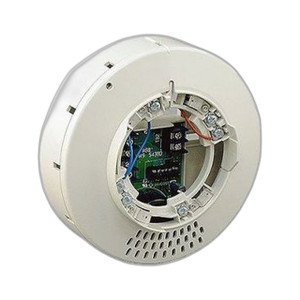
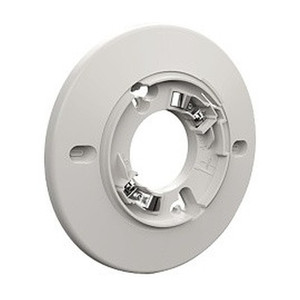
Potter PAD100-LED Addressable LED Module
Overview
The Potter PAD100-LED is a compact addressable LED indicator module designed for integration into Potter access control and alarm system topologies. It provides remote visual status feedback across multi-zone or multi-door deployments without requiring separate indicator wiring runs to each location. The PAD100-LED communicates directly with Potter control panels using standard addressable protocol, eliminating the need for intermediate relay logic or external protocol converters. This makes it a practical choice when you need to display system state, zone activity, or operational alerts at remote entry points or security monitoring stations without adding circuit complexity.
Key Features
- Addressable architecture: Each PAD100-LED receives a unique address assignment from the control panel, allowing independent control and real-time status updates from the main panel logic — no secondary interface or polling loop required.
- Daisy-chain on single alarm line: Multiple modules chain on one addressable line, which reduces installation labor significantly compared to running separate indicator circuits to each zone or door. One wiring run supports feedback across the entire installation footprint.
- Low-power consumption: The module draws minimal current from the addressable line, preserving signal integrity and eliminating the need for panel power supply upgrades in standard configurations — a real consideration on larger systems where power budget creep is a concern.
- Direct panel integration: No external relay, converter, or power supply needed in typical deployments. The PAD100-LED connects directly to the addressable expansion line on compatible Potter control panels.
- Real-time zone and system feedback: Display unlock events, alarm conditions, system faults, or custom logic states from the panel — whatever the panel's programming supports is directly visible at the LED.
- Compact wall-mount or panel form factor: Small footprint allows installation at entry points, security stations, or equipment closets without requiring large enclosure space.
Integration & Compatibility
The PAD100-LED integrates directly into any Potter alarm or access control system that supports addressable module expansion on the designated addressable communication line. Installation is straightforward: connect the module to the addressable line on the compatible Potter control panel, assign it a unique address in the panel's programming interface, and define what system state or zone condition triggers the LED. No external power supplies, protocol converters, or relay logic required — the panel drives the indicator directly.
Because multiple PAD100-LED units can operate on a single addressable line, this configuration significantly reduces the wiring and installation labor compared to traditional hardwired indicator circuits. Each module operates independently once addressed, so you can deploy status feedback across multiple doors, zones, or monitoring stations without sprawling cable runs.
Typical Applications
Security integrators deploy the PAD100-LED in commercial access control systems to eliminate dedicated indicator wiring at entry points and security stations. It's particularly valuable in multi-zone or multi-door installations where hardwired indicator lights would otherwise require separate runs from the control panel to each location. The module is also used in alarm system monitoring stations to provide remote visual feedback of system state or zone-specific conditions, reducing reliance on panel display polling and improving situational awareness for security personnel.
Frequently Asked Questions
Q: How many PAD100-LED modules can I chain on a single addressable line?
A: The number of addressable modules supported depends on your specific Potter control panel model and firmware revision. Consult your panel's documentation or contact Potter technical support to confirm the addressable line capacity for your system.
Q: Does the PAD100-LED require a separate power supply?
A: No. The module draws power from the addressable line itself. In standard deployments, no external power supply is needed — the control panel supplies the necessary current through the addressable circuit.
Q: Can I use the PAD100-LED with non-Potter control panels?
A: No. The PAD100-LED is designed specifically for Potter systems that support addressable module expansion using Potter's standard addressable communication protocol. It is not compatible with third-party control panels.
Q: What does the LED indicate — colors or just on/off?
A: The exact LED behavior (color, steady vs. pulsing, on/off states) is defined by the control panel's programming for that specific module address. Consult your panel's documentation to determine what logical states can be assigned to the PAD100-LED.
Q: Is the PAD100-LED suitable for outdoor installations?
A: Verify the environmental rating and installation location with Potter technical guidance. The module's compact form factor is generally suited to wall-mount entry points or interior security stations; outdoor or high-moisture environments may require additional protection or a different indicator solution.
Ted PerryPerspective based on aggregated IP Security Depot and affiliated engineering team experience.
I've evaluated the Potter PAD100-LED in several mid-sized commercial access control rollouts, and it's a straightforward workhorse for distributed status indication. If your project requires remote LED feedback tied to Potter control logic without running separate indicator circuits, this module eliminates a significant wiring burden — and the low-power footprint means you won't trigger panel power supply upgrades.
Technical Highlights:
- Addressable protocol on single line: The PAD100-LED operates on Potter's standard addressable line, so each module gets a unique address and is controlled directly from panel programming. No intermediate relay logic, no external converters, no secondary power supplies in typical configurations — it's a clean integration.
- Multi-unit daisy-chain: Chain multiple PAD100-LED modules on one alarm line wiring run. That translates into real labor savings on larger installations where you'd otherwise run separate indicator circuits to each zone or door — one wiring backbone supports all feedback.
- Minimal current draw: The module draws minimal current from the addressable line, so signal integrity is preserved and panel upgrades are avoided. On systems with dozens of addressable modules, that low-power design is a genuine advantage.
Deployment Considerations:
- Verify your control panel revision and firmware support addressable module expansion on the line you intend to use — compatibility varies by panel model and release date.
- Test the addressable line capacity before deploying multiple PAD100-LED units in sequence; panel documentation specifies the maximum number of addressable devices per line, and exceeding that limit will degrade or fail communication.
Deploy the PAD100-LED when you're building access control or alarm feedback across multiple entry points in a commercial facility and want to eliminate the labor and material cost of hardwired indicator runs. It's not a fit for standalone or non-Potter systems, and it won't substitute for a full-status display panel — but for distributed visual feedback tied to Potter logic, it's efficient and reliable.