


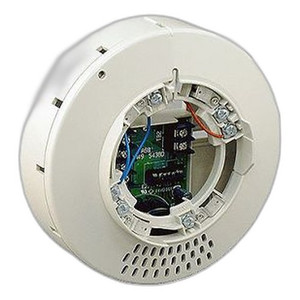

Product images are provided for reference and may not represent the exact model, configuration, or included
components.
Overview
SKU:
PAD100-SB
Condition:
New
Availability:
Usually ships in 24 hours
Warranty
Manufacturer Warranty
Potter PAD100-SB Addressable Sounder Base
Potter PAD100-SB Addressable Sounder Base The Potter PAD100-SB is an addressable sounder base designed for integration into fire alarm and emergency …
Potter PAD100-SB Addressable Sounder Base
$138.50
$104.99
Your recommended setup
Review items below — quantities update pricing automatically.
Item
Qty
Status
Price
Optional Add-Ons recommended
Services optional
Bundle Summary
Bundle Subtotal:
$0.00
Optional Add-Ons:
$0.00
Services:
$0.00
Total:
$0.00
Overview
SKU:
PAD100-SB
Condition:
New
Availability:
Usually ships in 24 hours
Warranty
Manufacturer Warranty
Description

Potter PAD100-SB Addressable Sounder Base
The Potter PAD100-SB is an addressable sounder base designed for integration into fire alarm and emergency notification systems. This component provides a standardized mounting and electrical interface for addressable notification devices, enabling individual device control and status monitoring across networked fire alarm installations.
Overview
The PAD100-SB functions as a dedicated addressable sounder base, allowing system designers and integrators to deploy individually controllable audible notification devices across multi-zone or campus-wide fire alarm networks. The addressable architecture enables precise device-level activation, status reporting, and circuit management without requiring separate control relays or zone-based grouping. This modular approach supports scalable notification deployments in commercial, industrial, and institutional environments where granular control and system diagnostics are required.
Key Features
- Addressable device architecture for individual sounder control and monitoring
- Compact sounder base form factor for standard mounting applications
- Compatible with networked fire alarm control panels and addressable loops
- Integrated device status reporting and diagnostics
- Standardized electrical interface for straightforward installation
- Supports multi-circuit and multi-zone notification system designs
Integration and Compatibility
The PAD100-SB integrates with addressable fire alarm systems that support Potter device protocols and addressable loop architectures. Installation requires connection to an addressable notification loop or module on the fire alarm control panel. The device communicates its address, operational status, and fault conditions back to the control panel, enabling real-time system diagnostics and individual sounder activation commands. Integration with third-party systems or non-Potter control panels requires verification of protocol compatibility and loop capacity.
Integrators should confirm addressable loop availability, maximum device density per loop, and any required interface modules or programmable output cards on the host control panel before design. The PAD100-SB is not suitable for non-addressable, conventional fire alarm systems or standalone applications without addressable loop infrastructure.
System Design Considerations
The addressable sounder base reduces overall wiring complexity in large notification systems by eliminating the need for individual zone circuits or relay banks. Device-level activation enables compliance with emergency response protocols requiring selective notification or staged evacuation. System designers should calculate total addressable loop capacity, ensure adequate power supply for all devices on the notification loop, and verify that the fire alarm control panel supports the required number of addressable sounder bases. Environmental considerations such as mounting location, potential water exposure, and temperature extremes should be evaluated to ensure proper device operation.
Jerry Tildsen
I've reviewed the Potter PAD100-SB during planning cycles for distributed notification deployments, and this is a straightforward addressable sounder mounting platform. The device is purpose-built for integrators who need individual control over notification devices without additional relay infrastructure.
Technical Highlights:
- Addressable Control: Each PAD100-SB base receives its own device address on the fire alarm loop, enabling selective activation and real-time status reporting from the control panel.
- Modular Design: The base accepts compatible sounder cartridges, allowing standardized mounting across different notification applications.
- System Diagnostics: Built-in monitoring reports device health, short-circuit conditions, and operational faults back to the control panel display.
Deployment Considerations:
- Verify that your fire alarm control panel has available addressable loop capacity and supports Potter addressable sounder bases. Some legacy panels require upgrading to addressable-capable models.
- Plan addressable loop wiring carefully—maximum loop lengths and device density vary by panel model. Consult the control panel documentation for loop ohm calculations.
- Confirm that the sounder cartridge you intend to use is compatible with the PAD100-SB base. Different cartridge types support different sound characteristics and output levels.
The PAD100-SB is a reliable choice for new fire alarm system designs or upgrades where individual device control is required. It integrates cleanly with modern addressable panels and reduces installation labor compared to conventional multi-circuit notification systems. I recommend it for campuses, commercial buildings, and industrial facilities where notification selectivity is a design requirement.
Specifications
Product Type:
Addressable sounder base
Communication:
Addressable loop
Have Questions?
Ask an Expert.
RELATED PRODUCTS


System Design, Deployment & Technical Support
Support services and planning resources for commercial surveillance, access control, and infrastructure deployments.
Fixed scope • Fixed price
System Design Assistance
- Get help validating product compatibility
- Coverage requirements
- Storage planning and deployment architecture before you buy.
Deployment & Configuration Support
- Access fixed-scope support for rollout planning
- User setup guidance
- Migration and system standardization across single-site or multi-site deployments
Guides, Tools & Calculators
- PoE requirements
- Storage retention
- Camera selection and deployment methodology