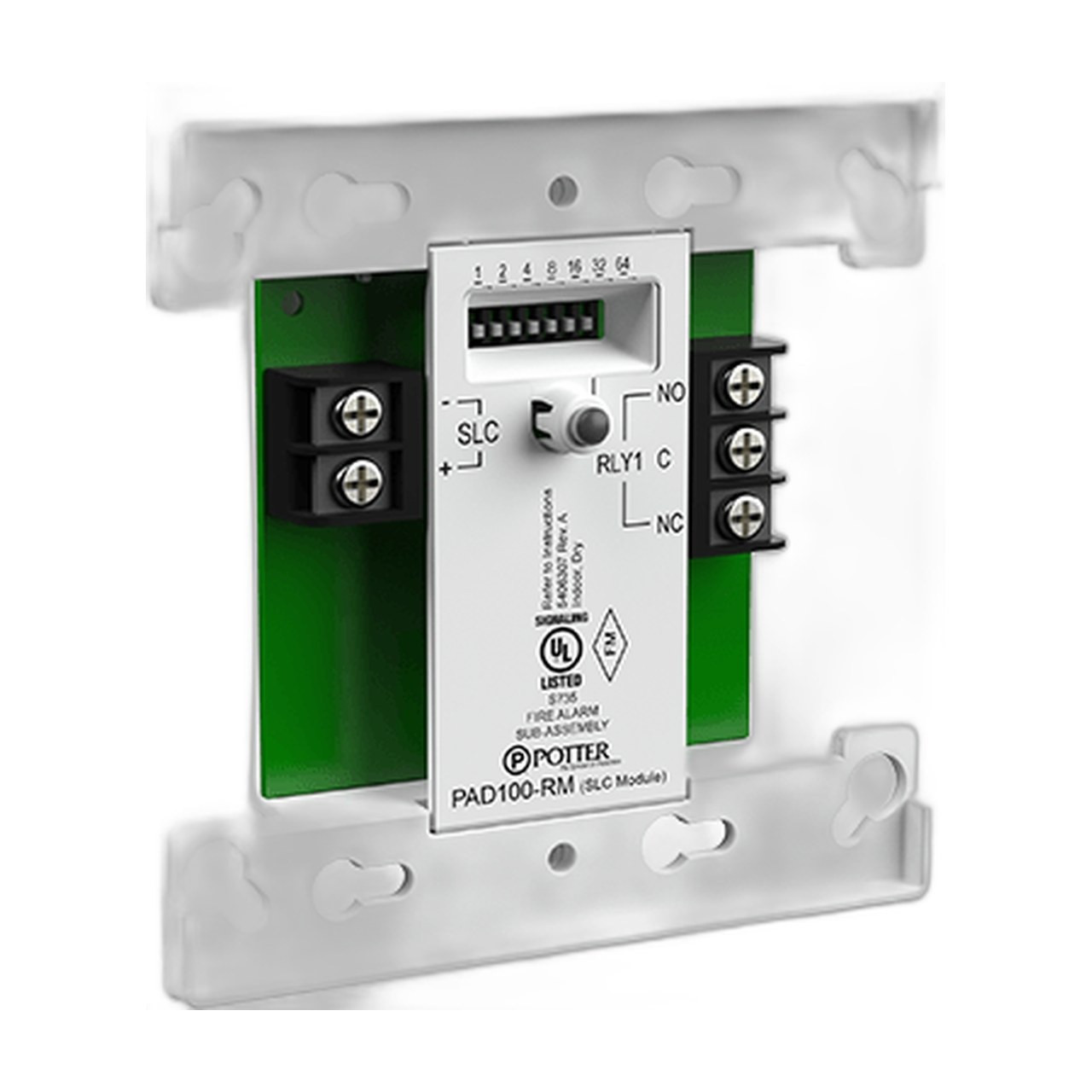
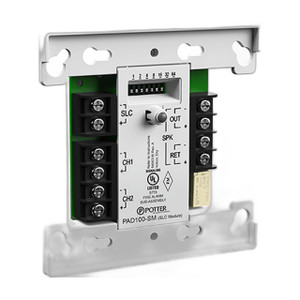
Potter PAD100-RM Relay Expansion Module
The Potter PAD100-RM is a relay expansion module engineered to extend the door and reader capacity of Potter PAD series access control systems. Instead of replacing your existing controller when facility requirements grow beyond initial scope, the PAD100-RM adds relay-switched door control points directly to your deployed Potter infrastructure. This modular approach keeps your deployment timeline predictable and avoids capital redeployment on new control hardware.
Key Features
- Relay-Driven Door Expansion: Adds relay-controlled strike and lock management capacity to Potter PAD series controllers. Each additional relay handles one door's strike, magnetic lock, or electronic release — meaning you can grow from a 2-door to a 4-door or 8-door installation without controller swap-out.
- Direct Potter PAD Integration: Designed specifically for Potter access control platforms, so there's no protocol translation layer or third-party middleware. Relay assignments, timing, and access policy execution happen within the same control logic as your readers and credentials.
- Multi-Reader Support: Works with Potter reader devices and credential authentication systems (card, PIN, biometric formats supported by Potter ecosystem). Each reader controls multiple relay-switched doors based on credential and access rule — typical for corporate offices, schools, hospitals, or secure storage where one person's badge opens different doors on different floors.
- Modular Scaling Architecture: Install one PAD100-RM relay module now; add another later if the facility expands further. No wholesale system redesign — just additional relay capacity wired to the same control frame.
- Relay-Based Strike & Lock Control: Supports standard 12VDC and 24VDC relay-switched strikes, magnetic locks, and electronic latches. Relay contact ratings allow direct control of high-inrush loads common in door hardware without intermediate contactors (verify your specific hardware's draw against relay specs during design).
- Access Policy & Scheduling Enforcement: Relay state changes follow Potter's control logic — time windows, credential level matching, and denial rules all apply to PAD100-RM relay outputs the same way they do to the controller's native relay ports.
Integration & Compatibility
The PAD100-RM pairs with any Potter PAD series access control controller in your deployment. It communicates over the same interconnect as your reader devices and credential processing, so management remains centralized. Security integrators scale installations methodically: install the core PAD controller and primary readers first, then deploy the PAD100-RM relay module as doors are phased into the facility or as tenant security requirements expand. Works within Potter's ecosystem for card readers, PIN keypads, and multi-factor authentication hardware. Compatible with Potter's centralized reporting and audit logs — relay activations and door-strike operations appear in the same event stream as credential grants or denials.
When to Choose a Different Model
If your facility requires more than a single PAD100-RM relay module can provide, or if you need advanced features like biometric reader integration beyond Potter's native capability, consult with an integrator about higher-capacity Potter controller variants or a fuller Potter platform deployment. If you're building a new system from scratch, evaluate the full Potter PAD controller lineup to right-size relay capacity at deployment rather than scaling with modules later.
Typical Deployment Scenarios
Corporate campuses adding secure server rooms or executive suites to an existing access control footprint. Educational institutions expanding controlled entry as enrollment or security requirements grow. Hospitals and healthcare facilities adding restricted zones for operating suites or pharmaceutical storage. Government and secure storage facilities where phased rollout of door control aligns with facility renovation or staffing changes.
Frequently Asked Questions
Q: Can I install multiple PAD100-RM modules on one Potter PAD controller?
A: Yes. The modular architecture supports cascading relay modules. The total number of relays your system can manage depends on your specific Potter PAD controller model and its relay-control addressing capacity. Confirm maximum relay count with your integrator during the design phase.
Q: Does the PAD100-RM require separate power for the relay coils?
A: The PAD100-RM draws power from the Potter PAD controller's supply or a dedicated auxiliary supply (12VDC or 24VDC depending on relay voltage). Door strike and lock power is typically sourced separately to avoid loading down control logic power. Your integrator will specify power distribution during commissioning.
Q: How is the PAD100-RM wired to door hardware?
A: Relay contacts connect to your door strike or magnetic lock coil. Standard 18–14 AWG wiring is typical. Relay switching timing and hold duration are configured in Potter control software — your integrator will program release duration based on strike type (e.g., 500 ms buzz for a buzzer strike vs. continuous hold for a mag lock).
Q: Will relay activation interfere with reader operation?
A: No. Reader communication and relay control operate on separate channels within the Potter PAD platform. When a credential is verified, the relay activates independently of reader signaling.
Q: What happens if the PAD100-RM relay module fails?
A: Relays controlled by the failed module will not activate. Other relays and readers on the Potter PAD system continue to operate. This is why security integrators often recommend redundant control paths or fail-safe hardware (e.g., fail-safe strikes that unlock on power loss) in mission-critical doors.
Q: Can I monitor relay status (door open/closed) through the PAD100-RM?
A: The PAD100-RM is a relay output module; it does not natively provide door position feedback. To monitor whether a door is actually open or closed, wire a separate door-position switch (magnetic reed, push-button, or electronic position sensor) to a Potter reader input or a dedicated contact monitor on the controller.
Ted PerryPerspective based on aggregated IP Security Depot and affiliated engineering team experience.
I've evaluated the Potter PAD100-RM relay module across several multi-door access control deployments. This module is a practical expansion solution for Potter PAD system integrators who encounter facilities requiring more door control points than a single controller can handle. The PAD100-RM (often searched as PAD100 RM) avoids costly hardware replacement and keeps installation timelines predictable — a real advantage when a customer discovers six months in that they need three more secure doors than originally planned.
Technical Highlights:
- Relay Expansion Capacity: The PAD100-RM extends the number of relay-controlled doors that can be managed by a Potter PAD series controller, supporting additional strike control and lock management without protocol bottlenecks. Each relay output independently switches a door's strike or mag lock based on credential verification and access policy — meaning you're not limited to daisy-chaining doors through a single relay.
- Reader Integration Consistency: Works with Potter reader devices and credential systems, maintaining identical authentication logic across expanded door networks. When a cardholder swipes at Door 1 (native controller relay) or Door 5 (PAD100-RM relay), the access rule evaluation is identical — no role-based drift or credential-level inconsistency between hardware pathways.
- Power and Wiring Isolation: Relay coil power and door strike power are kept separate from control logic power in a properly designed installation. This isolation prevents inrush spikes from door hardware from affecting reader communication or controller stability — critical in facilities where access control uptime is non-negotiable.
Deployment Considerations:
- Plan relay wiring and strike power distribution carefully during the design phase — each additional relay-controlled door adds coil and contact load that must be verified against available control power supply and door hardware inrush current. A single mag lock with 500 mA holding current times four doors can quickly exceed a modest supply's capacity.
- Test reader and relay synchronization during commissioning. Verify that credential denial properly blocks relay activation (i.e., a denied cardholder doesn't hear the strike buzz or mag lock click). Test fail-safe behavior — what happens to each relay-controlled door if the PAD100-RM or its power supply fails unexpectedly.
- Document relay assignments and door-to-reader mappings clearly in your control software and in printed form for future maintenance and credential updates. When a third-party contractor needs to troubleshoot a noisy strike two years later, clear labeling saves hours of detective work.
The PAD100-RM is a reliable choice for integrators expanding Potter access control systems methodically across growing facilities. It avoids overloading single controllers and provides a cost-effective scaling path for offices, schools, hospitals, and secure storage installations that grow beyond their initial access control scope.