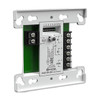
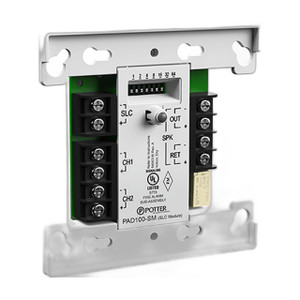
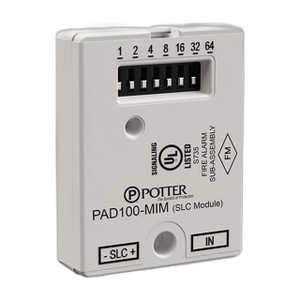
Potter PAD100-ZM Zone Expansion Module
The PAD100-ZM is a zone expansion module designed to extend access control capacity in Potter-based security systems without requiring panel replacement. This modular approach lets you add reader and strike control points incrementally—a significant advantage when retrofitting existing facilities or phasing in access control across campus deployments. The PAD100-ZM (often searched as PAD100 ZM) connects as a networked slave device to Potter control platforms, distributing I/O across multiple modules while maintaining centralized policy management.
Overview
Zone expansion modules serve a specific problem: your original control panel has enough processing power, but you've run out of physical I/O points for door readers and electronic strikes. Rather than rip out working infrastructure, the PAD100-ZM plugs into your existing Potter ecosystem and adds capacity. This is particularly valuable in multi-building campuses, warehouse facilities, and retrofit scenarios where core hardware investment is already committed. The module functions as a slave device, receiving access policies and credential assignments from the central management platform—so you're not managing separate systems or synchronizing credentials manually.
Common deployment environments include office buildings, educational facilities, healthcare networks, and enterprise campuses where initial control infrastructure must scale without wholesale replacement.
Key Features
- Zone expansion capability: Adds reader and strike I/O points to Potter systems that have reached capacity on the core panel—eliminates the need to replace working hardware.
- Networked integration: Connects via Potter's standard protocol stack, meaning the module integrates transparently into your existing network topology without requiring separate management interfaces or credential synchronization tools.
- Modular field installation: Deploys as a retrofit or new-build expansion without disrupting live access control—useful when you want to add a new building or wing without downtime on existing readers.
- Centralized access policy management: All credential assignments and time-based access rules are enforced from the primary control panel, eliminating policy drift across zones.
- Multi-zone coordination support: Enables coordinated access workflows across multiple entry points—important in facilities where access decisions depend on location history or concurrent authentication across doors.
- 24/7 operational design: Engineered for continuous operation in mission-critical environments; supports audit logging and access event reporting tied to the main platform.
Integration & Compatibility
The PAD100-ZM is compatible with Potter access control systems and networked architectures that support zone-based management. Integration requires verification of your specific Potter panel model and software version—not all panel revisions support the same expansion module count or communication speeds. The module communicates using Potter's proprietary protocol, ensuring consistent policy enforcement and eliminating interoperability variables.
During commissioning, document all connected readers, strike types, and credential formats. Verify network connectivity to the primary control platform and confirm power delivery (most zone modules draw modest current but should be surveyed for your specific load). Site surveys must account for cable runs between the primary panel and each zone module location—network latency impacts real-time access decisions on some Potter architectures.
Deployment Scenarios
Typical use cases: expanding single-door systems into multi-door facilities without panel replacement; adding zones to existing Potter installations as tenants or departments grow; creating redundant access paths in critical areas; and supporting phased campus deployments where initial core infrastructure is preserved during expansion. The modular approach reduces integration complexity and project timeline compared to control panel swaps, allowing you to align capacity growth with organizational budgets and operational windows.
Before live deployment, establish access policies, credential assignments, and audit logging configurations. Work with your integrator to document all reader types, credential formats (magnetic stripe, proximity card, mobile credential if supported), and strike control sequences. Test failover behavior if your Potter system includes redundancy features.
Frequently Asked Questions
Q: Does the PAD100-ZM require separate network switches or can it run on the same network as my readers?
A: The PAD100-ZM communicates via Potter's standard protocol stack over standard network infrastructure. Verify your network design with your Potter control system documentation or integrator—some installations benefit from dedicated access control VLAN segmentation for security and latency isolation.
Q: Can I add multiple PAD100-ZM modules to a single Potter control panel?
A: Yes, multiple zone modules are supported, but verify the maximum module count for your specific panel model and firmware version. Document expansion limits during the site survey phase.
Q: What happens to access control if the network link between the panel and PAD100-ZM drops?
A: Behavior depends on your Potter panel's configured failsafe settings. Some panels hold the last known credential state on zone modules; others deny access until communication is restored. Confirm this during commissioning and document it in your security procedures.
Q: Does the PAD100-ZM support the same credential types as my current Potter readers?
A: Credential support (magnetic stripe, proximity, mobile, biometric) is determined by your reader hardware and panel firmware, not the zone module. The PAD100-ZM passes credential data to the main panel for validation—ensuring consistent authentication rules across all zones.
Q: Can I retrofit the PAD100-ZM into an existing installation without re-commissioning all credentials?
A: Yes, the module integrates into your credential database and policy set once it's networked and discovered by the main panel. No mass re-enrollment is needed, but the module must be physically wired, tested, and formally registered in the access control management software before readers attached to it are live.
Ted PerryPerspective based on aggregated IP Security Depot and affiliated engineering team experience.
I have evaluated the Potter PAD100-ZM during capacity planning for a multi-building enterprise installation. This zone module provides a practical approach to expanding access control footprint without wholesale panel replacement—a significant advantage in retrofit scenarios where core infrastructure investment is already committed and downtime carries operational risk. The PAD100-ZM's networked slave architecture means policy enforcement remains centralized, so you avoid credential synchronization headaches or policy drift that plague distributed systems.
Technical Highlights:
- Modular I/O expansion: Extends reader and strike capacity incrementally without replacing the primary control panel—useful when your original hardware has processing power but exhausted physical connection points.
- Standard Potter protocol integration: Communicates via Potter's native protocol stack, ensuring transparent discovery and policy synchronization from the main platform without custom middleware or manual credential pushes.
- Field-installable form factor: Deploys as a retrofit or new-build addition without requiring panel downtime, important in 24/7 facilities where access control interruption triggers security alerts or compliance violations.
Deployment Considerations:
- Verify maximum module count for your specific Potter panel revision and firmware version—not all older panels support the same expansion capacity, and firmware upgrades may be required.
- Network latency between the primary panel and zone module affects real-time access decision timing on some Potter architectures; segment access control traffic if your campus network is oversubscribed or carries heavy data flows.
- Failsafe behavior (credential denial vs. last-known-state hold) varies by panel configuration—document and test this during commissioning to ensure compliance with your facility's security posture during network disruptions.
The PAD100-ZM is most valuable in phased campus deployments where you're adding wings, floors, or buildings over time and want to preserve initial control panel investment. It's also a strong retrofit choice in multi-tenant or leased facilities where replacing core hardware requires landlord coordination or creates unacceptable downtime windows. Less relevant if you're designing a greenfield system where a larger panel up-front is cost-neutral.