

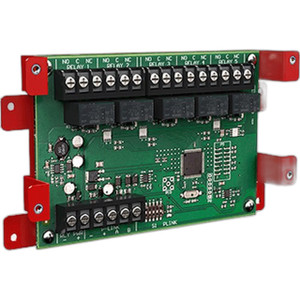

Product images are provided for reference and may not represent the exact model, configuration, or included
components.
Overview
SKU:
PFC-4064
Condition:
New
Availability:
Usually ships in 24 hours
Warranty
Manufacturer Warranty
Potter Conventional Fire Alarm Control Panel
Potter PFC-4064 Conventional Fire Alarm Control Panel Overview The Potter PFC-4064 is a conventional fire alarm control panel designed for commercial…
Potter Conventional Fire Alarm Control Panel
$1,373.20
$1,025.99
Your recommended setup
Review items below — quantities update pricing automatically.
Item
Qty
Status
Price
Optional Add-Ons recommended
Services optional
Bundle Summary
Bundle Subtotal:
$0.00
Optional Add-Ons:
$0.00
Services:
$0.00
Total:
$0.00
Overview
SKU:
PFC-4064
Condition:
New
Availability:
Usually ships in 24 hours
Warranty
Manufacturer Warranty
Description

Potter PFC-4064 Conventional Fire Alarm Control Panel
Overview
The Potter PFC-4064 is a conventional fire alarm control panel designed for commercial and institutional fire detection and alarm applications. As a conventional (non-addressable) system, the PFC-4064 organizes detection zones into distinct circuits, each capable of supporting multiple smoke detectors, heat detectors, and manual pull stations. This architecture delivers straightforward zone-based monitoring suitable for facilities requiring reliable fire alarm coverage without the complexity of addressable device management.
Key Features
- Conventional zone-based fire detection architecture for multi-zone facility coverage
- Support for multiple detector types per zone including smoke detectors, heat detectors, and manual fire alarm stations
- Visual and audible alarm indication for immediate fire event notification
- Integrated power supply with battery backup for emergency operation during power loss
- Manual and automatic silence functions to manage alarm state after initial activation
- Compliant design meeting applicable fire code and safety standards for commercial installations
- LED status indicators for system health monitoring and operational state visibility
- Modular design supporting field expansion and maintenance procedures
- Durable metal enclosure rated for wall-mount installation in control rooms or equipment areas
- Standard terminal strip connections for detector circuits and notification appliances
System Architecture and Zone Configuration
The PFC-4064 operates as a hardwired conventional panel, meaning each detection zone is individually wired to the main control unit. Unlike addressable systems where detectors report their exact location electronically, conventional panels report zone activation only—the installer must physically identify which detectors are in alarm based on the zone indicator. This approach reduces system cost and complexity, making it cost-effective for facilities with straightforward layout requirements.
Detector Compatibility
The panel accommodates standard two-wire and four-wire fire detectors across all zones. Common detector types include ionization and photoelectric smoke detectors for general occupancy areas, rate-of-rise and fixed-temperature heat detectors for high-ambient environments like kitchens, and mechanical or electrical pull stations for manual alarm activation. Each zone circuit includes built-in supervision, detecting open or short-circuit faults to alert operators to wiring or device failures before an actual fire emergency.
Alarm Signaling and Notification
Upon zone activation, the PFC-4064 triggers both on-board visual indicators and external notification devices connected to the alarm output circuits. Typical notification appliances include audible alarm bells or horns and visual strobes required by ADA and fire code. The panel integrates dedicated circuit connections for these devices, allowing facility managers to route alarms to multiple areas simultaneously or to specific zones based on fire code requirements.
Power and Backup Battery
The control panel draws power from standard 120 VAC building wiring and includes an integrated charger for a backup battery (typically 24 VDC) that maintains system operation and alarm signaling for a minimum supervised period in the event of main power loss. This ensures fire detection capability persists during electrical failures, a critical safety requirement in most jurisdictions.
Installation and Service Considerations
Installation of the PFC-4064 requires running individual wiring runs from the panel to each detection zone and notification device. The panel's terminal strip connections facilitate both initial wiring and future modifications. Routine maintenance includes checking battery voltage, testing notification devices quarterly, and replacing detectors per manufacturer recommendations (typically every 10 years) and local fire marshal requirements. Service personnel should verify zone isolation and alarm response during annual inspections.
Jerry Tildsen
I've specified the Potter PFC-4064 on multiple institutional projects where conventional fire alarm architecture aligns with facility layouts and budget constraints. The PFC-4064 delivers straightforward zone monitoring without the software licensing or addressing overhead of intelligent systems. It's a solid choice for buildings where hardwired zone separation matches the physical floor plan and where staff comfort with conventional operation outweighs addressable device benefits.
Technical Highlights:
- Zone-Based Detection: Individual circuits isolate detection zones, simplifying troubleshooting and allowing incremental expansion as facilities grow or reconfigure.
- Multi-Detector Support: Each zone accommodates mixed detector types (smoke, heat, manual stations) wired in series, reducing overall panel count and installation complexity.
- Battery Backup: Integrated 24 VDC battery charger maintains alarm function during utility power interruption, meeting code-mandated availability requirements.
- Supervision and Fault Detection: Built-in circuit integrity monitoring alerts staff to wiring breaks or detector failures before an actual fire event occurs.
Deployment Considerations:
- Confirm local fire marshal approval before final installation; some jurisdictions now encourage or require addressable systems in new construction, particularly for large or complex buildings.
- Run separate conduit for detector wiring and notification device wiring to simplify future service and reduce crosstalk risk in high-RF environments.
- Plan battery backup runtime according to local fire code (typically 24–48 hours minimum); verify charger output matches your backup battery specification.
- Train facility staff on manual zone identification during alarm events, since the PFC-4064 does not pinpoint exact detector locations like addressable systems do.
The PFC-4064 remains a practical conventional platform for mid-size commercial and institutional facilities prioritizing cost-effectiveness and operational simplicity. Its hardwired architecture and detector flexibility make it suitable for retrofit projects where new addressable systems may be cost-prohibitive.
Specifications
Product Type:
Conventional Fire Alarm Control Panel
Have Questions?
Ask an Expert.
RELATED PRODUCTS



System Design, Deployment & Technical Support
Support services and planning resources for commercial surveillance, access control, and infrastructure deployments.
Fixed scope • Fixed price
System Design Assistance
- Get help validating product compatibility
- Coverage requirements
- Storage planning and deployment architecture before you buy.
Deployment & Configuration Support
- Access fixed-scope support for rollout planning
- User setup guidance
- Migration and system standardization across single-site or multi-site deployments
Guides, Tools & Calculators
- PoE requirements
- Storage retention
- Camera selection and deployment methodology