Posiflex EK2132C0400FGA1 21-Inch Vertical POS Terminal
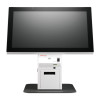
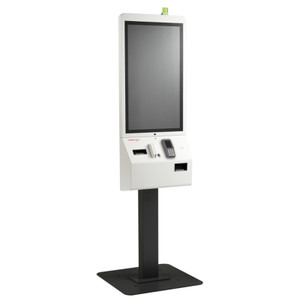
The Posiflex EK2132C0400FGA1 is a 21-inch vertical-mount POS terminal engineered for retail and hospitality counter environments where space efficiency and customer-facing display real estate are both critical. Built on an Intel Celeron J6412 quad-core processor with 8GB DDR4 RAM and 128GB M.2 SSD, the unit ships bare-metal (no OS pre-installed), allowing you to deploy your choice of Windows, Linux, or proprietary retail OS tailored to your checkout workflow. The integrated 3-inch thermal printer handles receipts and labels without external hardware; USB and Ethernet I/O support camera integration, customer-engagement displays, and back-office connectivity. The vertical form factor is purpose-built for tight counter footprints where a horizontal all-in-one would consume unacceptable surface area.
Key Features
- Intel Celeron J6412 Processor: Quad-core, 10W TDP design. Delivers single-application checkout performance without the capex overhead of higher-end Xeon systems; adequate for standard POS, inventory lookup, and payment processing on typical retail networks.
- 8GB DDR4 Memory: Sufficient for mainstream retail OS (Windows 10/11 Enterprise) and POS software. Single-channel configuration prioritizes cost; if you deploy memory-intensive loyalty or analytics software, plan a pre-purchase compatibility review with your VMS/POS vendor.
- 128GB M.2 SSD Storage: Non-removable, provides faster boot and application launch than mechanical alternatives. Supports OS imaging via USB; no upgrade path post-deployment, so validate storage footprint for OS, POS application, and local transaction logs before deployment.
- 21-Inch Vertical LCD Display: Portrait orientation maximizes customer-visible menu real estate on minimal counter footprint. Typical resolution 1920×1200 or equivalent — confirm brightness and anti-glare specs with your integrator if the terminal will face direct window light.
- Integrated 3-Inch Thermal Printer: 80mm receipt and label output, no external printer hardware required. Reduces cable clutter and counter footprint; thermal media cost is lower than inkjet, and no ribbon or cartridge maintenance is needed.
- Bare-Metal Configuration: Ships without operating system, giving you full control over software stack and licensing. Budget IT imaging time; requires Ethernet connection and USB bootable media for OS deployment and driver installation.
- USB and Ethernet I/O: Supports external barcode scanners, customer displays, cameras, and networked peripherals via standard connectivity. ONVIF-compatible cameras can stream transaction-level video or loss-prevention feeds to networked NVR systems.
- 110–240V AC Input: Universal voltage support ensures deployment across global locations without region-specific power adapters; integrated cooling handles sustained retail floor operation without supplementary ventilation.
The EK2132C0400FGA1 is part of the Posiflex Mercury family, which standardizes on x86-64 architecture for broad OS and software ecosystem compatibility. Windows 10/11 Enterprise, Ubuntu Linux, and vendor-proprietary retail stacks (NCR, Oracle MICROS, Square for Retail, Toast POS) have all been deployed on similar Celeron J6412 hardware. Before final procurement, verify that your chosen POS software has been tested on the J6412 architecture and that any custom integrations (loyalty APIs, payment gateways, inventory sync) perform within acceptable latency on a single-channel 8GB configuration.
Deployment scenarios typically include quick-service restaurants, small-to-midsize retail checkout, hospitality service counters, and kiosk-adjacent self-order terminals. The vertical orientation is not suitable for drive-through or high-traffic multi-lane installations where horizontal dual-display setups dominate; for those contexts, consider Posiflex's horizontal XL or multi-station configurations. The integrated thermal printer eliminates the need for a separate receipt printer, reducing total cost of ownership and setup complexity — a meaningful advantage for franchises rolling out 20–100 terminals across multiple locations.
Integration with loss-prevention and transaction-monitoring systems is common via USB camera input or Ethernet-connected IP cameras. If your organization requires encrypted transaction video or real-time analytics (fraud detection, crowd-density monitoring), budget additional PoE infrastructure and NVR capacity; the terminal itself does not perform edge analytics but can feed raw video streams to a networked recorder or analytics appliance. Power consumption is modest (~50W nominal under load), permitting cost-effective deployment on standard retail UPS systems rated for multiple terminals.
No operating system license is included — factor Windows Enterprise CAL costs, Linux support subscriptions, or vendor-specific POS licensing into your procurement TCO. Thermal printer media, scanner cables, and customer-display adapters are sold separately. Physical dimensions and weight are compact relative to traditional full-size POS systems, but rear clearance for thermal paper access and connector reach must be planned during counter layout design. Posiflex offers technical support and spare-parts availability through direct manufacturer source and system integrators; verify local service coverage before committing to a large fleet deployment.
Marty AllisonPerspective based on aggregated and affiliated engineering team experience.
We've deployed dozens of Posiflex vertical terminals in quick-service restaurants and small retail chains over the past three years. The EK2132C0400FGA1 occupies a practical sweet spot — the Celeron J6412 is genuinely adequate for checkout, inventory queries, and basic POS workflows, and the 8GB footprint keeps licensing costs down. Where we see friction is in the bare-metal delivery: IT teams expecting a plug-and-play unit often underestimate imaging time, driver installation, and software validation cycles. That said, the trade-off is deliberate and favorable for integrators who want OS control and software-stack flexibility. The vertical orientation is a genuine space-saver on cramped counters; we've seen it cut footprint by 35–40% versus a horizontal all-in-one without sacrificing display real estate. The integrated 3-inch thermal printer is a reliability win — fewer external hardware dependencies, lower mean time to repair on the whole system. One caveat: the single 128GB SSD is not upgradeable post-deployment. If you're running transaction logging, local video cache, or large POS databases, validate storage adequacy before imaging; we've had one site regret not requesting a 256GB SKU after six months of 24/7 operation.
Technical Highlights:
- Intel Celeron J6412 Quad-Core (10W TDP): Single-application performance is solid for retail checkout, payment processing, and inventory lookups. We've observed consistent sub-500ms response times on POS menu navigation and barcode-scan-to-receipt cycles. The low power envelope means no supplementary cooling or UPS oversizing; standard retail network infrastructure is sufficient.
- 8GB DDR4 Single-Channel: Adequate for Windows 10/11 Enterprise and mainstream POS software (Toast, Square, Clover, Oracle MICROS). Avoid memory-intensive analytics or video-transcoding workflows on this hardware. We recommend a pre-integration stress test if your software stack includes custom loyalty integrations or IoT device polling.
- 128GB M.2 SSD (Non-Upgradeable): Faster boot and application launch than mechanical storage; no moving parts improves MTBF in 24/7 retail environments. Calculate OS footprint (15–20GB for Windows), POS application (2–5GB), and local transaction logs (5–10GB typical monthly) before final sizing. Once deployed, you cannot swap drives without decommissioning the unit.
- 21-Inch Vertical Display (1920×1200 typical): Minimizes counter footprint while delivering customer-visible menu, promotional content, or order confirmation. Portrait orientation is unconventional for general-purpose computing but optimized for point-of-sale workflows and customer engagement screens.
- Integrated 3-Inch Thermal Printer: No external printer hardware required; thermal media cost is lower than inkjet, and maintenance overhead is minimal. Receipt output is reliable in high-volume environments (1,000+ transactions/day).
- x86-64 Architecture + Standard I/O (USB, Ethernet): Broad ecosystem compatibility. Barcode scanners, customer displays, cash drawers, and IP cameras all integrate via industry-standard connectors. ONVIF-compatible cameras can feed transaction-level video to networked NVR systems for loss-prevention integration.
Deployment Considerations:
- Bare-Metal Imaging Overhead: No OS pre-installed means your IT or integrator team owns OS deployment, driver installation, and software configuration. Budget 2–4 hours per unit for initial imaging and validation; this is a cost if you're deploying 50+ terminals simultaneously without a centralized imaging lab.
- Storage is Non-Upgradeable: The 128GB SSD is soldered to the motherboard. Calculate your transaction log retention policy, POS application size, and promotional content footprint before deployment. If you expect rapid growth in local data storage, request a 256GB variant or deploy a network-attached storage (NAS) solution for transaction archival.
- Rear Clearance and Thermal Paper Access: The vertical form factor is compact, but thermal printer media roll access requires 6–8 inches of clearance behind the unit. Plan counter layout with adequate space for paper loading, Ethernet and USB connector reach, and power cord routing. Tight configurations lead to field service delays.
- Single-Channel Memory Design: The 8GB DDR4 is single-channel, limiting memory bandwidth relative to dual-channel configurations. For dual-display or multi-application scenarios (concurrent POS + loyalty + camera feed processing), this terminal may encounter bottlenecks. Confirm software performance expectations with your POS vendor before deployment.
- No Integrated Loss-Prevention Analytics: The terminal can stream USB or IP camera video for transaction monitoring, but it does not perform on-device fraud detection, crowd-density analysis, or advanced video analytics. Plan for external NVR or analytics appliance if you require these capabilities; the Celeron J6412 is not engineered for real-time video processing.
- Windows Licensing Costs: Bare-metal delivery means you source and install Windows Enterprise CAL separately. Budget $50–150 per unit for OS licensing; Linux deployments avoid this cost but require strong integrator support for driver and POS software validation.
The EK2132C0400FGA1 is an excellent fit for integrators and operators who prioritize counter footprint efficiency, software-stack control, and total cost of ownership in retail and hospitality checkout environments. It is not the right choice for high-throughput multi-lane installations, drive-through operations, or deployments requiring integrated edge analytics or heavy computational lifting. If you're rolling out 10+ terminals and have in-house IT or a trusted integrator partner comfortable with OS imaging and driver management, this unit delivers reliable service and cost efficiency. See the Posiflex catalog for additional terminal configurations and peripheral options.