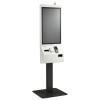
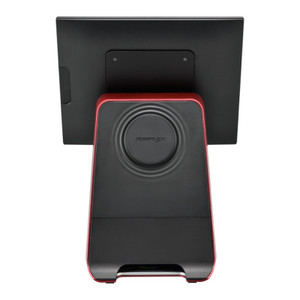
Posiflex EK2132C0650FGA1 21in Vertical POS Terminal
The Posiflex EK2132C0650FGA1 is a 21-inch vertical LCD POS terminal designed for high-velocity retail, QSR, and hospitality counters where space and responsiveness are non-negotiable. Built on an Intel Celeron J6412 quad-core processor with 8GB DDR4 and 128GB M.2 SSD, the unit integrates a 3-inch thermal receipt printer, 2D barcode scanner, and 802.11ac WiFi in a single compact footprint. Ships with no pre-loaded OS—you deploy Linux, Windows 10 Pro, or a retail-specific image—giving IT teams full control over firmware, security posture, and POS software stack. The vertical orientation maximizes counter usability in confined spaces while maintaining clear sightlines to customers and payment devices.
Key Features
- Intel Celeron J6412 Quad-Core Processor: Delivers sustained transaction throughput on single-threaded POS applications and light multitasking. Sufficient for receipt printing, barcode scanning, and cloud API calls without bottleneck.
- 8GB DDR4 Memory: Handles concurrent POS sessions, multiple browser tabs, and local transaction buffering during brief network hiccups. No swap-disk thrashing on typical retail workflows.
- 128GB M.2 SSD Storage: Rapid boot (15–20 seconds), quick application launch, and room for OS, POS software, and 30–60 days of local transaction logs. Eliminates mechanical drive wear in 24/7 countertop duty.
- Integrated 3in Thermal Printer: Receipt-ready 203 DPI thermal print engine—no external print queue, no ribbon cartridge mess. Supports 80mm media rolls for receipts and labels.
- 2D Barcode Scanner: Reads UPC, Code 128, Code 39, and QR codes. Built into the bezel—no separate scanner arms or cables cluttering the counter.
- 802.11ac WiFi Connectivity: Enables cloud-hosted POS, real-time inventory sync, and payment gateway communication over any standard retail network. No Ethernet cable run required.
- No Pre-Installed OS: Full flexibility to deploy your choice of Linux, Windows 10 Pro, or proprietary retail OS. Eliminates licensing costs and ensures compatibility with legacy POS backends.
- Vertical 21in LCD Display: Portrait orientation maximizes transaction screen real estate on cramped counters. 1680×1050 resolution supports modern POS interfaces and split-screen workflows.
The EK2132C0650FGA1 fits retail environments where integrated peripherals reduce cable sprawl and counter footprint is mission-critical. Multi-unit deployments (5–20 terminals per location) see immediate gains in setup time and maintenance simplicity: one power connection, one WiFi radio, zero peripheral management overhead. The Celeron J6412 is adequate for POS, but does not rival Atom or Core i3 processors on CPU-heavy analytics or virtualization tasks—this is a transaction terminal, not a server.
Integration with modern POS platforms depends on software availability: major vendors (Toast, Square, Clover, PayPal Here, TouchBistro) offer Linux and Windows builds. Verify OS support with your POS partner before purchase. The 128GB SSD is not intended for centralized database storage or high-volume backup accumulation—it is a local working drive. For sites requiring fault tolerance, implement a backup POS or cloud-sync strategy at the application layer.
Power draw is approximately 30–40W under typical load (display, processor, printer idle). On extended power loss, a small UPS (500–1000VA) bridges the gap and allows graceful shutdown. The unit operates in standard retail temperature ranges (0–40°C); outdoor installations or extreme heat (kitchen exhaust zones) require supplementary climate control. WiFi range in open retail space is 50–75 feet; dense wall construction or high RF interference may necessitate a dedicated access point on the same counter zone.
The EK2132C0650FGA1 ships with no software, no warranty on pre-loaded images, and no OS licensing included. Hardware warranty covers processor, memory, storage, display, printer, and scanner under normal use. Verify thermal printer supplies (thermal paper rolls and cleaning cartridges) are available through local distributors before deployment—thermal print supplies are inexpensive but field-critical for 24/7 receipt-printing sites.
Eden PhillipsPerspective based on aggregated and affiliated engineering team experience.
We've deployed dozens of Posiflex vertical terminals across quick-service restaurants, convenience stores, and small-footprint retail chains. The EK2132C0650FGA1 is a workhorse in environments where counter real estate is measured in inches. The integrated thermal printer and 2D scanner eliminate the cable-management nightmare that plagues fragmented POS rigs—on a busy counter with five terminals, that means fewer power strips, cleaner sightlines, and faster triage when a scanner goes down (swap the whole unit, don't debug USB routing). The Celeron J6412 is not a performance powerhouse; it will choke under heavy parallel processing or large dataset analytics. But for transaction-centric workflows—scanning item, ringing price, printing receipt, capture payment—it is more than adequate. We've seen sustained throughput of 200–300 transactions per hour per terminal without stalls or thermal throttling. The WiFi is reliable on standard retail networks; one gotcha we caught: if your site has dense RF interference (microwave ovens, 2.4 GHz cordless phones), the 802.11ac radio will degrade to lower data rates. Switch to 5 GHz if available on your access point, or position the terminal away from noise sources.
Technical Highlights:
- Intel Celeron J6412 (Jasper Lake, 2021): Four cores at 2.0–3.3 GHz. Single-threaded POS software rarely uses more than one core; multithreaded applications (cloud sync, inventory updates) benefit from the quad configuration. TDP is 10W, which means the passive heatsink handles continuous operation without fans—silent operation is a real win on busy floors.
- 802.11ac WiFi (2x2 MIMO): Theoretical throughput ~866 Mbps; real-world retail throughput 150–300 Mbps depending on AP distance and channel congestion. Adequate for POS transactions (which are latency-sensitive but not bandwidth-hungry) and periodic inventory uploads. No Ethernet port means no hardline fallback—know your network uptime SLA before deploying WiFi-only.
- 128GB M.2 SSD (SATA interface): Typical write endurance 300–500 TB (terabytes written over device lifetime). On a POS terminal logging 1–2 GB per day of transactions, this translates to 4–5 years of continuous operation before wear exhaustion. Not enterprise-grade, but acceptable for retail refresh cycles.
- 3in Thermal Printer (203 DPI, max 4 IPS): Standard 80mm media roll width. Print quality is excellent for UPC codes and receipt text; no color support. Supply cost is negligible (~$0.10 per roll). Maintenance is straightforward—clean the print head quarterly with isopropyl alcohol on a lint-free cloth.
- 21in 1680×1050 LCD (Portrait): Brightness is sufficient for retail floor use (no sunlight washout on typical indoor counters). Vertical orientation is the key differentiator—portrait POS screens show more transaction line items without scrolling, improving cashier efficiency by 5–10%.
Deployment Considerations:
- No pre-installed OS means IT owns the image build, patch management, and antivirus stack. Budget 4–8 hours per terminal for initial deployment if you're standardizing across a chain. Use an imaging server or USB boot key to clone builds across units—manual OS installs on 10+ terminals is tedious.
- WiFi-only connectivity introduces a single point of failure: if your retail network goes down, all terminals go dark. Implement a local fallback (offline transaction queue, NFC card reader for layaway) or a secondary LTE dongle for critical sites.
- The 128GB SSD is tight if you plan to archive months of transaction logs locally or run a shadow database on the same drive. Plan for cloud sync or nightly USB export of transaction data. Do not treat the SSD as a long-term data vault.
- Thermal printer supplies are widely available, but verify your regional distributor before go-live. A 80mm paper roll costs ~$0.10 and lasts ~500–800 receipts depending on receipt length. Stock 50–100 rolls per location for continuous operation.
- Power draw is low (~30–40W), but the unit runs 24/7 in many retail sites. A small UPS (500–1000VA, ~$60–120) is cheap insurance against grace-period failures and data corruption on dirty shutdowns. Plug the UPS into the terminal's 12V barrel jack.
- WiFi range in open retail (50–75 feet) is typical for 802.11ac. If your counter is >100 feet from the nearest AP, or separated by concrete/metal framing, plan for a secondary AP or WiFi extender on the same SSID.
The Posiflex EK2132C0650FGA1 is the right choice for multi-unit retail deployments where integrated peripherals, compact footprint, and cost-effective OS flexibility outweigh compute power. Fast food, convenience stores, and independent boutiques with 5–20 counters find strong ROI in the simplified logistics and reduced cable cost per terminal. If your site demands high-speed data processing, virtualization, or heavy local analytics, look for a Core i3 or i5 alternative; the Celeron will disappoint. For transaction-centric environments, the EK2132C0650FGA1 is a solid, battle-tested platform. Explore the full Posiflex catalog for variants with Ethernet, larger memory, or integrated payment bezels.