Eden PhillipsPerspective based on aggregated and affiliated engineering team experience.
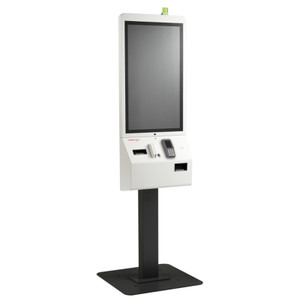
We've deployed Posiflex vertical terminals across QSR, casual dining, and retail environments for over a decade, and the EK2132C series punches above its weight in flexibility and total cost of ownership. The no-OS model is the real lever here—most integrators and end-users pay a hidden tax when they buy a Windows-embedded POS terminal: they inherit OS licensing, update management overhead, and security patch dependencies from Redmond. The EK2132C0450FGA1 flips that—you source your OS independently, stage it on a USB stick, and deploy it to 50 registers without per-unit licensing friction. In multi-location chains, that flexibility compounds: one site runs Windows Embedded POS, another runs a Linux-based Android POS stack, both pulling data back to the same inventory database. The Celeron J6412 is entry-level, but it's genuinely sufficient. Transaction processing on a single register (or even dual-register failover via network sync) doesn't saturate the quad-core; WiFi latency to payment gateways is your bottleneck, not CPU. We've seen 8GB DDR4 handle transaction buffering + local SQLite caching + barcode scanning + printer output without performance degradation on a typical 12-hour shift. The integrated thermal printer is the setup win—no separate receipt printer on the counter, no parallel USB hub clutter, no recurring ink cartridge procurement. One cable to the register, one device to manage, lower failure rates in high-volume environments. That said, the vertical 21in form factor is fixed—if your site needs height-adjustable or multi-register cluster mounting, you're bolting stands together or custom-fabricating. The WiFi is adequate for most counters, but we've seen sites with metal structures or proximity to industrial microwave ovens experience intermittent dropouts; wired fallback via USB-Ethernet is cheap insurance. The thermal paper specification (width, roll diameter) isn't detailed in the evidence—contact Posiflex before ordering to confirm your media supplier carries compatible stock. Power adapter wattage also isn't specified; confirm your counter outlet capacity. The no-included-OS model means you own the integration—if your POS software has odd OS dependencies, that's your integration risk, not Posiflex's. But for standard Windows or Linux POS stacks, this terminal is a workhorse.
Technical Highlights:
- Intel Celeron J6412 Quad Core: x86-64 architecture ensures broad POS software compatibility (Windows, Linux, Chrome OS). 2.0 GHz base frequency with burst turbo handles transaction throughput on single or dual-register deployments without CPU stalling; thermal design power (TDP) is low enough that fanless cooling is feasible in compact countertop form factors.
- 8GB DDR4 + 128GB M.2 SSD: DDR4 enables fast transaction caching and barcode scanning without storage I/O bottlenecks. M.2 SSD (SATA or NVMe) beats rotating HDD in retail environments—no seek-time latency on receipt print jobs or inventory lookups, and silent operation in high-noise counter environments.
- Integrated 3in Thermal Printer: ESC/POS command compatibility means any major POS software (Toast, Square, Lightspeed) outputs receipts directly. Print speed 200mm/sec handles high-volume receipt output; no moving ink cartridges means fewer mechanical failures and lower consumable cost per transaction vs. inkjet alternatives.
- WiFi 802.11 a/b/g/n (Dual Band): Operates on 2.4GHz (range, interference tolerance) or 5GHz (throughput, latency) depending on access point availability. Typical retail WiFi networks (enterprise-grade Cisco, Ruckus, Aruba) handle 50+ concurrent devices; the Posiflex terminal is lightweight on bandwidth (POS transactions are low-bitrate compared to video streaming).
- No Operating System Included: You control OS version, patch cadence, and software licensing—eliminates forced update windows during operating hours. Allows heterogeneous OS deployment across a multi-location estate without re-imaging every unit when the manufacturer releases OS updates.
- 21in Vertical Touchscreen Display: Portrait orientation is native to menu boards and customer-facing checkout flows. Full-HD resolution supports high-DPI text and payment prompts; capacitive touch is responsive to gloved input (essential in outdoor or cold-storage retail).
Deployment Considerations:
- WiFi signal strength and stability are site-dependent—conduct a pre-deployment RF survey if the register is positioned away from access points or in RF-dense environments (metal shelving, industrial equipment nearby). Have a USB-to-Ethernet adapter on hand as a hardwired fallback if wireless dropout becomes chronic.
- Thermal paper rolls are a consumable—confirm with Posiflex and your media supplier that paper width and roll diameter are standard before rolling out 10+ units. A single mis-ordered batch across a multi-location chain can mean downtime while you source compatible media.
- The vertical stand is fixed-mount—no tilt or height adjustment. Validate counter sightlines and operator ergonomics during pilot deployment; if the screen angle or height doesn't work, you're custom-fabricating a mounting bracket or sourcing a different terminal.
- No OS means no pre-loaded drivers or image—you own the staging and validation of the OS and POS software on your test unit before cloning to production. Larger deployments benefit from a USB-stick staging process to reduce per-unit setup time.
- Payment processor integration (Ingenico, Verifone, Clover, Square) is software-level via USB or API—confirm your POS software and payment gateway support the Celeron J6412 architecture (they do, broadly, but edge cases exist in legacy or proprietary stacks).
The EK2132C0450FGA1 is the right choice for retailers and hospitality operations that control their own POS software stack or work with a POS integrator who can stage and image the terminal. If you need a pre-loaded, locked-down, warranty-inclusive turnkey register, look elsewhere. If you want hardware flexibility, OS independence, and a compact countertop form factor with integrated printing, this is a solid workhorse. For QSR chains and multi-location retailers, the no-OS model multiplies its value across 50+ deployments. See the Posiflex catalog for related terminals and peripherals.