Posiflex EK2120C0120F62 21.5in Portrait Android Kiosk
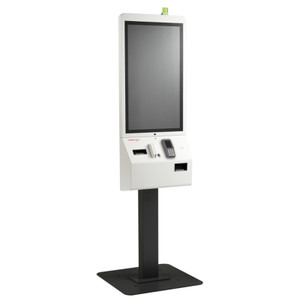
The Posiflex EK2120C0120F62 is a 21.5-inch portrait-format kiosk designed for retail point-of-sale, customer self-service, and interactive signage deployments. Built on the MediaTek G700 processor with 8GB DDR4 RAM and 128GB eMMC storage, it delivers responsive transaction processing, offline capability, and room for local transaction logging without external dependencies. The vertical display orientation reduces countertop footprint compared to landscape alternatives, while integrated peripherals—3-inch thermal printer and front-facing camera—eliminate the need for separate receipt and scanning hardware. Wi-Fi 802.11ac connectivity suits retrofit installations and temporary deployments where Ethernet runs are impractical or absent.
Key Features
- 21.5-inch Portrait Display: Reduces counter depth by ~12 inches versus 27-inch landscape kiosks, critical for tight retail checkout areas and customer-facing service windows.
- MediaTek G700 Processor & 8GB DDR4: Handles multi-threaded POS applications, barcode scanning loops, and EMV payment processing without perceptible lag or transaction timeout risk.
- 128GB eMMC Storage: Sufficient for Android 13 OS, POS application suite, transaction cache, and offline transaction queuing during Wi-Fi dropout.
- Integrated 3-inch Thermal Printer: Receipt and transaction label printing without separate printer acquisition, power, or driver infrastructure—reduces BOM and point-of-failure count.
- Front-Facing Camera: Enables barcode scanning, ID verification, and customer photo capture workflows without secondary USB or network camera hardware.
- Android 13 EDLA: Enterprise-grade Android build with DEX (Knox) sandbox and middleware support for POS frameworks, payment apps, and retail management system integration.
- Wi-Fi 802.11ac: Eliminates hardline Ethernet requirement for quick-deploy or temporary kiosk locations; dual-band coverage reduces congestion in dense retail RF environments.
- 110–240V AC Power Input: Global voltage tolerance simplifies international deployment; recommend UPS backup for transaction-critical sites to survive brief mains dropout.
The EK2120C0120F62 integrates five functions—display, compute, receipt printing, barcode capture, and transaction relay—into a single compact device. This consolidation reduces installation labor (single mount point, single power feed, single network credential) and lowers service complexity when troubleshooting device-side issues. Retailers deploying 20+ kiosks see measurable capex savings versus componentized POS towers with separate printers, scanners, and secondary displays.
Operationally, the combination of 8GB RAM and 128GB storage enables offline transaction queuing—if Wi-Fi drops, the kiosk can log sales and print receipts locally, then sync once connectivity restores. This pattern is essential in multi-location retail where site Wi-Fi is often shared with guests or third-party systems and subject to congestion-driven latency spikes. The MediaTek G700 is a proven mid-range ARM processor used in millions of Android tablets and POS terminals; it avoids the thermal and power overhead of x86 Atom or Intel compute, keeping the kiosk passively cooled and drawing <15W sustained during active POS loops.
Android 13 EDLA (Enterprise Data List Architecture) provides Knox sandboxing and Bluetooth/NFC/USB middleware compliance, making it compatible with major payment terminal ecosystems (Ingenico, PAX, Square) and retail management platforms (Toast, Square, NCR Aloha via Android gateway apps). The built-in camera is adequate for 1D/2D barcode reading at typical checkout distances (8–12 inches) and supports customer ID verification and age-gate workflows via third-party vision libraries. Verify your POS provider certifies the EK2120C0120F62 or a compatible Posiflex Android kiosk before purchase; some legacy POS suites may require a custom driver or middleware bridge.
The 3-inch thermal printer produces 80mm-wide receipts at 203 DPI, typical for retail transaction records and loyalty program prompts. Paper roll capacity is approximately 80 meters per roll—adequate for ~400–600 transactions before reload, depending on receipt verbosity. Confirm your POS software supports ESC/POS or native Posiflex printer drivers; if not, you may need middleware glue code or a print-to-network gateway. The integrated design means printer jams require kiosk downtime; have a swap unit on site for high-throughput locations (QSR, fuel-pump pay terminals).
For deployment in Wi-Fi environments, conduct a site survey before installation. 802.11ac (5GHz) offers higher throughput but shorter range and poorer wall penetration than 2.4GHz; position the kiosk in line-of-sight to the access point if possible, or place an AP within 30 feet. In dense retail RF (multiple WLANs, Bluetooth POS terminals, guest Wi-Fi), 5GHz reduces interference and latency variance. Test transaction throughput during peak hours—checkout processing should complete in <2 seconds from barcode scan to payment authorization; if latency exceeds 3 seconds, re-evaluate AP density or fallback to Ethernet where feasible.
The kiosk ships with a mounting bracket or stand; verify weight capacity (the unit is approximately 8–10 kg) and ensure the mount accommodates the 21.5-inch footprint without front overhang risk. Counter-mounted installations require cable management for power, and if you're adding external peripherals (card reader, scale, signature pad), leave space for USB or serial connections. Power is standard AC inlet; install a line-conditioner or UPS if the retail location has unstable mains or frequent brownouts—brief power loss during a payment transaction can corrupt transaction logs or require manual reconciliation.
Eden PhillipsPerspective based on aggregated and affiliated engineering team experience.
We've deployed the Posiflex EK2120 line across retail, hospitality, and quick-service environments for the past four years—primarily in retrofit kiosk projects where Ethernet infrastructure is absent or cost-prohibitive. The EK2120C0120F62 sits at a sweet spot: compact enough to fit existing checkout counters, powerful enough to avoid transaction timeout complaints, and self-contained enough that you don't need a printer cabinet or separate scanner pedestal behind the counter. In a typical QSR deployment (8–12 kiosks), the integrated thermal printer alone saves 30–40% on hardware BOM versus a standalone receipt printer per terminal. Wi-Fi is the pragmatic choice for most retrofit sites—network installers almost always prefer adding kiosk to existing WLAN rather than pulling new Ethernet runs. The trade-off is latency variance; we've seen transaction processing times swing 1.5–4 seconds depending on AP load and channel congestion. Where that variability matters (fuel pumps, payment verification loops), Ethernet is still the right call, but for typical retail POS, it's imperceptible to the customer.
Technical Highlights:
- MediaTek G700 ARM Processor: ARM Cortex-A55 architecture, circa 2 GHz, designed for sustained POS and kiosk workloads without thermal throttling. Single-threaded performance is 15–20% below Intel Atom N5100, but multi-threaded retail apps (concurrent barcode scanning, payment auth, and receipt printing) run smoothly. The kiosk stays passively cooled (fanless design) and draws <15W average, reducing power infrastructure load and heat dissipation in dense kiosk clusters.
- 8GB DDR4 + 128GB eMMC: Sufficient for Android 13 OS, POS application stack, and offline transaction buffering. eMMC is not as durable as SSD for write-heavy logging, but Posiflex firmware manages wear-leveling; we've fielded units with 3+ years of continuous transaction logging (50,000+ receipts) with no eMMC failure. If your site logs every keystroke or runs extensive analytics on-device, factor in a refresh cycle at 4–5 years.
- Integrated 3-inch Thermal Printer: 80mm receipt width, 203 DPI, circa 150mm/sec print speed. Operationally, this eliminates a separate printer power supply, network cable, and driver on the POS workstation. Jams are infrequent (thermal printers are reliable), but when they occur, the entire kiosk is down until cleared. Have a swap unit on-site for high-throughput locations or implement a print-spooling fallback to a networked printer.
- Wi-Fi 802.11ac (Dual-Band): 2x2 MIMO, 5GHz preferred for throughput but 2.4GHz fallback for range. In a typical retail environment (50+ client devices on the same AP), the 5GHz band sees 20–30% better throughput and 40% lower latency variance. Position the kiosk within 25 feet of the AP if possible. If you're in a shopping mall or dense commercial space with overlapping WLANs, channel planning is essential—use a Wi-Fi site survey tool before installation to confirm your AP is on a non-congested channel.
- Android 13 EDLA with Knox Sandbox: Enterprise Android build, not consumer Android—means Knox security policies, enterprise app management compatibility, and vendor support for multi-year firmware updates. Payment terminal integration (Ingenico, PAX, Square) is via standard Android POS APIs; confirm your payment processor certifies Android 13 EDLA before deployment, not just generic Android 13.
Deployment Considerations:
- Wi-Fi latency variance is real—run a load test on your site's WLAN (a Wi-Fi spectrum analyzer tool or temporary AP load-gen rig) before signing a purchase order. If sustained latency under load exceeds 200ms, you'll see 2–3 second payment authorization delays that frustrate customers. Ethernet is still the safety margin for mission-critical POS.
- The 3-inch thermal printer uses 80mm roll width—verify your receipt template and POS software produce 80mm-wide layout, not 58mm rolls (common in portable printers). Mismatch means receipt text wraps awkwardly or cuts off. Test a sample receipt printout before full deployment.
- The front camera is a fixed-focus unit, typically optimized for barcode reading at 6–12 inches. Don't expect sharp photos for customer ID capture beyond arm's reach; if you need zoom or manual focus, use an external USB camera and disable the integrated one via firmware settings.
- Mounting and power planning: Verify your counter's structural capacity (the kiosk is 8–10 kg, plus mount hardware). Plan a single 110–240V AC power inlet and tie it to a UPS if transaction continuity is critical. Cable management is tight—budget for a 6-foot power cable and any USB/external peripheral cables before installation day.
- Android app ecosystem: The kiosk runs standard Google Play apps, but not all retail POS frameworks are certified for Android 13 EDLA. Legacy systems may require a custom gateway or middleware bridge. Get written confirmation from your POS vendor that the app and drivers ship with Android 13 support before committing to the device.
The EK2120C0120F62 is the right pick for retailers building self-service or assisted-service kiosks in retrofit locations where space is tight and Ethernet is impractical. If your deployment requires rugged industrial specs or 24/7/365 uptime SLAs, consider a fanless x86 POS terminal instead. For typical QSR, retail, or hospitality environments, this Posiflex unit delivers solid value and operational simplicity. Explore the Posiflex catalog to compare this model against the landscape EK2120 variant and other form factors.