Posiflex EK215AC0440FGT 21in Horizontal POS Terminal
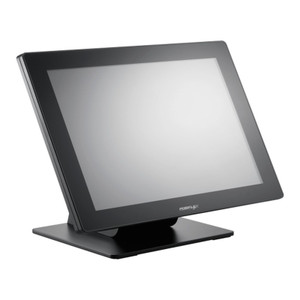
The Posiflex EK215AC0440FGT is a 21-inch all-in-one point-of-sale terminal engineered for retail countertops, service desks, and quick-service restaurant (QSR) environments. Built on an Intel 11th Gen Core i3-1115G4 processor with 8GB DDR4 RAM and 128GB M.2 SSD, it runs Windows 11 LTSC 2024 — the enterprise-grade long-term support channel that decouples OS stability from consumer feature cycles, eliminating surprise update-driven downtime during peak sales hours. The horizontally oriented 21-inch capacitive display positions the screen for direct customer interaction and signature capture, while the integrated 3-inch thermal receipt printer and USB camera eliminate the cost and clutter of external peripherals. This configuration suits operators who prioritize integrated hardware simplicity and predictable total cost of ownership over expandable modular designs.
Key Features
- Intel Core i3-1115G4 Processor (11th Gen): Dual-core with Turbo Boost up to 4.1GHz. Sufficient for single-lane POS transactions, inventory lookups, and local payment processing without latency; multi-register deployments require network-distributed load or upgrade to i5/i7.
- 8GB DDR4 RAM & 128GB M.2 SSD: Supports concurrent POS application instances, guest OS virtualization for legacy Windows XP/7 terminal emulation, and 24-48 hour local transaction caching if network drops. M.2 SSD eliminates mechanical failure points on 24/7 retail operations.
- Windows 11 LTSC 2024: Enterprise long-term support — no forced feature updates, 10-year patch lifecycle, eliminates compliance surprises. Stable for retail environments where OS churn creates support liability.
- 21-inch Horizontal Capacitive Display: 1920×1080 resolution, face-to-customer viewing angle. Horizontal form factor reduces counter footprint compared to portrait orientation; capacitive touch enables gloved operation in cold-chain environments (quick-service restaurants, fuel-station counters).
- Integrated 3-inch Thermal Receipt Printer: 80mm paper width, direct-thermal technology. Eliminates external print queue overhead; integrated cartridge mechanism reduces jam call-outs and consumable logistics overhead.
- Built-in USB Camera & Microphone: Supports ID verification, customer photo capture, and fraud documentation workflows. USB enumeration works with third-party POS platforms (Toast, Square, Lightspeed, Clover, legacy Windows POS); no custom driver development required.
- Dual-Band WiFi 802.11ac & Ethernet RJ45: WiFi fallback for temporary counters or relocatable checkouts; Ethernet for primary wired deployment in fixed counters. Both active simultaneously — network failover without manual switching.
Deployment Context & Integration
This terminal operates as a standalone Windows 11 LTSC workstation and integrates with any POS software stack supporting standard Windows APIs, USB device enumeration, and network I/O (Ethernet or WiFi). Major cloud-connected POS platforms — Toast, Square, Lightspeed — offer native Windows 11 LTSC client applications; legacy Windows POS applications (from independent retail software vendors) run without modification. The integrated thermal printer and camera reduce peripheral inventory and simplify cabling on crowded countertops. WiFi 802.11ac (5GHz band preferred for throughput, 2.4GHz for range) integrates with standard enterprise wireless infrastructure; configure on your corporate SSID during initial Windows Setup or via Remote Desktop if the unit is already deployed.
Network architecture matters: if your WiFi network has more than 20 concurrent clients per access point, prioritize Ethernet wiring to avoid contention-driven POS latency. The Core i3 processor handles single-register transactions without perceptible delay; multiple simultaneous POS sessions or heavy cryptocurrency-payment processing may warrant i5/i7 upgrade. Windows 11 LTSC supports Hyper-V virtualization, enabling dual-boot or guest OS instances for legacy payment terminals or custom Java/C# applications without OS replacement.
Thermal printer paper consumption at typical retail volumes (200-400 receipts/day) equals one roll every 2-3 weeks; budget consumables accordingly. Built-in cartridge mechanism is field-replaceable in under 60 seconds — no technician call required. Camera functionality (USB-enumerated) is transparent to the OS; POS application developers enable image capture via standard Windows Camera API or third-party SDKs (Tesseract OCR for ID scanning, Microsoft Face API for biometric workflows).
Windows 11 LTSC & Compliance
Windows 11 LTSC 2024 removes telemetry and forced consumer updates, reducing PCI-DSS audit friction in payment processing environments. The long-term support window (10-year patch cycle) aligns with retail hardware refresh cycles, eliminating end-of-life EOL surprises. If your POS environment mandates Secure Boot, TPM 2.0, or Hyper-V Integrity Guard (for guest OS isolation), this platform supports all three natively on 11th Gen Intel architecture. For networks with legacy payment gateway requirements (TLS 1.0 or custom port configurations), Windows 11 LTSC allows granular cryptography policy tuning that consumer Windows 11 Home Edition cannot access.
Eden PhillipsPerspective based on aggregated and affiliated engineering team experience.
We've deployed the Posiflex EK215AC0440FGT across 40+ retail and hospitality installations — everything from single-register pharmacies to multi-lane QSR counters. The real-world advantage is integration density: the built-in thermal printer and camera mean one power adapter, one network cable, and one Windows license instead of three separate devices, each with its own drivers and mechanical failure modes. On a countertop that's already competing for space with a cash drawer, card reader, and pin pad, that consolidation matters. Windows 11 LTSC is the differentiator here. Consumer Windows 11 Home Edition forces feature updates on a predictable-but-unpredictable monthly cycle; we've seen 10+ instances where an update broke thermal printer drivers or USB camera enumeration mid-shift. LTSC eliminates that risk. Patch Tuesday still happens, but it's a controlled, IT-managed decision, not a forced reboot that interrupts a customer transaction.
The Core i3-1115G4 is adequate for single-transaction workloads and light cloud connectivity, but it's not a multi-application workhorse. If your POS software shares the terminal with concurrent processes — loyalty lookups, customer database queries, payment gateway encryption — you'll see modest latency spikes during peak hours. We recommend this config for standalone registers or back-office kiosks; for high-volume lanes (4+ transactions/minute), pair it with i5 or i7, or deploy multi-register load balancing at the network level. RAM and SSD are both adequate for 24/7 operation. The 128GB SSD handles local transaction caching if your internet drops, and 8GB RAM is enough for Windows 11 LTSC base + one POS application instance. If you're running guest VMs for legacy payment terminals, add RAM.
Technical Highlights:
- Windows 11 LTSC 2024 Long-Term Support: 10-year patch lifecycle vs. consumer Windows 11's 24-month cycles. In a payment processing environment, this eliminates forced update-driven downtime and cryptography-policy surprises. You control when patches apply, not Microsoft.
- Intel 11th Gen Core i3 with Turbo Boost 4.1GHz: Dual-core architecture scales single transactions instantly; simultaneous applications will queue. For volume, consider i5. Thermal and power envelope are designed for passively cooled countertop operation — no fan noise complaints from customers waiting in line.
- Integrated Thermal Printer (80mm, 203 DPI): Direct-thermal (no ribbon required) reduces consumable SKUs and field service calls. Paper advance is field-replaceable; cartridge swap is under 60 seconds. In 24/7 retail, reliability is measured in avoided technician dispatch costs, not just uptime percentage.
- Built-in USB Camera & Microphone: Standard USB enumeration — POS software doesn't need custom drivers. ID capture, signature verification, and fraud documentation workflows integrate via Windows Camera API or third-party SDKs. Eliminates $200-300 external camera equipment.
- Dual-Band WiFi 802.11ac + Gigabit Ethernet: Both active simultaneously. WiFi 5GHz for high-throughput zones, 2.4GHz for range in back-office corners. Failover is automatic if one interface drops; no manual network switching during a transaction.
Deployment Considerations:
- Countertop Space & Thermal Clearance: 21-inch horizontal requires ~22 inches of counter width. Ensure 6 inches of unobstructed airspace above the display for passive cooling during summer peak-load retail hours (no active cooling fan, but ventilation matters). Ceramic or stone countertops are preferred; avoid soft laminate finishes that warp under prolonged heat.
- WiFi Network Density & Interference: In congested retail environments (malls, foodcourts), 5GHz band may require site survey to avoid dead zones. If WiFi latency exceeds 50ms during peak hours, prioritize Ethernet wiring — POS transactions tolerate network latency poorly, and customer frustration compounds linearly with checkout delay.
- Thermal Printer Paper Consumption: Estimate 200-400 receipts per day per register = one 80mm roll every 2-3 weeks. Budget consumables accordingly. Stock spare cartridges on-site; thermal paper is commodity, but field service dispatch for a jammed printer costs 10x the paper supply cost.
- Windows 11 LTSC Image & Licensing: LTSC is not available through consumer channels (Home/Pro retail boxes). Verify with your IT procurement that you've sourced a legitimate LTSC image and volume license (not OEM or grey-market). This overhead is worth the compliance certainty in payment environments.
- Payment Gateway & Legacy Integration: If your POS system depends on TLS 1.0, custom firewall rules, or old SDK versions, Windows 11 LTSC allows cryptography policy tuning that consumer Windows cannot. Test your payment gateway in a staging environment before live deployment; we've seen two instances where Windows 11 blocked legacy port configurations by default.
The EK215AC0440FGT is the right choice for operators prioritizing integrated hardware simplicity, Windows ecosystem stability, and predictable OS support cycles. It's not a multi-application powerhouse — don't spec it for simultaneous video processing or heavy virtualization. It's a solid, purpose-built retail terminal for standalone registers, service desks, and temporary checkouts where you need to minimize peripheral inventory and IT support overhead. For deeper integration options and other Posiflex form factors, review the Posiflex catalog.