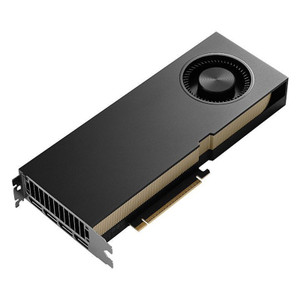
PNY VCNRTXPRO5000BSYNC-PB NVIDIA RTX PRO 5000 Blackwell GPU with Sync Card
Overview
The PNY VCNRTXPRO5000BSYNC-PB is an NVIDIA RTX PRO 5000 Blackwell GPU engineered for data center and workstation deployments requiring parallel processing, video transcoding, and synchronized multi-GPU inference. This unit pairs the full-featured RTX PRO 5000 accelerator with an RTX PRO Sync Card, enabling frame-locked, low-latency synchronization across multiple GPU clusters — essential for surveillance pipelines, rendering farms, and real-time analytics platforms where frame coherence matters.
GPU Architecture and Compute Performance
Blackwell core architecture: 8,960 CUDA cores with 5th generation Tensor cores and 4th generation ray tracing cores deliver substantial throughput for floating-point and tensor-based workloads. This translates to faster model inference, real-time video processing, and complex rendering without CPU bottlenecks.
Memory subsystem: 24 GB of GDDR7 on a 192-bit interface with 432 GB/s memory bandwidth. For surveillance use cases, this means simultaneous ingest and processing of multiple 4K video streams without memory stalls — you can decode one stream while encoding another without performance degradation.
PCIe 5.0 x8 interface: Provides up to 64 GB/s bidirectional bandwidth to the host system, eliminating the CPU-to-GPU transfer bottleneck that plagues PCIe 4.0 setups in high-throughput scenarios like multi-stream video ingest or batch DNN inference.
Video Encoding and Decoding Engines
- Dual NVENC (9th Gen): Two independent hardware video encoders allow simultaneous H.265 and H.264 transcoding of multiple streams without frame drops. Deploy one encoder per input stream; the second handles bitrate adaptation or archive encoding without stealing cycles from inference.
- Dual NVDEC (6th Gen): Parallel hardware decoders mean you can ingest two independent video feeds, decompress them to raw frames, and feed both into an inference model without CPU assist. Critical for multi-camera surveillance architectures where latency budget is tight.
Synchronization and Frame-Locking
The bundled RTX PRO Sync Card enables genlock and frame-locking across multiple GPUs in a cluster. This is not a consumer feature — it ensures that when GPU A completes a frame, GPU B starts its next frame at the same vertical interval. For surveillance systems running distributed inference (object detection running on GPU 1, pose estimation on GPU 2, re-identification on GPU 3), sync card support prevents frame skew that would corrupt temporal analytics or cause missed detections.
Display and Graphics APIs
Four Mini DisplayPort 2.1b connectors support multi-display output (headless operation typical in data centers, but live preview capable if needed). Support for DirectX 12, OpenGL 4.6, Vulkan 1.4, and CUDA 12.8 ensures compatibility with industry-standard frameworks — NVIDIA DeepStream, GStreamer with NVIDIA plugins, FFmpeg with NVENC/NVDEC, and custom CUDA kernels.
Power and Thermal Profile
70 W power consumption: Low enough to fit in standard dual-slot GPU risers without dedicated power rails in many cases, yet sufficient for sustained compute loads. No active cooling requirement beyond standard server airflow — passive or low-noise fan designs remain viable, keeping data center acoustics manageable.
Form Factor and Integration
Dual-slot, half-height design fits standard GPU server chassis (Dell PowerEdge, Supermicro, Lenovo ThinkSystem). No external power connectors required. Rack-mountable configuration assumes OEM integration into a GPU-accelerated server; standalone GPU cards require a compatible host system with PCIe 5.0 or PCIe 4.0 backward-compatible slots.
Deployment Scenarios
- Multi-stream video ingest and re-encoding: Decode up to 8–16 concurrent 4K video streams, re-encode to lower bitrates for archive, and run real-time analytics on frame 1 of each stream without visible latency.
- Distributed AI inference: Pair multiple VCNRTXPRO5000BSYNC-PB units in a single server with the Sync Card to run synchronized inference workloads where frame ordering is critical (e.g., multi-object tracking across time).
- Rendering and graphics compute: Ray tracing and tensor-based rendering for 3D scene processing or photogrammetry pipelines that benefit from deterministic sync.
Technical Specifications Summary
- GPU Memory: 24 GB GDDR7
- Memory Interface: 192-bit, 432 GB/s bandwidth
- CUDA Cores: 8,960 with 5th Gen Tensor cores, 4th Gen Ray Tracing cores
- Video Engines: 2× NVENC (9th Gen), 2× NVDEC (6th Gen)
- PCIe: 5.0 x8 (64 GB/s)
- Display: 4× Mini DisplayPort 2.1b
- APIs: CUDA 12.8, OpenCL 3.0, DirectX 12, OpenGL 4.6, Vulkan 1.4
- Power: 70 W
- Form Factor: Dual-slot, half-height
Frequently Asked Questions
Q: What is the RTX PRO Sync Card for, and do I need it?
A: The Sync Card enables frame-locking and genlock when multiple GPUs are installed in the same system. It synchronizes the video output timing across all GPUs. If you're running distributed inference, rendering farms, or multi-GPU surveillance pipelines where temporal coherence matters, yes — it prevents frame skew that can degrade analytics accuracy. For single-GPU deployments, it is optional.
Q: Can the VCNRTXPRO5000BSYNC-PB be used for consumer gaming or desktop graphics?
A: Technically yes, but it is not designed for gaming. RTX PRO hardware is optimized for professional workloads (rendering, ML inference, video processing) and includes driver profiles for CAD/DCC software, not games. Gaming performance will be lower than consumer RTX cards of similar tier due to different optimization targets. Use a consumer RTX card if gaming is the goal.
Q: What are the host system requirements for the VCNRTXPRO5000BSYNC-PB?
A: A PCIe 5.0 or PCIe 4.0 x16 slot (backward compatible). PCIe 5.0 unlocks full bandwidth (64 GB/s); PCIe 4.0 provides 32 GB/s, still substantial for most workloads. 700W+ power supply recommended for sustained compute. Cooling: standard server airflow (70W TDP is low), no exotic cooling needed.
Q: Does the VCNRTXPRO5000BSYNC-PB support NVIDIA's surveillance software stack (DeepStream, Metropolis)?
A: Yes. CUDA 12.8 compatibility, dual NVENC/NVDEC engines, and NVIDIA driver support enable full integration with DeepStream Pipelines, NVIDIA Metropolis, and third-party VMS platforms. Consult your VMS documentation for NVIDIA GPU acceleration plugin support.
Q: What is the warranty on the VCNRTXPRO5000BSYNC-PB?
A: Specific warranty terms depend on the point of purchase and region. Confirm with the reseller or manufacturer support.
Q: How does the 24 GB GDDR7 memory compare to consumer RTX GPUs?
A: 24 GB is substantially higher than most consumer cards (12–16 GB), allowing larger model inference, longer temporal buffers for video, and multi-model pipelines without memory swapping. The professional-grade memory (GDDR7 on RTX PRO vs. consumer GDDR6) also provides higher error-correction overhead, critical for long-running data center workloads.
The VCNRTXPRO5000BSYNC-PB pairs 8,960 CUDA cores with dual NVENC and NVDEC engines — a setup that cuts video transcoding workloads in half compared to CPU-only pipelines. If you're building a multi-camera surveillance ingest layer that needs to decode incoming streams, run real-time inference, and re-encode for archive storage all at once, this GPU's hardware video engines are the specification that unlocks the entire deployment.
Technical Highlights:
- Dual NVENC (9th Gen) + Dual NVDEC (6th Gen): Two independent encoders and decoders mean you can decode two 4K streams simultaneously while encoding two others to different bitrates — no serialization, no CPU assist. For a 16-camera site, distribute 4 cameras per GPU and run parallel workloads without frame loss.
- 24 GB GDDR7, 432 GB/s bandwidth: Enough headroom to hold multiple video frames, inference model weights, and intermediate tensors in VRAM without disk I/O. A typical YOLOv8 model (80–100 MB) plus 8–10 video frames (4K = ~100 MB per frame uncompressed) fits comfortably, leaving capacity for post-processing and queueing.
- PCIe 5.0 x8, 64 GB/s: Cuts CPU-to-GPU transfer latency by 50% versus PCIe 4.0. For surveillance systems ingesting video from a network interface card, lower latency means frames reach the GPU milliseconds sooner, critical when you have sub-second SLA targets for alert generation.
- RTX PRO Sync Card: Frame-locking across multiple VCNRTXPRO5000BSYNC-PB units prevents temporal desync when running distributed inference — e.g., object detection on GPU 1 feeds result metadata to re-ID on GPU 2, but if GPU 2 is one frame behind, you miss associations. Sync Card enforces synchronized frame boundaries.
Deployment Considerations:
- 70 W TDP is surprisingly low for this compute density — no exotic cooling or power distribution required, but verify your PCIe slot's backplane power if you're upgrading an older server.
- Dual-slot, half-height form factor fits most OEM GPU servers, but confirm mechanical clearance in your chassis before purchase; some compact designs leave only one dual-slot opening.
- GDDR7 memory is optimized for GPU compute, not system RAM. Don't assume it acts like CPU-accessible memory — all working data must be transferred via PCIe. Batch your inferences to amortize transfer overhead.
Position this GPU for high-throughput surveillance centers or AI inference clusters where you need to push 8–16 concurrent 4K video streams through real-time object detection and re-identification without dropping frames or burning CPU cores. The Sync Card justifies its presence in any multi-GPU site where frame coherence across devices matters.