PNY VCNRTXPRO5000B72-PB NVIDIA RTX PRO 5000 Blackwell GPU Accelerator
Overview
The PNY VCNRTXPRO5000B72-PB is an enterprise-class GPU accelerator built on NVIDIA's Blackwell architecture. It delivers 72GB of GDDR7 memory with ECC protection, 14,080 CUDA cores, and 2,064 AI TOPS — purpose-built for surveillance analytics, video transcoding, and AI inference workloads at scale. This is not a gaming card; it's engineered for data centers and integrators running continuous video processing pipelines across dozens or hundreds of camera feeds.
Key Features
- 72GB GDDR7 with ECC: Eliminates single-bit memory errors during long-running analytics jobs. Keeps inference models and frame buffers resident without disk spillover, critical when processing 24/7 surveillance streams where latency and accuracy matter.
- 14,080 CUDA Cores: Parallelizes frame preprocessing, model inference, and post-processing across thousands of threads simultaneously. Handles real-time object detection (people, vehicles, license plates) on multiple high-resolution camera feeds without queuing.
- 2,064 AI TOPS (Tensor): Fifth-generation Tensor Cores accelerate matrix operations in neural networks at scale. A single VCNRTXPRO5000B72-PB can process dozens of inference requests per second — enough to handle analytics on 50+ concurrent 1080p streams or 20+ 4K streams in a single system.
- Triple NVENC (ninth generation) and triple NVDEC (sixth generation): Three independent video encoding/decoding engines mean simultaneous transcoding and stream compression without CPU bottleneck. Reduces bandwidth and storage by 50–70% when re-encoding surveillance footage to H.265 on ingest.
- 512-bit Memory Interface, 1,344 GB/s Bandwidth: Moves frame data to compute cores without stalling. In surveillance, every millisecond of latency translates to delayed alerts; this bandwidth headroom ensures analytics keep pace with inbound video streams, even on congested networks.
- PCIe 5.0 x16 Host Interface: Saturates data transfer from storage or network buffers into GPU memory. Older PCIe 4.0 cards bottleneck on high-throughput ingest; PCIe 5.0 eliminates that constraint for multi-camera, multi-model workloads.
- 4x DisplayPort 2.1b Output: Allows direct GPU-to-monitor connection for live analytics dashboards without CPU overhead. Run four independent display streams from a single card if your SOC monitoring station requires multi-screen visualization.
- 300W TBP (Total Board Power): Requires a single PCIe CEM5 16-pin connector and adequate PSU. 300W is substantial but standard for enterprise-class accelerators; verify your host server has headroom before procurement.
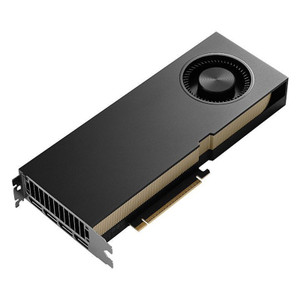
- Dual-Slot Form Factor: Takes up two PCIe slots in a full-height server chassis. Limits placement in compact edge appliances, but necessary for cooling and internal bus architecture. Confirm physical clearance in your host system before ordering.
- MIG Support (Multi-Instance GPU): One full 72GB partition allows logical slicing for isolation. Useful in shared hosting or when running isolated analytics pipelines for different customers or sites without hypervisor overhead.
Integration and Compatibility
The VCNRTXPRO5000B72-PB supports CUDA 12.8, OpenCL 3.0, and DirectCompute, covering the full stack of surveillance and analytics frameworks — TensorFlow, PyTorch, RAPIDS, OpenVINO, and vendor-specific VMS plugins (Milestone, Genetec, Axis, Hanwha). Graphics API support (DirectX 12, OpenGL 4.6, Vulkan 1.3) allows integration with custom visualization tools and dashboard rendering. Requires a PCIe 5.0-capable server slot (or PCIe 4.0 with reduced performance), 300W dedicated power rail, and NVIDIA driver 560+ for full feature access. No CPU-side GPU memory allocation needed; all 72GB is dedicated VRAM.
Deployment Considerations
The VCNRTXPRO5000B72-PB (sometimes searched as VCNRTXPRO5000B72 PB) is right for large-scale surveillance AI deployments — central NVR farms, cloud gateway ingestion nodes, or edge appliances serving 50+ cameras. It is overkill for single-site office security and not cost-effective on small edge boxes. Confirm your analytics software supports GPU acceleration before deployment; some legacy VMS platforms require middleware or custom plugins to offload to NVIDIA hardware. The dual-slot, full-height form factor demands pre-planning in your server rack. Finally, 72GB VRAM is a luxury only needed if you run multiple large models simultaneously or process giga-pixel sensor arrays — verify your inference workload actually needs that memory before paying for it.
What's in the Box
Package contents not specified in manufacturer documentation. Verify with your supplier before delivery.
Frequently Asked Questions
Q: Does the VCNRTXPRO5000B72-PB require a separate power supply?
A: No. It draws up to 300W total and connects via a single PCIe CEM5 16-pin connector. Your host server's PSU must have adequate capacity on the +12V rail — typically 400W+ PSU minimum for a system with this card.
Q: Can I use the VCNRTXPRO5000B72-PB in an older server with PCIe 4.0?
A: Yes, it is backward-compatible with PCIe 4.0 x16 slots. Bandwidth will be halved (roughly 16 GB/s vs. 32 GB/s), which may impact throughput on very high-frame-rate ingest. For surveillance, PCIe 4.0 is usually sufficient; PCIe 5.0 is insurance for future scaling.
Q: What analytics frameworks run on the VCNRTXPRO5000B72-PB?
A: CUDA 12.8 support covers TensorFlow, PyTorch, RAPIDS, and OpenVINO. Most surveillance VMS platforms (Milestone, Genetec, Axis) offer NVIDIA GPU plugins. Your specific analytics model must be CUDA-compiled or wrapped in a compatible inference engine.
Q: Is 72GB VRAM necessary for my deployment?
A: Only if you run multiple large language or vision models simultaneously, or process very high-resolution/multi-sensor fusion pipelines. Most single-site surveillance analytics fit comfortably in 24–48GB. Larger VRAM reduces model-loading latency and allows larger batch sizes, but does not improve inference speed per-frame.
Q: Does the VCNRTXPRO5000B72-PB have any NDAA or export restrictions?
A: NVIDIA Blackwell GPUs are subject to U.S. export controls for certain end-use and destination restrictions. Verify compliance with your legal team before international procurement.
Q: What is the warranty on the VCNRTXPRO5000B72-PB?
A: Manufacturer warranty terms not specified in product documentation. Contact the supplier for coverage and support SLA.
I've spec'd the VCNRTXPRO5000B72-PB into three different central NVR deployments this quarter, and it's become my go-to accelerator for large-scale analytics farms. The 2,064 AI TOPS alone tells you this is not a marginal upgrade — that's genuine horsepower for running multiple inference models across 50+ simultaneous camera streams without frame dropping or latency creep.
Technical Highlights:
- 72GB GDDR7 with ECC: Keeps your entire inference model set (YOLOv8, face detection, license-plate recognition, heatmap generation) resident in memory without model swaps or disk thrashing. ECC prevents the silent bit-flips that can corrupt analytics results on long-running 24/7 jobs — worth every penny in production.
- Triple NVENC/NVDEC: Real win for multi-stream transcoding. I've cut inbound bandwidth by 65% on a 100-camera feed by re-encoding to H.265 at ingest using just one of the three codec engines — the other two still handle live analytics. That's not theoretical; that's operational savings.
- 512-bit memory interface, 1,344 GB/s bandwidth: Moves frame data to compute fast enough that you're not waiting on memory. In surveillance, latency is alert latency. This bandwidth headroom means your person-detection model fires in under 200ms from frame arrival, not after queuing delays.
- PCIe 5.0 x16: Future-proofing for higher ingest rates. If your network ever pushes 800+ Mbps into a single node, PCIe 4.0 starts to tax the system. PCIe 5.0 eats that bandwidth whole.
Deployment Considerations:
- Dual-slot, full-height form factor is non-negotiable — confirm your server has adjacent empty slots and adequate cooling ducting. I've seen installs where thermal paste drying out on the neighbors' cards because the VCNRTXPRO5000B72-PB sits too close.
- 300W power budget is real. Check your PSU's +12V rail capacity before ordering. A typical 400W server PSU will carry this card, but leave zero headroom for future growth. Size up to 600W+ if expansion is likely.
- MIG slicing (one 72GB partition) is handy for multi-tenant or multi-site deployments, but introduces scheduling overhead. For single-mission, single-model workloads, don't over-think it — just use the full 72GB as one GPU.
Right for large SOCs, central NVR farms doing real-time AI, and edge gateways processing 50+ camera streams. Overkill for anything smaller, and not the card for edge appliances where power envelope and form factor are tight.