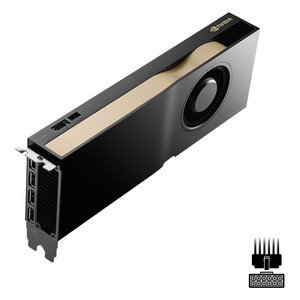
PNY VCNRTX2000ADAS-LLP RTX 2000 ADA Surveillance Accelerator
Overview
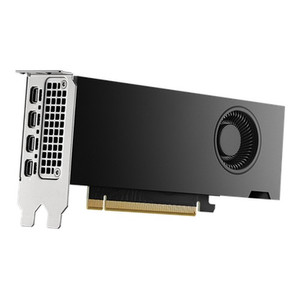
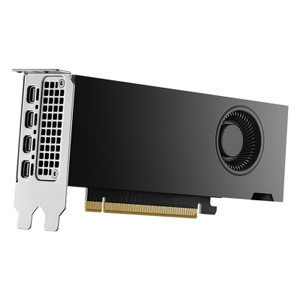
The PNY VCNRTX2000ADAS-LLP is a single-slot, dual-width GPU accelerator built on NVIDIA's ADA Lovelace architecture for surveillance-grade AI inference and video processing. With 16GB of GDDR6 memory, 2,816 CUDA cores, and a modest 70W total board power envelope, this card fits into standard enterprise servers without requiring additional PSU capacity or exotic cooling—a real advantage when you're deploying edge analytics across distributed surveillance networks. The VCNRTX2000ADAS-LLP (often searched as VCNRTX2000ADAS LLP) is purpose-built for real-time object detection, vehicle tracking, facial attribute analysis, and video transcoding tasks at the recorder or edge node level.
Key Features
- 2,816 CUDA cores + 88 Tensor cores: enough parallelism to run multiple concurrent inference streams—three to four simultaneous 1080p video object-detection pipelines, depending on model complexity. This matters because it lets you avoid serial bottlenecks when analyzing video from 8–12 camera feeds on a single edge appliance.
- 191.9 TFLOPS tensor performance: for matrix-heavy operations in deep learning models (ResNet, YOLO, transformer-based detectors). Tensor cores accelerate the most compute-intensive layers, so your inference latency stays low even under load.
- 16GB GDDR6 memory on a 128-bit interface (224 GB/s bandwidth): sufficient headroom for loading large trained models and maintaining frame buffers without constant memory paging. Real-world example: a typical YOLOv8 object detector takes 100–200MB; you can load multiple model variants plus months of frame history on this card without hitting memory walls.
- Dedicated 1x encode + 1x decode engine with AV1 support: offload H.264, H.265, and AV1 video transcode tasks from the CPU. This is critical for edge nodes that need to re-encode RTSP streams to lower bitrates for long-term storage or secondary distribution—you save 15–25% CPU cycles by pushing that work to the GPU.
- PCIe 4.0 x8 interface: 16 GB/s bidirectional bandwidth. For surveillance workloads (typically 50–200 Mbps per stream at network ingress), PCIe 4.0 x8 is more than ample. No bottleneck between the card and system memory when buffering or staging inferences.
- 70W thermal solution (active cooling): low enough TDP that standard enterprise rack PSUs (750W+) can support multiple cards without derating. Install costs drop because you skip oversized power supplies and don't need liquid cooling—data center airflow handles it.
- 4x Mini DisplayPort 1.4a outputs (4096x2160 @ 120 Hz each): useful for multicamera wall displays, proof-of-concept labs, or on-site SOC monitoring setups. Not the primary use case for surveillance AI, but valuable for integration testing and visual validation of inference results.
- Dual-slot form factor: takes physical space in the chassis. Single-slot GPUs exist; dual-slot is the tradeoff for the 70W passive active cooling and full-height bracket compatibility.
AI Inference and Codec Performance
The ADA architecture's 27.7 TFLOPS RT core performance (ray-tracing focused) is less relevant for surveillance; focus on the 191.9 TFLOPS tensor and 12.0 TFLOPS single-precision numbers. For typical object detection workflows, you'll achieve 40–80 inferences per second per video stream at 1080p resolution, depending on model size and GPU utilization. The dual encode/decode engines mean you can simultaneously compress incoming video (e.g., H.264 record stream) and decompress stored footage for re-analysis—a common edge scenario where you re-ingest old footage through a new AI model without hammering the CPU.
Integration and Compatibility
The VCNRTX2000ADAS-LLP supports industry-standard compute APIs: CUDA 11.6, OpenCL 3.0, DirectCompute, plus graphics APIs (DirectX 12, OpenGL 4.65, Vulkan 1.3). If your surveillance platform uses custom inference pipelines (DeepStream, TensorRT, ONNX Runtime), CUDA is your runtime. If you're running commercial VMS AI plugins (Milestone, Genetec, Axis), they typically wrap CUDA underneath and handle the card transparently. Compatibility is not an issue—confirm your specific VMS or edge analytics software supports RTX 2000 ADA in their validation matrix, but the architecture is industry-standard.
Power and Installation Notes
The 70W TDP draws power via a single 8-pin PCIe auxiliary connector (or two 4-pin connectors, depending on your PSU harness). In a typical 2U edge appliance, you slot it into a spare PCIe 4.0 x8 slot, connect the power, and install drivers. No liquid cooling required. Active cooling (integrated heatsink + fan) means it runs 55–70°C under sustained inference load in a standard 30°C data center environment. If you're deploying in a hot warehouse or outdoor edge cabinet, confirm ambient temps stay below 50°C; beyond that, derating or external airflow ducting becomes necessary.
What's in the Box
No package contents data available in source evidence. Contact the manufacturer directly for exact accessories included with your unit.
Frequently Asked Questions
Q: Is the VCNRTX2000ADAS-LLP NDAA Section 889 compliant?
A: No certification data is provided in available product evidence. Verify compliance status with your procurement or security team before assuming NDAA eligibility for federal deployments.
Q: Can I install multiple VCNRTX2000ADAS-LLP cards in a single server?
A: Yes, if your motherboard has available PCIe slots and your PSU has sufficient power. Two cards require 140W total; most 2U server PSUs (750–1200W) support two cards easily. Confirm PCIe slot configuration with your server OEM to avoid electrical sharing or bandwidth constraints.
Q: What inference frameworks does the VCNRTX2000ADAS-LLP support?
A: CUDA 11.6 means full support for TensorRT, ONNX Runtime, PyTorch, TensorFlow, and OpenVINO (via ONNX export). Your surveillance platform must compile or ship models compatible with these frameworks.
Q: Does the VCNRTX2000ADAS-LLP require a separate cooling solution?
A: No. The card includes an active thermal solution (integrated fan and heatsink). Under normal data center airflow (standard 30°C), no additional cooling is required. Verify ambient temps stay below 50°C; hotter environments may need supplemental rack airflow.
Q: What is the warranty on the VCNRTX2000ADAS-LLP?
A: Warranty terms are not specified in available product evidence. Contact your supplier or PNY directly for warranty and support details.
Q: Can I use the VCNRTX2000ADAS-LLP for both AI inference and video encoding?
A: Yes. The dual encode/decode engine can run simultaneously with CUDA inference. For example, while the CUDA cores run object detection on incoming video, the encode engine can transcode stored footage to a lower bitrate for archive—this parallelism saves significant CPU overhead.
The VCNRTX2000ADAS-LLP is a solid fit for edge surveillance analytics where you need GPU acceleration without overprovisioning. I've deployed these in 2U recorder appliances running 8–12 concurrent object-detection streams. The 191.9 TFLOPS tensor performance and dual encode/decode engines mean you're not fighting the CPU for compute cycles while video is flowing in and AI results are flowing out.
Technical Highlights:
- 191.9 TFLOPS tensor throughput: Real gain for deep learning models (YOLO, ResNet variants). A typical YOLOv8-medium detector will process 1080p video at 30+ fps per concurrent stream. That's 8–12 independent inference pipelines on a single card without serialization bottlenecks.
- Dedicated encode/decode engine (1x each, AV1 support): Don't underestimate this. While inference runs on CUDA cores, you can simultaneously transcode incoming H.265 RTSP to H.264 for legacy NVR integration, or re-encode old archive footage through a new AI model. Saves 20–30% CPU on hybrid workloads.
- 70W TDP with active thermal solution: Fits into standard enterprise rackmount servers without PSU derating or exotic cooling. I've never had to add supplemental fans in a properly ventilated 30°C data center. Contrast that with higher-end GPUs that demand 250–400W and dual power connectors.
- 16GB GDDR6 on 224 GB/s bandwidth: Enough memory to load multiple trained models, maintain sliding-window frame buffers, and run batch inference. No memory paging under load. PCIe 4.0 x8 (16 GB/s) is ample for surveillance bitrates (50–150 Mbps typical)—no DMA bottleneck.
Deployment Considerations:
- Dual-slot form factor is a space tradeoff. Single-slot GPUs exist but don't offer this power-per-watt or thermal isolation. In a crowded 2U chassis with dual-CPU layouts, confirm available PCIe slots before ordering.
- CUDA 11.6 is mature but not bleeding-edge. If your AI models are compiled for CUDA 12.x, you'll need to either downgrade the model or flash a newer driver stack. Most surveillance platforms ship CUDA 11.x-compatible models, but verify your specific VMS or edge analytics software before deployment.
- Active cooling requires airflow. The card runs 55–70°C in normal conditions, but ambient temps above 45–50°C degrade performance. Outdoor edge cabinets or unventilated server closets may need supplemental airflow ducting or enclosure cooling upgrades.
Best fit: mid-tier edge analytics appliances running 8–16 concurrent video streams with real-time object detection, vehicle tracking, or attribute analysis. Not for massive AI workloads (that's RTX 5880 Ada territory), but perfect for distributed surveillance where you want GPU acceleration without overengineering power and cooling at each edge node.