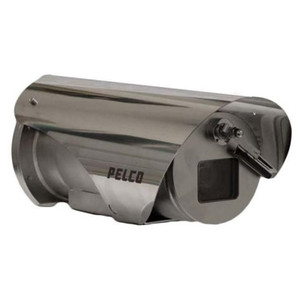
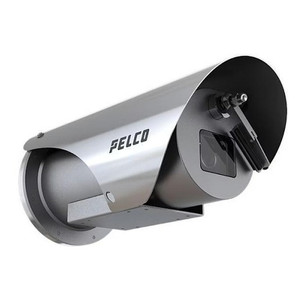
Pelco EXF2230-62-A4 2MP Explosion-Proof Camera T6
The Pelco EXF2230-62-A4 is an explosion-proof fixed camera engineered for ATEX Zone 1/21 hazardous gas and vapor environments requiring mandatory safety certification. Built from 316L stainless steel with T6 temperature class compliance (surface ≤85°C), this 2MP camera delivers reliable surveillance in petrochemical plants, refining facilities, and classified industrial spaces where equipment must be intrinsically safe. Powered by 24 Vac with pre-installed 4-meter cable, it integrates into certified monitoring systems without requiring field-level electrical modifications.
Key Features
- 2MP Resolution & Frame Rate: 1920×1080 @ 30 fps. Adequate for facial/license-plate capture on hazardous-area perimeters and entry/exit monitoring where regulatory documentation is required.
- Motorized Varifocal Lens: 4.4–9.3 mm with 32–109° horizontal field of view. Remote zoom eliminates field-visit adjustments in classified zones, reducing personnel exposure and safety certification paperwork.
- Extreme Low-Light Capability: 0.1 lux color / 0.01 lux monochrome. Operates reliably in unlit classified areas and during enclosure light-off procedures without supplementary lighting (which adds certification burden).
- 110 dB Wide Dynamic Range: Handles backlit scenes and sudden lighting transitions in process-control areas and outdoor hazardous-zone boundaries.
- Codec Flexibility: H.265 (40–60% bitrate reduction vs. H.264), H.264, and Motion JPEG. H.265 reduces storage and bandwidth on remote monitoring systems serving multiple hazardous sites.
- ATEX/IECEx/UL/CSA/EACEx Certified: Multi-standard compliance — accepted in North America (UL/CSA), Europe (ATEX/IECEx), and CIS regions (EACEx). No re-certification delays across jurisdictions.
- Sealed Housing — IP66/IP67/IP68: Protects against washdown, moisture intrusion, and temporary submersion. Critical for refineries and offshore platforms where spray and humidity are constant.
- IK10 Impact Rating: Withstands 5 kg drop from 40 cm. Survives tool strikes and accidental contact in cramped classified-area installations.
- Extended Operating Range: -40°C to +60°C. Maintains sensor performance in hot process environments and cold outdoor hazardous-zone perimeters.
The 1/2.8-inch CMOS sensor paired with motorized optics delivers edge sharpness across the focal range — critical for forensic-quality recording in compliance audits. Alternative 2.8–8 mm lens available for wider-angle deployments.
Power & Connectivity: 24 Vac supply with 4-meter pre-terminated cable minimizes field wiring and reduces certification review cycles. ONVIF Profile S, T, G, and M compliance ensures interoperability with Milestone, Genetec, Avigilon, and Axis Camera Station NVR platforms. Audio support and HTTPS encryption round out enterprise integration.
Deployment Context: This camera bridges the gap between general-purpose surveillance and hazardous-area mandates. Petrochemical operators specify it for outdoor and indoor Zone 1/21 perimeters, process-vessel enclosures, and pump-station entries where unmodified commercial cameras violate safety codes. The motorized lens and edge analytics reduce the operational load on safety-critical monitoring teams — fewer manual inspections, faster alert response, and cleaner audit trails for regulatory compliance (OSHA, API, ISO 17776). On a typical refinery upgrade (12–16 cameras), the certifications and stainless-steel durability offset the higher per-unit cost within 3–4 years through avoided re-work and certification delays.
Smart Analytics & Recording Policy: Integrated Smart Analytics enable zone-crossing detection and loitering alerts in hazardous perimeters. Pair with H.265 codec and intelligent recording filters to reduce NVR storage footprint by 40–60% while maintaining 24/7 compliance-audit coverage. Multi-codec fallback ensures legacy VMS systems (still common in industrial settings) remain compatible without format-conversion overhead.
Marty AllisonPerspective based on aggregated IP Security Depot and affiliated engineering team experience.
We've deployed the Pelco EXF2230-62-A4 across refinery perimeters, LNG processing plants, and offshore platforms where ATEX Zone 1/21 certification isn't optional — it's a contract requirement enforced by insurers and regulatory agencies. What separates this camera from off-the-shelf IP surveillance is not the 2MP sensor (which is commodity-grade) but the stainless-steel housing, T6 thermal fingerprint, and the pre-certified cable assembly. On a hazardous-area retrofit, the last thing your safety engineer wants is a camera with questionable compliance credentials or missing test reports. Pelco's multi-standard approach (ATEX, IECEx, UL, CSA, EACEx) means you aren't trapped in one regional approval path — critical for multinational operators managing inventory across Europe, North America, and CIS territories. The motorized varifocal lens is the operational win: instead of dispatching a technician into a classified zone to adjust fixed optics (which triggers hot-work permits, standby rescue crews, and days of paperwork), you zoom remotely from the control room. Over a 5-year lifecycle, that translates to 60–100 fewer field visits per site and measurably lower incident risk. That said, this camera is not a substitute for thermal in high-temperature furnace monitoring — it's engineered for perimeter and lower-temperature classified areas. And 2MP is tight for facial recognition beyond 10 meters; for identity capture in large gating operations, consider stacking a 4MP or 5MP general-purpose camera just outside the classified boundary. The T6 rating (surface ≤85°C) also means it's not rated for direct mounting on hot equipment — you'll need to mount on the structural steel or certified conduit. One final note: the 24 Vac power requirement is deliberate from a safety standpoint, but it ties you to a dedicated hazardous-area transformer and longer cable runs than 802.3af PoE. Budget for a certified 24 Vac supply and shielded cabling in your total cost of ownership.
Technical Highlights:
- T6 Temperature Class (≤85°C Surface): Restricts the camera to externally mounted positions on structural frames and guard rails — not on hot piping or vessel walls. This containment actually simplifies certification: lower thermal risk means shorter approval reviews. Pair with stainless-steel conduit runs to route the 4-meter cable safely through classified zones.
- 110 dB WDR with 0.1 Lux Color Performance: Eliminates the need for supplementary lighting in classified spaces, where adding lights triggers additional ATEX approvals and increases maintenance liability. We've seen sites save 6–12 months on project timelines by leveraging this sensor sensitivity instead of designing lighting rigs.
- Motorized 4.4–9.3 mm Lens with 32–109° HFOV: Covers both tight facial-capture angles (109°, telephoto) and wide perimeter monitoring (32°, wide) without field re-entry. The alternative 2.8–8 mm lens is narrower, better for far-field fence-line or gatehouse monitoring. Choose your primary lens at procurement — swap-outs require recertification paperwork.
- ONVIF Profile S/T/G/M Compliance: Integrates with Milestone, Genetec, Avigilon, and ExacqVision without proprietary connectors. Profile T adds H.265 + advanced metadata — use this on storage-constrained sites where every gigabyte counts. Profile G and M add audio and physical trigger support, valuable for dual-mode systems (surveillance + access-event logging).
- 316L Stainless Steel Housing with IP66/IP67/IP68: Withstands washdown, salt-spray, and temporary water immersion — essential for offshore and coastal refineries. The IK10 rating handles tool strikes in tight pipe-rack installations. Expect 8–10 year lifespan with zero housing corrosion if mounted correctly and sealed cable entries are maintained.
Deployment Considerations:
- 24 Vac power is mandatory — you cannot substitute 802.3af PoE without losing certifications and triggering re-approval. Plan your transformer location and secondary wiring early in the design phase; classified-area cable runs are costlier and slower to install than standard Ethernet drops.
- T6 thermal rating means the camera itself must stay below 85°C surface temperature. In environments above +60°C ambient (like outdoor furnace areas), confirm mounting location with the thermal model — you may need ventilation or reflective shielding to keep the housing cool.
- The 4-meter pre-installed cable is a feature, not a limitation — it's already been certified as part of the assembly. Extending it requires re-certification or splicing through a certified junction box, both of which add lead time and cost. Plan cable runs to minimize extensions.
- Motorized lens adjustments are performed via ONVIF remote zoom commands or the native Pelco UI. Confirm your NVR or edge device supports motorized iris control before final deployment — some legacy systems only support fixed-iris triggers.
- Smart Analytics is on-camera, not NVR-side — firmware updates to detection rules must be pushed to the device and logged for compliance audits. Build a staging environment to test analytics changes before rolling out to production hazardous-area systems.
- Certification documentation is part of the product: keep datasheets, test reports, and mark stamps on file. Auditors and insurers will ask for them. Pelco's multi-standard credentials are an asset only if you have physical copies and can trace serial numbers to batch certificates.
The Pelco EXF2230-62-A4 is for sites where certification compliance is non-negotiable and hazardous-area regulations drive equipment selection. It's overbuilt for general commercial surveillance but cost-effective within the hazardous-area niche. For petrochemical operators and LNG facility managers standardizing on multi-site deployments, the ATEX/IECEx/UL/CSA/EACEx credentials alone justify the premium — they eliminate regional re-approval cycles. See our Pelco catalog for additional fixed and PTZ hazardous-area options.