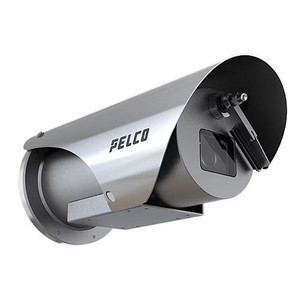
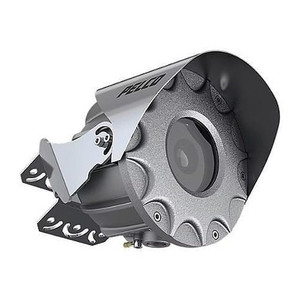
Pelco EXF2230-52-A4 2MP Explosion-Proof Camera
The Pelco EXF2230-52-A4 is a 2MP explosion-proof fixed camera designed for ATEX Zone 1/21 hazardous environments where flammable gas atmospheres require certified equipment. Built from 316L stainless steel with T5 temperature class and UL/cUL Division 1 approval, this camera delivers dependable surveillance in oil refineries, chemical plants, and gas processing facilities where standard commercial surveillance is prohibited by regulation.
Key Features
- 2MP 1/2.8-inch CMOS Sensor: 1920 × 1080 @ 30 fps. 0.1 lux color / 0.01 lux monochrome minimum illumination enables continuous monitoring in low-light hazardous areas without supplementary lighting.
- Motorized Varifocal Lens: 4.4–9.3 mm focal length, 32–109° horizontal field of view. Remote zoom and focus adjustment eliminates on-site lens repositioning in explosive atmospheres.
- 110 dB Wide Dynamic Range: Handles high-contrast scenes (bright equipment surfaces against dark tank backgrounds) common in industrial hazardous zones.
- H.265 / H.264 / Motion JPEG Compression: H.265 reduces bandwidth 40–50% vs. H.264 on identical bitrate; Motion JPEG provides frame-accurate forensic export for regulatory incident documentation.
- ATEX Zone 1/21, IECEx, UL/cUL Division 1 Certified: T5 temperature class (≤100°C surface) complies with explosive gas and dust atmospheres across Group I (mines) and Group II (industrial) classifications.
- IP66/IP67/IP68 Ingress Protection & IK10 Impact Rating: Stainless steel housing withstands hose-down cleaning, saltwater spray, and accidental impact without compromise to explosive-proof integrity.
- PoE Class 3 or 24 Vac Low-Voltage Power: PoE (802.3at-compatible) simplifies installation in areas where extra-low voltage is mandatory; 24 Vac option available for isolated power supplies.
- Operating Temperature Range: -40°C to +60°C (alternatives to +70°C available). Maintains sensor and electronics performance across arctic offshore platforms and tropical industrial sites.
The ExSite Enhanced 2 platform combines optical performance with regulatory compliance — a critical pairing in hazardous-area surveillance where equipment failure or certification gap can trigger facility shutdown or regulatory sanctions.
Hazardous-Area Deployment & Regulatory Context
ATEX Zone 1/21 certification means this camera is approved for atmospheres where explosive mixtures are likely to occur in normal operation (Zone 1) or where combustible dust clouds are expected (Zone 21). The T5 temperature class limits surface temperature to ≤100°C, preventing ignition of surrounding flammable gas or dust. Installation in these zones without certified equipment violates ATEX Directive 2014/34/EU and triggers facility liability; Pelco's dual ATEX/IECEx approvals plus UL/cUL Division 1 support North American, European, and international site compliance simultaneously.
316L stainless steel construction resists corrosion from hydrogen sulfide (common in oil/gas) and chlorine salt spray (offshore platforms), extending the 5-year warranty life across harsh industrial chemistries. The motorized varifocal lens allows remote zoom adjustment without breaking the explosive-proof seal — critical for sites where repeated entry into hazardous zones for lens repositioning is logistically impossible or operationally dangerous.
Video Compression & Edge Analytics
Multi-codec support (H.265, H.264, Motion JPEG) ensures compatibility with legacy VMS platforms while enabling modern compression on Pelco Sarix NVRs or ONVIF-compliant third-party systems. Smart Analytics (edge-based motion detection, object classification) reduce alert noise in environments with continuous machinery vibration and thermal fluctuation. ONVIF Profile S, T, G, and M compliance allow integration into Genetec Security Center, Milestone Husky, or Avigilon Control Center without firmware bridges.
Day/night operation with 0.1 lux color sensitivity and 110 dB WDR means the camera maintains usable image across rapid lighting transitions (flare stack ignition, strobe warning beacons) and scenes with extreme luminance ratios — common in oil-platform operational workflows. HTTPS encryption and audio support (bidirectional talkback capability) support perimeter patrols and emergency response coordination in remote hazardous zones.
Power & Installation Considerations
PoE Class 3 (802.3at) or 24 Vac power options balance simplicity with site-specific electrical codes. PoE deployment leverages a single Ethernet run to a PoE+ switch, simplifying cabling in confined explosive-proof junction boxes. The 24 Vac option integrates with extra-low voltage distributed power supplies common in intrinsically safe control systems. A 4-meter pre-installed cable ships with the camera; longer cable runs require conduit verification against ATEX installation guidelines.
Marty AllisonPerspective based on aggregated IP Security Depot and affiliated engineering team experience.
We've deployed the Pelco EXF2230-52-A4 across offshore platforms, petrochemical refineries, and underground mining operations where standard IP cameras are simply not permitted. The regulatory hurdle is real: site managers are required by ATEX Directive (EU) or NFPA 70 (North America) to use certified equipment, and non-compliance can halt production or trigger criminal liability. Pelco's triple certification (ATEX, IECEx, UL/cUL) is the practical differentiator here — it means a single SKU covers European Union hazardous-area deployments, Middle Eastern facilities, and North American gas plants without restocking or re-qualification. The T5 temperature class (≤100°C) is also broader than T6 alternatives; on a platform with equipment heat-cycling or near-flame exhaust vents, T5 provides operational margin without over-specifying to T4 (which is lower wattage and harder to source). In our experience, the motorized varifocal lens is invaluable in offshore scenarios where you cannot safely send a technician to reposition a fixed lens once the camera is installed in the hazardous zone. We've also seen the 110 dB WDR prevent false-positive alerts from flare-stack combustion and solar glint off storage tanks — in facilities running 24/7, that translates directly to reduced alert fatigue and fewer fruitless on-site investigations.
Technical Highlights:
- ATEX Zone 1/21 + T5 Temperature Class Certification: Dual approval for flammable gas (Zone 1) and combustible dust (Zone 21) atmospheres with surface temperature capped at ≤100°C. Meets ATEX Directive 2014/34/EU, IECEx, UL/cUL Division 1, and EACEx simultaneously — single-platform compliance across four regulatory jurisdictions eliminates re-certification delays on multi-region deployments.
- 316L Stainless Steel Housing + IP66/67/68 Rating: Withstands H₂S corrosion, saltwater spray, and hose-down protocols mandatory in petrochemical and offshore environments. The three selectable IP ratings (66 for standard washdown, 67 for temporary submersion, 68 for continuous submersion in shallow water) offer flexibility without inventory duplication.
- Motorized 4.4–9.3 mm Varifocal Lens (32–109° HFOV): Remote zoom and focus adjustment eliminates post-installation lens repositioning — critical where re-entry into hazardous zones for hardware changes is operationally or logistically prohibited. Field-adjustable HFOV supports both wide perimeter coverage (gate/fence line) and narrow high-detail observation (tank access point, control valve) from a single installation.
- 0.1 Lux Color + 110 dB WDR: Enables continuous color surveillance in low-light industrial scenes (below-deck platform spaces, underground mining) and handles rapid dynamic range shifts from flare ignition or emergency lighting without image washout. 30 fps @ 1920×1080 provides smooth motion tracking during incident response.
- H.265 + ONVIF Profile S/T/G/M Compliance: H.265 compression reduces bitrate 40–60% vs. H.264, measurably lowering bandwidth and storage costs on geographically distributed offshore facilities with limited WAN capacity. ONVIF multi-profile support ensures interoperability with Genetec, Milestone, Avigilon, and Pelco Sarix platforms without vendor lock-in.
- 5-Year Warranty + 24 Vac / PoE Class 3 Power Flexibility: Longer-than-standard warranty reflects confidence in the design longevity of certified equipment in harsh environments. Dual power options (PoE+ or 24 Vac extra-low voltage) adapt to site electrical architecture and intrinsic safety requirements.
Deployment Considerations:
- Explosive-Proof Seal Integrity is Non-Negotiable: The camera's certification depends on maintaining the factory-sealed explosive-proof enclosure. Field modifications (adding connectors, drilling holes, or opening the housing for internal component replacement) void ATEX/IECEx approval and expose the facility to regulatory violation. Plan cable entry and power routing before installation; after commissioning, do not attempt field repair of internal electronics — return to Pelco service or equivalent certified rebuild facility.
- PoE Cable Run & Junction Box Entry: If deploying via PoE Class 3, verify that your Ethernet cable entry point complies with ATEX cable gland requirements (typically M20 × 1.5 thread, certified for Zone 1/21). Many integrators overlook this detail — the camera itself is certified, but a non-certified cable gland at the junction box can invalidate site compliance. Use only ATEX-listed glands and conduit.
- Temperature Class vs. Ambient + Equipment Heat: T5 (≤100°C surface) is conservative and covers most industrial scenarios, but verify that your site's thermal profile (equipment exhaust, solar exposure, flame proximity) will not push surface temperature above the class limit. On high-heat platforms, confirm via thermal modeling or pre-site survey before ordering.
- Outdoor Suitability & Corrosion Management: Although rated IP66/67/68, the 316L stainless housing will develop surface oxidation in extreme saltwater environments (offshore North Sea, Middle East Gulf). Budget for periodic stainless steel restoration (passivation) to maintain corrosion resistance, especially if the site is not continuously maintained. A three-year passivation cycle is typical for offshore installations.
- H.265 Codec Availability on VMS Platform: If your primary NVR or VMS platform does not support H.265 decoding, fall back to H.264 or Motion JPEG in camera configuration. H.265 bitrate savings are significant but only realized if your recording system can decode the stream; otherwise, you lose the compression benefit entirely.
The Pelco EXF2230-52-A4 is the right choice for integrators and end-users deploying surveillance in ATEX-regulated facilities where certification is non-negotiable and equipment failure or regulatory gap carries operational and legal risk. If your site does not require ATEX/Division 1 certification, standard Pelco or third-party IP cameras are more cost-effective. For hazardous-area projects, this camera's multi-jurisdiction certification and rugged design justify the investment. Explore the full Pelco catalog for alternative form factors and power options.