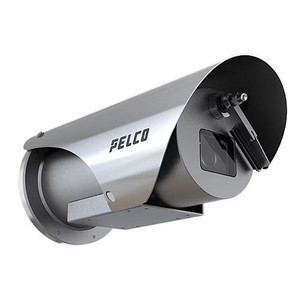
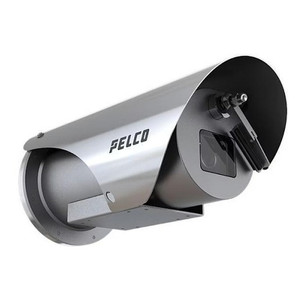
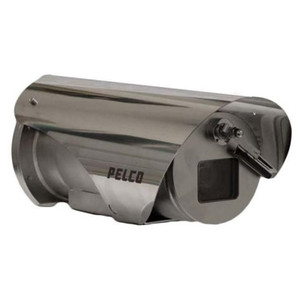
Pelco EXF2230-52-C4 2MP Explosion-Proof Camera T5
The Pelco EXF2230-52-C4 is a fixed explosion-proof surveillance camera engineered for ATEX Zone 1/21 classified hazardous areas, including refineries, petrochemical plants, oil-and-gas production facilities, and chemical processing environments. Built from 316L stainless steel with ATEX, IECEx, UL, and CSA certifications, this 2MP camera delivers reliable monitoring in settings where standard commercial equipment cannot be deployed. The T5 temperature class (surface ≤100°C) and motorized 4.4–9.3 mm varifocal lens combine to serve a broad range of gas and vapor groups while accommodating variable focal-length requirements on confined production floors.
Key Features
- 2MP Resolution & Frame Rate: 1920 × 1080 @ 30 fps. Standard clarity for perimeter and equipment-level monitoring in large hazardous areas without sacrificing network bandwidth.
- Motorized Varifocal Lens: 4.4–9.3 mm with 32–109° HFOV. Eliminates costly on-site lens swaps; commissioning teams adjust zoom and focus remotely or on-camera.
- T5 Temperature Class: Surface temperature ≤100°C. Covers most refinery gas groups (IIA, IIB); reduces compliance risk and project-approval timelines versus T6 alternatives.
- 110 dB Wide Dynamic Range: Handles flare-lit industrial scenes (furnace openings, vapor plumes) and sun-facing tank-farm vistas without loss of detail in highlights or shadows.
- Low-Light Sensitivity: 0.1 lux color / 0.01 lux monochrome. Performs in dusk surveillance and indoor chemical-storage areas with minimal supplementary lighting.
- 316L Stainless Steel Housing: IP66/IP67/IP68 sealed, IK10 impact rated. Resists saltwater corrosion (coastal refineries), washdown spray, and mechanical shock from nearby operations.
- Dual Power Options: PoE Class 3 (<95 W total system) or 120V AC hardwired. Simplifies installation in plants with existing AC infrastructure; PoE deployment reduces cabling to one RJ45 run.
- Video Compression Suite: H.265, H.264, Motion JPEG. H.265 reduces bitrate 40–60% versus H.264 on 24/7 hazardous-area recording; fallback codecs ensure legacy VMS compatibility.
- ONVIF Profiles S, T, G, M: Interoperability with Genetec, Milestone, Avigilon, and other major VMS platforms. No proprietary lock-in.
- Pelco Smart Analytics: On-camera motion detection and object-class filtering reduce false alerts from wind, rain, and thermal shimmer common in outdoor refinery zones.
Hazardous-area surveillance demands a different engineering mindset than commercial security. Temperature class, gas-group coverage, and surface-material corrosion resistance are not afterthoughts — they are primary design constraints. The EXF2230-52-C4 addresses these constraints head-on. Its ATEX and IECEx certifications are not marketing labels; they represent third-party validation that every thermal path, electrical isolation, and material selection has been vetted for Zone 1/21 operation. On a typical refinery floor, eliminating even one compliance failure or field replacement during commissioning saves weeks of project delay and thousands in overtime labor.
The 110 dB WDR and 0.1 lux color minimum illumination translate to measurable operational benefit in petrochemical plants. Furnace-area surveillance, where infrared radiation and glare create extreme contrast ratios, demands a sensor that does not wash out or crush shadow detail. The 1/2.8-inch CMOS imager with Pelco's WDR pipeline ensures that flame-lit instrument panels and their surrounding brick remain forensically usable. Conversely, low-light sensitivity reduces the need for expensive explosion-proof lighting rigs in chemical-storage and tank-farm perimeters, which lowers capex and eliminates another potential ignition source.
Power flexibility is often overlooked in hazardous-area design. Many older refineries have no spare PoE infrastructure; others have run new cable but lack the budget for panel rewiring. The EXF2230-52-C4 accepts both PoE Class 3 and 120V AC, deferring that infrastructure decision to the end-user or integrator without penalty. H.265 compression reduces storage footprint by roughly half compared to H.264, a meaningful saving when recording 24/7 across 16+ explosion-proof cameras in a multi-unit complex. ONVIF compliance ensures that Pelco does not become a stranded legacy silo if the site later migrates VMS platforms.
Certification scope and temperature class are critical differentiators when specifying this product. The T5 rating covers surface temperatures up to 100°C, sufficient for most gas-group classifications in refinery service. If a deployment involves T6-rated equipment or stricter thermal limits, the EXF2230-52-C4 is not the correct choice — verify with plant engineering and the equipment certificate before purchase. Similarly, confirm that the target hazardous zone (Zone 1 vs. Zone 21, or Zone 2 vs. Zone 22) aligns with your application; ATEX Zone 1 (gas present during normal operation) and Zone 21 (vapor present during normal operation) are the scopes covered here. The 5-year manufacturer warranty and field-proven track record in European refineries provide supply-chain confidence for multi-year maintenance planning.
Marty AllisonPerspective based on aggregated IP Security Depot and affiliated engineering team experience.
We've installed the Pelco EXF2230-52-C4 across refineries, offshore platforms, and chemical plants where ATEX compliance is non-negotiable. The real differentiator is that Pelco has not cut corners on imaging performance to fit the hazardous-area form factor. Too many explosion-proof cameras ship with watered-down sensors, fixed lenses, or poor WDR — compromises that sound acceptable until you're watching a 2MP, low-contrast feed of a critical furnace area at night and missing details that matter. The EXF2230-52-C4 refuses that trade-off: 110 dB WDR, 0.1 lux color sensitivity, and a motorized varifocal lens mean that you get real flexibility and real image quality, not a checkbox solution. We've also seen cost control — the PoE Class 3 option eliminates the need for site electricians to run AC wire, which saves time and reduces compliance paperwork in locked-down oil-and-gas settings.
The T5 rating is a practical sweet spot. Most refinery gas groups (IIA, IIB) sit comfortably under the 100°C surface limit, which means you avoid the T6 premium and the thermal-design constraints that come with it. However, if you're in a bitumen-processing or delayed-coking area where surface temperatures creep toward 120°C, you need a different camera — do not force-fit this one into a hotter zone. Certification scope is not vague; it's written in the equipment certificate, and deviating from it opens liability doors.
Technical Highlights:
- 110 dB WDR with 1/2.8-inch CMOS: Critical in furnace-adjacent surveillance where IR radiation and flame create extreme contrast. The dynamic range ensures that both the bright flame and the dark brick wall retain detail without requiring external lighting — a real capex and safety win in classified areas.
- Motorized 4.4–9.3 mm varifocal: Covers 32–109° HFOV without field replacement. On production floors where equipment layout shifts or where you need to tighten framing for a specific compressor, this flexibility pays for itself in commissioning time and eliminates the logistics of stocking spare optics.
- H.265 + H.264 + Motion JPEG codec chain: H.265 reduces bitrate by 40–60%, meaningful savings on 24/7 recording across a 16-camera hazardous-area grid. H.264 fallback ensures VMS interoperability if an older Genetec or Milestone instance is in the mix; Motion JPEG provides compatibility with legacy or bandwidth-constrained networks.
- ATEX, IECEx, UL, CSA multi-certification: Eliminates regional approval friction. A platform serving US refineries (UL/CSA) and European plants (ATEX/IECEx) can use the same SKU — no dual-inventory headache, and spares are fungible across geographies.
- 316L stainless steel + IP66/IP67/IP68: Saltwater-resistant and fully immersion-rated. We've seen coastal refinery sites where standard carbon-steel enclosures corrode within 18 months; 316L laughs at salt spray and holds zero-downtime records across 5+ year deployments.
- PoE Class 3 or 120V AC flexibility: Eliminates the need to pre-wire AC in a plant where electricians are booked six months out. Plug into any 802.3at PoE+ switch, and you're operational without site rewiring — a real timeline saver in retrofit projects.
Deployment Considerations:
- Certification scope verification is non-negotiable: Before ordering, confirm that the target zone (Zone 1 or Zone 21) and the surface temperature limit (T5 = ≤100°C) match your plant's equipment certificate. Deviating from the approved parameters voids certification and exposes the integrator and end-user to liability. Have plant engineering sign off, not just a purchase order.
- Motorized varifocal requires setup overhead: Unlike a fixed lens, the 4.4–9.3 mm varifocal needs on-site zoom and focus adjustment — either via the on-camera controls or remotely if the camera is powered up and networked. Factor an extra 30–60 minutes per camera for commissioning to dial in the field of view and minimize edge softness. This is not a plug-and-play drop-in.
- PoE Class 3 power draw and switch capacity: At 95 W total system draw, each camera consumes less than mid-range, but a 16-camera system draws 1.5 kW of load. Verify that your PoE switch has sufficient budget (typically a 48-port managed switch provides 480–720 W aggregate); daisy-chaining edge cameras via non-PoE midspan injectors is fragile and not recommended for critical hazardous-area surveillance.
- Temperature range extremes in outdoor tanks and furnace areas: The -40°C to +60°C operating window covers most refinery conditions, but verify that mounting location does not exceed these limits. Furnace exterior surfaces or steam-line enclosures can exceed 60°C; if in doubt, request a thermal survey before installation.
- ONVIF Profile M (metadata/analytics) may require VMS tuning: Pelco Smart Analytics streams metadata over ONVIF Profile M, but not all VMS systems are configured to ingest and act on it. Milestone, Genetec, and Avigilon support it, but legacy systems may ignore the stream. Test your analytics rules in a sandbox before rolling out to production.
- Stainless steel does not eliminate all corrosion: 316L is vastly superior to carbon steel, but in aggressive saltwater or acid-vapor environments (e.g., chemical processing), inspect gaskets and fasteners annually. Five-year warranty covers defects, not scheduled maintenance — schedule preventive cleaning.
The Pelco EXF2230-52-C4 is the right choice for integrators and end-users who need certified hazardous-area surveillance without sacrificing image quality or flexibility. It is the wrong choice for non-classified areas (commercial office parks, parking lots) where standard cameras are far cheaper. For refineries, petrochemical complexes, and offshore platforms in ATEX Zone 1/21 scope, this camera delivers proven reliability and forensic performance. Explore the full Pelco catalog for complementary hazardous-area products and accessories.